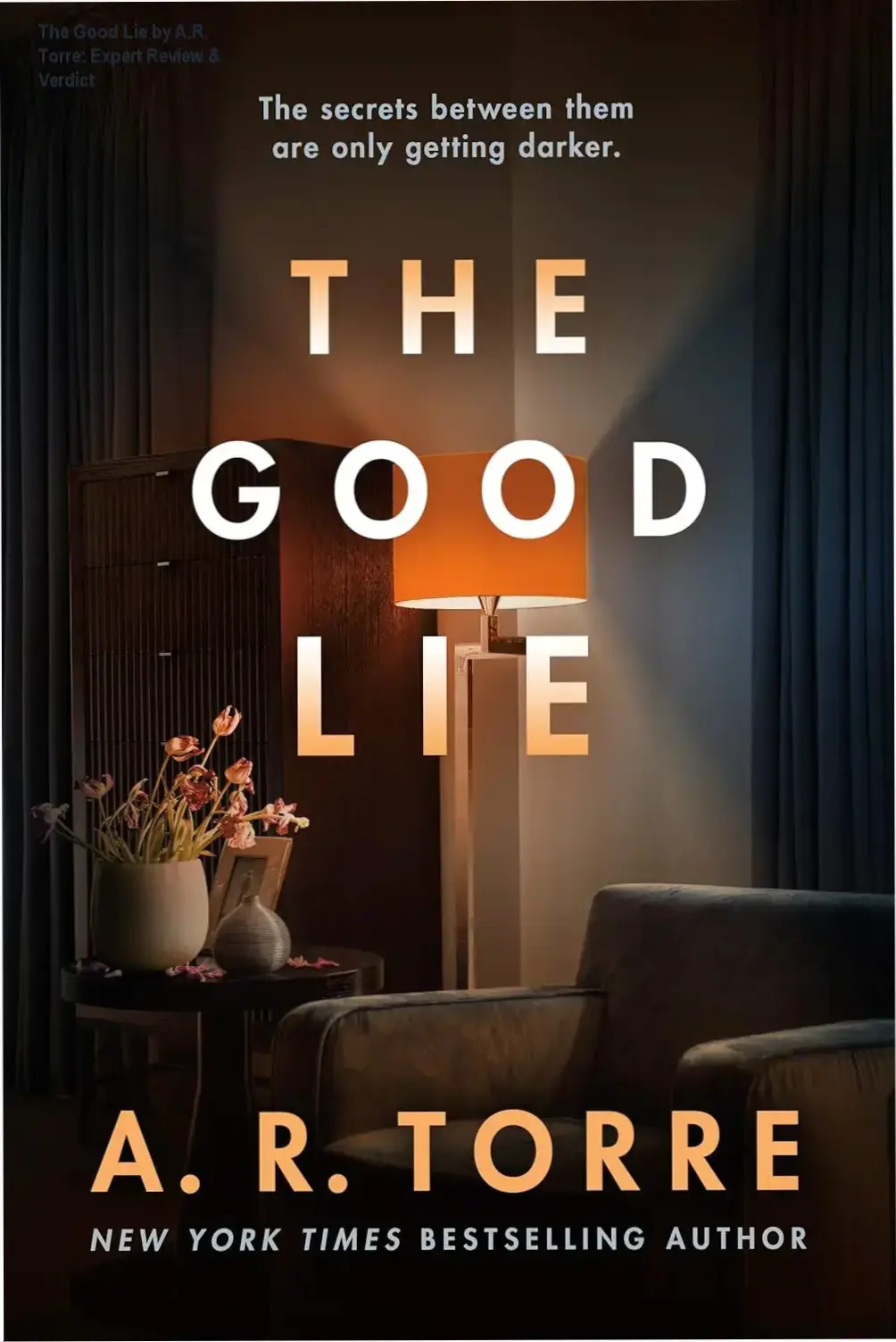
The Good Lie by A.R. Torre: Expert Review & Verdict
Most of us believe we can spot a liar. We trust the “damning evidence,” the witness testimony, and the satisfaction of a closed case. But the reality of the justice system is often far messier than a courtroom drama suggests, where the line between a predator and a victim is blurred by grief and professional bias.
Psychological thrillers succeed when they weaponize this uncertainty. A.R. Torre’s work, particularly The Good Lie, taps into the visceral fear that the wrong person is behind bars—or worse, that the right person is walking free. It’s a narrative designed for those who enjoy the intellectual gymnastics of trying to outsmart the author before the final page.
Ready to dive into “The Good Lie”?
Explore available editions, check current live pricing, or download a free sample directly on Amazon.
Preview Free Sample & Check Price on Amazon
*You will be redirected to Amazon. As an Amazon Associate, we may earn from qualifying purchases.
Pacing and the “Page-Turner” Architecture
Let’s be honest: many psychological thrillers suffer from a “sagging middle.” They build a great premise, stall for 150 pages, and then rush the ending. A.R. Torre avoids this trap with a lean, almost aggressive pace.
The narrative doesn’t waste time on fluff. The chapters are short, the dialogue is sharp, and the information is dripped out with surgical precision. It creates a sense of urgency that mirrors the desperation of the characters.
Reading this feels less like a leisurely stroll through a mystery and more like a sprint. For the modern reader with a dwindling attention span, this is a massive win. You aren’t fighting the prose; you’re fighting the urge to finish the book in one sitting.
The Forensic Psychology Angle: Expectation vs. Reality
The introduction of Dr. Gwen Moore provides the book’s intellectual backbone. As an expert on killers, she isn’t just a plot device; she’s the lens through which we analyze the “Bloody Heart” killer.
Skeptics might argue that the “expert psychiatrist” trope is overused. However, Torre uses Gwen to challenge the reader’s assumptions. She doesn’t just look at the evidence; she looks at the motive and the pattern.
The tension arises when Gwen’s professional objectivity clashes with the emotional chaos surrounding the case. The book asks: can an expert truly remain unbiased when the stakes are this personal?
| Metric | Analysis | Verdict |
|---|---|---|
| Plot Velocity | High. Rapid transitions and cliffhangers. | Excellent |
| Character Depth | Functional, driven by trauma and secrets. | Good |
| Predictability | Low to Medium. Several red herrings. | Strong |
| Atmosphere | Ideal Reader Profile This novel hits a sweet spot for readers who prefer psychological tension over graphic violence. If you enjoy unreliable narrators and the slow burn of a therapist-patient dynamic twisted into a cat-and-mouse game, the pacing works. It respects the reader’s intelligence, letting gaps in the narrative do the heavy lifting. Fans of authors like Tana French or early Karin Slaughter will appreciate the atmosphere. It’s less about the “whodunit” mechanics and more about the “why” and the “what now.” The Kindle format renders cleanly; no formatting glitches pulled me out of the story. Who Should Skip ItReaders craving high-octane action or a procedural deep-dive into forensics will find the middle act sluggish. The romance subplot feels obligatory rather than organic—if forced romantic tension ruins immersion for you, this is a friction point. The ending divides opinion; it prioritizes thematic resonance over neat closure. If you need every thread tied with a bow, the ambiguity will frustrate. Common Buying Missteps
Contextual FAQIs this a standalone? Yes. No prior knowledge of the author’s other work is required. How graphic is the violence? Mostly implied. The horror lives in the clinical descriptions and aftermath, not on-page gore. Audiobook narration quality? Dual POV narration enhances the split perspective. Worth the credit if you prefer audio. Editorial SummaryThe Good Lie delivers a compact, psychologically dense thriller that punches above its 257-page weight. It sacrifices procedural realism for character study, a trade-off that pays off if you value motive over method. The prose is functional—serviceable but rarely lyrical. Value for money is strong on Kindle Unlimited; at full price, wait for a promo unless you are a die-hard genre completist. You can verify current pricing and reader sentiment here. Final Editorial Verdict“The Good Lie” delivers on its core promise for its intended audience, offering compelling insights without fluff. As highlighted in our detailed edition breakdown, its practical depth and readability are its greatest strengths. We also recommend checking the official Kindle sample and reader ratings before making your final purchase decision. *You will be redirected to Amazon. As an Amazon Associate, we earn from qualifying purchases. Posts Similares
|