Most of us spend our professional lives feeling like small cogs in a corporate machine we didn’t design, following rules that seem arbitrary and designed to keep us stressed. It is a universal human frustration: the feeling that the “game” of life is rigged by people who find our struggle entertaining.
Matt Dinniman takes this relatable anxiety and turns it into a planetary nightmare. In the world of Dungeon Crawler Carl, the “rigged game” is literal, galactic, and lethal. If you are wondering if this is just another generic LitRPG or a genuine piece of dark satire, you can check the overwhelming reader reception on Amazon to see why it has become a cult phenomenon.
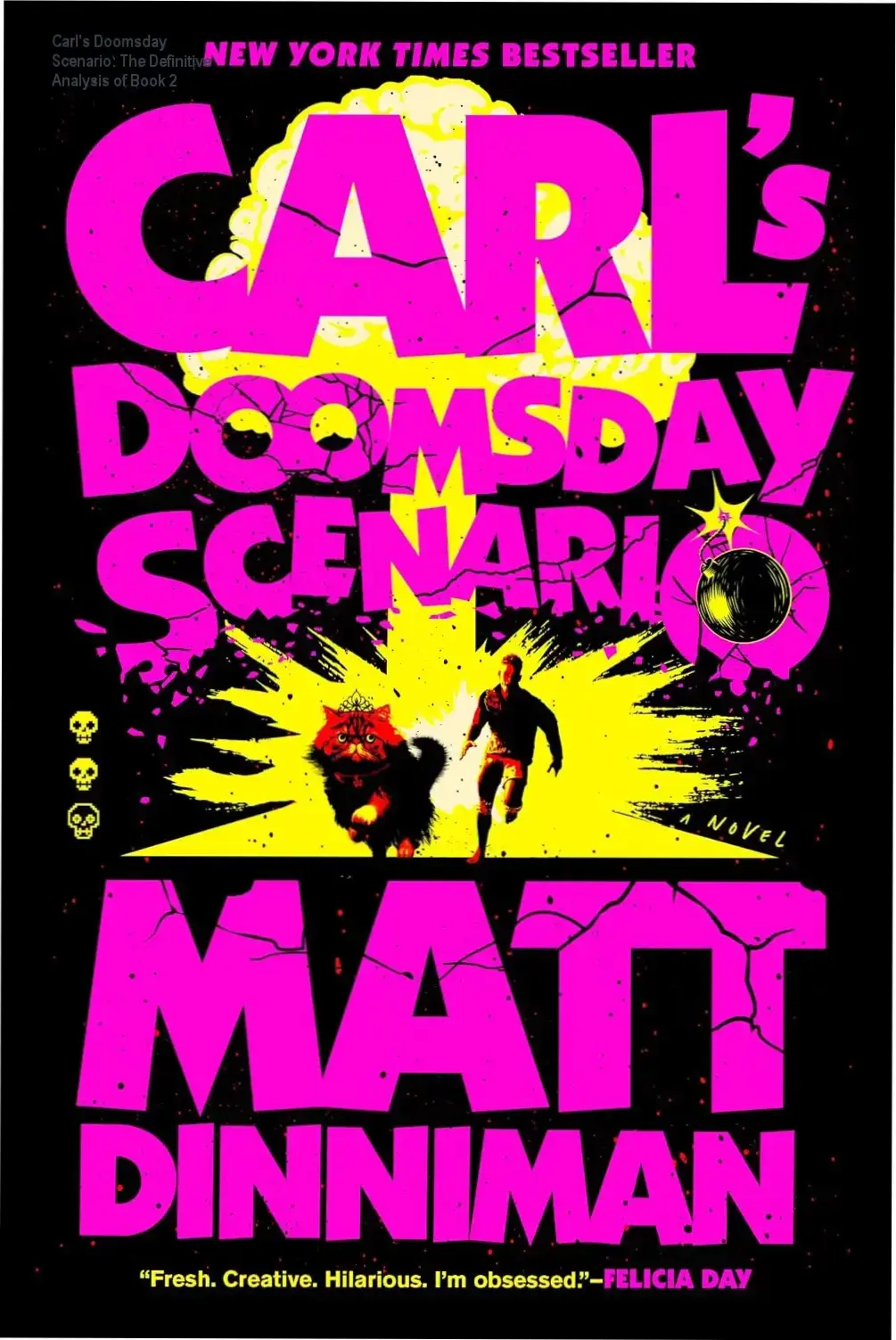
Ready to dive into “Carl’s Doomsday Scenario”?
Explore available editions, check current live pricing, or download a free sample directly on Amazon.
*You will be redirected to Amazon. As an Amazon Associate, we may earn from qualifying purchases.
The LitRPG Trap: Mechanics vs. Narrative
Let’s be skeptical for a second. The LitRPG genre is notorious for “spreadsheet syndrome”—books that spend more time listing stats and loot than actually telling a story. It usually feels like a manual for a game that doesn’t exist.
Carl’s Doomsday Scenario avoids this trap. Dinniman uses the game mechanics not as a crutch, but as a source of tension. The “system” is an antagonist in its own right, often mocking the characters with its notifications.
The pacing in the second book is aggressive. We move from the training levels into the meat of the game. The introduction of “Quests” isn’t just a gameplay change; it’s a narrative tool to force Carl and Donut into uncomfortable territories.
Readers on Reddit frequently highlight that the “numbers” in this series actually matter. When Carl gains a new ability or item, it isn’t just a stat boost—it’s a survival necessity that changes how he interacts with the environment.
The Odd Couple: Carl and Princess Donut
The emotional anchor of the story is the relationship between a cynical Coast Guard veteran and a pampered ex-girlfriend’s cat who has gained sentience and a taste for luxury.
It sounds like a gimmick, but it works. The chemistry is a masterclass in contrasting perspectives. Carl represents the gritty, pragmatic side of survival, while Donut represents the absurdity of fame and social standing.
Their dynamic evolves here. They aren’t just surviving; they are becoming “celebrities” in a galactic circus. This adds a layer of psychological horror: they are fighting for their lives while millions of aliens watch for entertainment.
“The dungeon gets more dangerous each day, and now there’s a whole new problem to deal with: Quests.”
This quote encapsulates the feeling of the book. Just as the characters find a rhythm, the rules change. It mirrors the real-world experience of “goalpost shifting” in high-stress environments.
World-Building: The Horror of the Over City
The third floor, the Over City, is where the series shifts from a “dungeon crawl” to something more atmospheric and haunting. A devastated metropolis filled with an undead circus is a bold choice.
Dinniman blends dark comedy with genuine gore. The image of murdered women raining from the sky is jarring, which is exactly the point. The dungeon isn’t a playground; it’s a slaughterhouse.
The “Over City” serves as a commentary on urban decay and the remnants of civilization. It forces the characters to solve mysteries while fighting for their lives, adding a detective layer to the action.
From a technical standpoint, the environmental descriptions are vivid without being bloated. You can feel the grime of the city and the oppressive atmosphere of the alien gaze.
Metric
Reader Score
Who Is This Book Actually For?
The Ideal Reader: If you enjoy the intersection of “The Running Man” and a high-stakes RPG, this is your territory. It appeals to those who appreciate systemic world-building where the rules are cruel and the humor is pitch-black.
It’s for the reader who wants a protagonist who isn’t a “chosen one” but a survivor who uses logic and sheer spite to cheat a rigged system.
Who Should Skip It?
Avoid this book if: You have a low tolerance for “game mechanics” (stats, levels, loot drops) interrupting the narrative flow. If you are looking for a poetic, slow-burn literary epic, the frenetic pace and absurdism of Carl and Donut will likely grate on your nerves.
Value for Money: The Reality Check
At 400 pages, the paperback offers a substantial amount of content. The inclusion of the exclusive bonus story “Backstage at the Pineapple Cabaret” adds tangible value to the print edition over the digital version.
The real value, however, lies in the pacing. Unlike many sequels that suffer from “middle-book syndrome,” this installment expands the world (introducing the Over City) without losing the character-driven tension that made the first book work.
Common Purchasing Missteps
Expecting a “Cute Cat Story”: While Princess Donut is a highlight, this is not a cozy read. It is visceral, violent, and psychologically taxing.
Reading it as a Standalone: This is Book 2. Attempting to jump in here is a mistake; the emotional weight of Carl’s journey depends entirely on the trauma established in the first volume.
Editorial Verdict
Matt Dinniman has managed to evolve the formula. By introducing “Quests” and a decaying urban environment, he prevents the story from becoming a repetitive loop of “fight-loot-repeat.” The dynamic between the cynical Coast Guard vet and the narcissistic feline remains the strongest asset of the series.
“Carl’s Doomsday Scenario (Dungeon Crawler Carl)” delivers on its core promise for its intended audience, offering compelling insights without fluff. As highlighted in our detailed edition breakdown, its practical depth and readability are its greatest strengths.
Most of us grow up believing that the quietest neighborhoods are the safest. We equate manicured lawns and silent streets with peace, ignoring the reality that silence is often just a mask for things people are too terrified to discuss openly. Karin Slaughter understands this paradox better than almost any contemporary thriller writer. In her…
Most of us have felt the sting of an unfair loss. That moment when the rules of the game change without your consent, leaving you stripped of your advantages while others glide forward. It is a visceral human frustration that translates perfectly into the “underdog” narrative, a staple of modern fiction that continues to dominate…
When your fiancé cheats days before a wedding, and you wake up in Vegas—married to a stranger—you’ve officially hit rock bottom. *The Accidental Honeymoon* by Portia MacIntosh turns this disaster into a laugh-out-loud rom-com, blending fake dating tropes with the chaos of a forced honeymoon. For fans of *Wish You Weren’t Here*, this book promises…
We need to produce the first part of a professional analytical book review for the book “{{BOOK_TITLE}}” by {{AUTHOR_NAME}}. We must output only English, using HTML tags as specified: , , , , , , , , , . Must start with a paragraph of contextualization. Must not start with heading tags. Must include exactly…
Every parent knows the “Bedtime War.” It is that nightly struggle where a simple transition from play to sleep turns into a tactical negotiation involving three extra glasses of water and a sudden, urgent need to find a specific toy. The goal isn’t just to get the child in bed; it is to lower the…
The smart scale notification is a brilliant, modern inciting incident. It strips away the plausible deniability that usually shields cheating spouses in romance novels. Calista isn’t guessing; she has data. That 1 A.M. ping—congratulating her on a 40-pound loss she never achieved—immediately signals that Cruel Lies isn’t interested in a slow-burn mystery. It wants to…