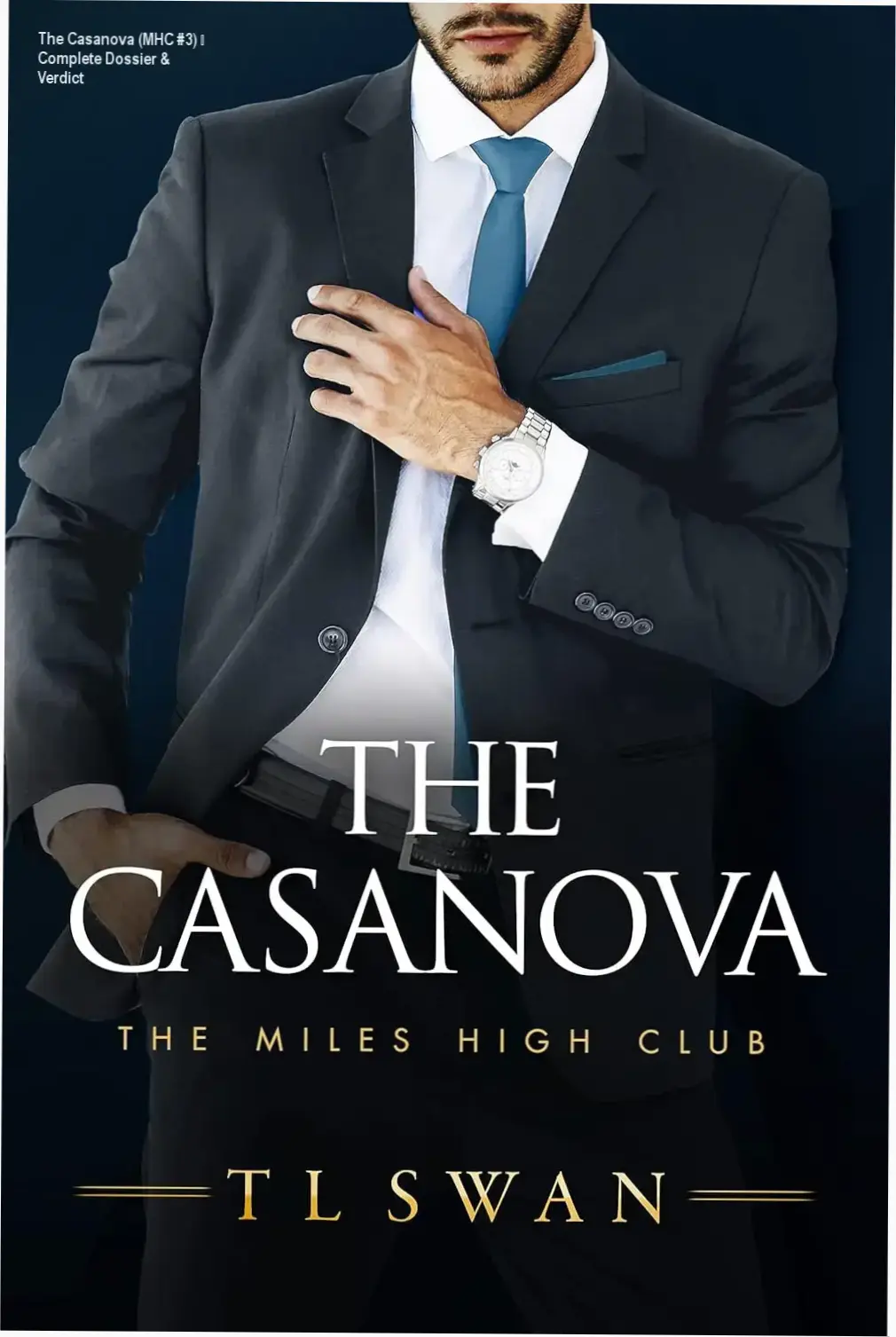
The office romance trope usually promises a predictable dance: stolen glances in the breakroom, a heated argument that turns into a kiss, and a tidy resolution before the quarterly review. But The Casanova by T L Swan smashes that formula by weaponizing the very technology meant to connect us. Kate’s mistake isn’t falling for her boss; it’s accidentally letting Elliot Miles—the man she torments daily—into the private sanctuary of her anonymous online friendship. That specific horror—realizing your worst professional enemy holds the keys to your most vulnerable thoughts—is a distinctly modern anxiety. It turns a standard enemies-to-lovers arc into a high-stakes game of digital chicken. If you want to see exactly how that implosion plays out, you can check the current edition and reader reviews here.
Swan understands that the “Casanova” label is rarely about charm; it’s armor. Elliot’s reputation precedes him, but the narrative peels back the layers to reveal a man playing a role he thinks the world demands. The tension doesn’t come from whether they will get together—this is a romance novel, after all—but from the excruciating wait for the other shoe to drop. Kate’s internal monologue is the engine here: sharp, defensive, and hilariously self-deprecating. It grounds the steamier elements in a reality that feels earned, not just plotted. The “secret identity” mechanic via work email is a ticking time bomb Swan handles with ruthless pacing.
Ready to dive into “The Casanova”?
Explore available editions, check current live pricing, or download a free sample directly on Amazon.
*You will be redirected to Amazon. As an Amazon Associate, we may earn from qualifying purchases.
The Dual Narrative Engine: Voice vs. Vulnerability
The structural genius of this installment lies in the “Edgar” correspondence. It functions as a parallel novel running underneath the office warfare. When Kate writes to Edgar, she drops the shield. She admits fear, loneliness, and ambition. When she speaks to Elliot, she deploys sarcasm like a riot shield. The reader gets both frequencies simultaneously. This creates dramatic irony of the highest order: we know Edgar is Elliot. We watch him absorb her raw honesty and then have to perform “The Casanova” five minutes later in a board meeting. It’s a masterclass in showing versus telling character growth.
Goodreads discussions frequently highlight this device as the series’ peak. Readers note that the “Edgar” letters allow Swan to write a “sweet, slow-burn epistolary romance” inside a “high-heat, banchy contemporary.” The contrast is jarring in the best way. One Reddit thread in r/RomanceBooks called it “catfishing with consent implications,” sparking a 500-comment debate on whether Elliot’s silence constitutes a betrayal or a survival strategy. The consensus usually lands on: it’s messy, it’s unethical, and it makes for incredible fiction. The ethical grey area is exactly where Swan thrives.
The pacing accelerates once the “Edgar” replies start mirroring Elliot’s real-time reactions. A complaint about a meeting appears in chat minutes later. A specific phrase Kate uses orally pops up in an email. The breadcrumb trail is deliberate. Swan respects the reader’s intelligence; she doesn’t hide the ball. She makes the tension about when Kate connects the dots, not if. That shift—from “who is Edgar?” to “how does she survive the reveal?”—changes the genre gear from mystery to psychological thriller romance.
Elliot Miles: Deconstructing the Archetype
Elliot is the most polarizing hero in the Miles High Club quartet, and that is by design. Book 1 and 2 established him as the untouchable older brother, the kingmaker. Book 3 forces him to be the butt of the joke. He is humiliated, outmaneuvered, and emotionally cornered. For a character defined by control, losing it over a woman who calls him “Princess” daily is the ultimate arc. His “Casanova” persona is diagnosed early by Kate: a defense mechanism against a family dynamic that treated affection as transaction.
Character Facade
Underlying Reality
Narrative Payoff
The Untouchable Playboy
Deeply loyal, monogamous at heart, starved for genuine connection
The “Edgar” persona proves he only wants her
The Ruthless CEO
Protective to a fault; uses power to shield loved ones
He destroys a rival for her career, not his ego
Who This Book Is Actually For
The ideal reader enjoys enemies-to-lovers tropes wrapped in a workplace setting with heavy banter. You want high heat, a hero who grovels eventually, and a heroine who matches him line for line. If you liked the previous Miles High Club installments for the brotherhood dynamic and the “competence porn” of the airline industry backdrop, this delivers more of that specific flavor.
Skip it if: you dislike the “secret identity/pen pal” trope when the reveal hinges on a contrivance (work email, really?). If you need your heroes morally grey but not borderline harassing in the early chapters, Elliot’s early behavior walks a fine line. Readers allergic to miscommunication plots that could be solved by one honest conversation will find the middle third frustrating.
Value Proposition: Time vs. Payoff
At 507 pages, this is a commitment. The pacing is front-loaded with tension but sags during the “Edgar” correspondence chapters—repetitive internal monologue eats page count. Kindle Unlimited subscribers get obvious value. For outright purchase ($9.99-$12.99 typical), the re-read value hinges entirely on how much you enjoy the specific dynamic: snark as foreplay. The emotional payoff in the final 15% is strong, but the journey requires tolerance for manufactured angst.
Common Buying Missteps
Expecting a standalone: References to previous couples (Logan, Tate) are constant. Context matters for the emotional beats.
Wanting a realistic workplace romance: HR would have a field day. This is fantasy corporate culture.
Buying for the “mystery”: The pen pal identity is obvious from chapter three. The tension comes from when they realize, not if.
Quick Contextual FAQ
Is the cheating trigger present? No. Kate is single; Elliot has a girlfriend early on but ends it cleanly before physical lines are crossed with Kate. Emotional fidelity is murkier.
How steamy is “steamy”? Explicit, frequent, and kink-adjacent (light bondage, praise kink). Door open, lights on.
Cliffhanger? No. HEA secured. Epilogue sets up Book 4 (different couple).
Bottom line: It’s a competent, trope-heavy execution of a popular formula. Flawed pacing, excellent chemistry. If the blurb hooked you, the book satisfies. You can verify current pricing and reader sentiment here before committing the weekend.
Final Editorial Verdict
“The Casanova” delivers on its core promise for its intended audience, offering compelling insights without fluff. As highlighted in our detailed edition breakdown, its practical depth and readability are its greatest strengths.
Most people imagine immigration as a suitcase and a plane ticket. In reality, it is a violent fragmentation of identity. For a child, the trauma isn’t just the war they flee, but the sudden realization that they are now “the other” in a place that looks like a movie set but feels like a cage….
We have all had those moments where life feels like a series of catastrophic errors leading to a dead end. That specific, suffocating feeling of being “at rock bottom” is rarely portrayed with honesty in fiction; it is usually glossed over for a quick redemption arc or drowned in melodrama. Alison Espach takes a different…
We have all been there: staring at a professional email for ten minutes, paralyzed by a single doubt. Is it “assistir o” or “assistir ao”? Does “bastante” take an “s” in this specific sentence? For many, the Portuguese language feels less like a tool for communication and more like a minefield where one wrong step…
The relationship between a mother and daughter is often a battlefield of mirrored mistakes. We spend our youth trying to be nothing like our parents, only to realize in adulthood that we are fighting the same ghosts they once did. This cycle of protection and resentment is the raw nerve that Colleen Hoover touches in…
Finding a complete romantic arc in the time it takes to drink a coffee sounds like a marketing fantasy, yet the “Summer Lovin’” collection bets its entire premise on that exact delivery. Readers burned by novellas that feel like chopped-up novels often approach these 57-page entries with justified skepticism. The promise here is specific: a…
Most people spend their professional lives chasing a “big win,” believing that success is a destination reached through strategic risks and calculated moves. But there is a common, quiet desperation in the modern workforce—the desire to hit a reset button and trade a high-stress career for something tangible, like a small-town diner where the stakes…