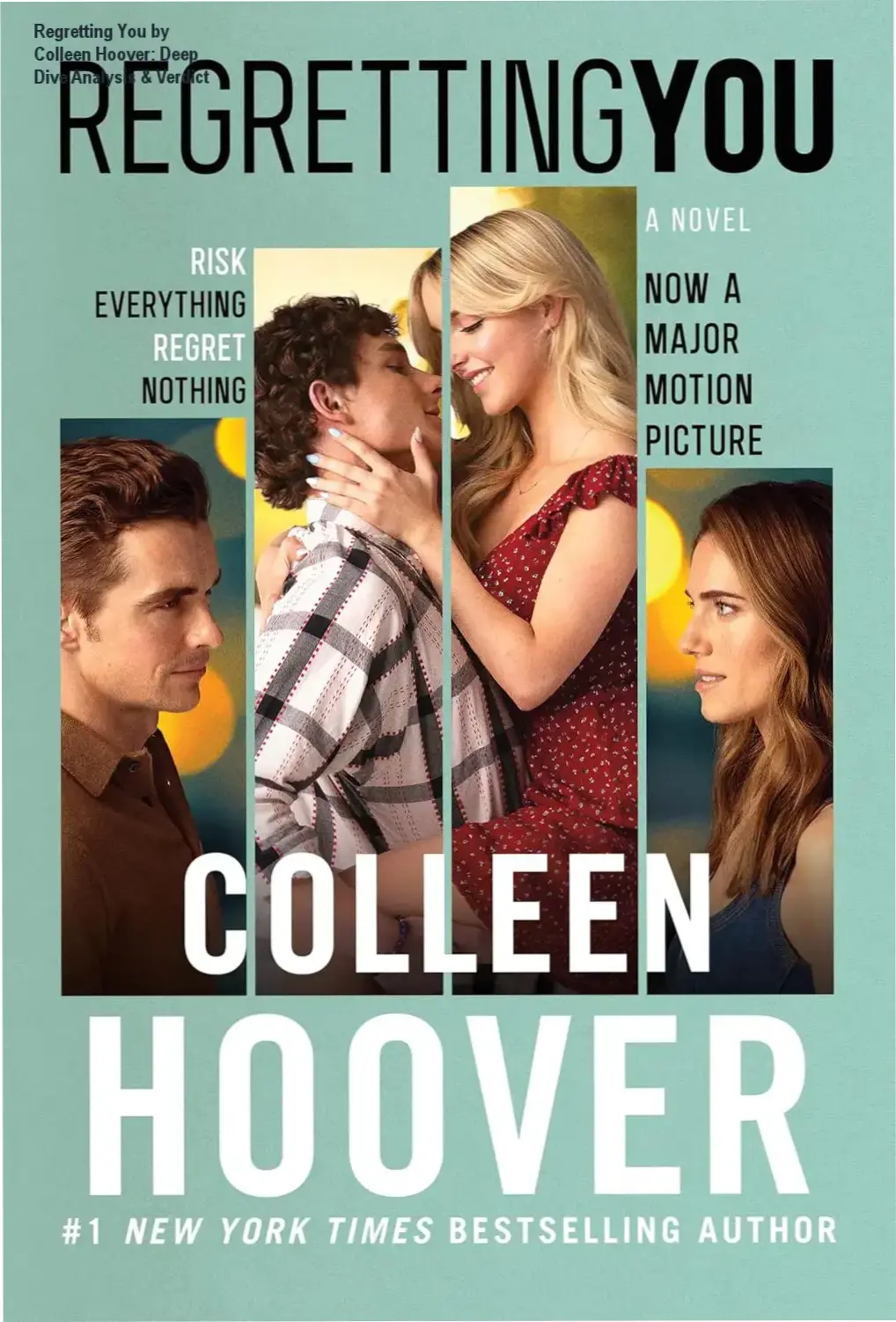
Regretting You by Colleen Hoover: Deep Dive Analysis & Verdict
The relationship between a mother and daughter is often a battlefield of mirrored mistakes. We spend our youth trying to be nothing like our parents, only to realize in adulthood that we are fighting the same ghosts they once did. This cycle of protection and resentment is the raw nerve that Colleen Hoover touches in her narrative.
Readers usually come to this story expecting a typical romance, but they find a heavy exploration of grief and the shattering of a family’s perceived stability. If you want to see how the community has reacted to this emotional rollercoaster, you can check the current reader reception and availability here.
Ready to dive into “Regretting You”?
Explore available editions, check current live pricing, or download a free sample directly on Amazon.
Preview Free Sample & Check Price on Amazon
*You will be redirected to Amazon. As an Amazon Associate, we may earn from qualifying purchases.
Writing Style: The “Page-Turner” Efficiency
Colleen Hoover doesn’t write for the literary elite. She writes for the binge-reader. Her prose is lean, direct, and stripped of unnecessary ornamentation.
The pacing is aggressive. She uses short chapters and cliffhangers that function like a TV series, forcing you to read “just one more” until it’s 3 AM.
Critics often call this style “simplistic,” but from a conversion standpoint, it’s a masterclass. She removes the friction between the plot and the reader.
The dialogue feels modern and conversational, though occasionally it leans too heavily into the “teen drama” trope, especially during Clara’s segments.
Narrative Structure: The Dual-POV Tension
The book utilizes an alternating perspective between Morgan (the mother) and Clara (the daughter). This isn’t just a stylistic choice; it’s the primary engine of the plot.
The reader is placed in a position of unfair advantage. You know things that Morgan doesn’t, and things that Clara is blindly ignoring.
This creates a state of constant dramatic irony. You aren’t just reading a story; you are watching a train wreck in slow motion, hoping the characters find the brakes in time.
The transition between the two voices is seamless, though the emotional weight shifts. Morgan’s chapters feel heavy with regret, while Clara’s are charged with the volatility of first love.
| Metric | Analysis | Impact |
|---|---|---|
| Pacing | High-velocity | Low abandonment rate |
| Emotional Depth | Melodramatic | High engagement for YA/Adult crossover |
| Structure | Dual-POV | Increased suspense via information gap |
The Core Conflict: Grief vs. Betrayal
The catalyst of the story—the “questionable accident”—is where the book pivots from a family drama to a psychological study of betrayal.
Hoover explores the concept of the “perfect partner.” The anchor of the family, Chris, is revealed to be a facade. This destroys not only the marriage but the
Ideal Reader Profile
This novel lands squarely for readers who treat fiction as emotional archaeology. If you appreciate dual timelines that expose how trauma echoes across generations—specifically the mother-daughter fault line—this delivers. It suits the BookTok demographic craving angst with a side of redemption, but also satisfies literary fiction readers who want commercial pacing without sacrificing psychological depth. The sweet spot? Women aged 25–45 navigating their own family scripts, or anyone who cried through It Ends with Us and wants the same visceral punch without the trigger-heavy domestic violence core.
Who Should Skip It
- Plot-driven thriller fans: The “questionable accident” is a catalyst, not a mystery. Resolution is internal, not procedural.
- Readers allergic to miscommunication tropes: Roughly 60% of the conflict evaporates if characters speak honestly at the 40% mark. Hoover leans hard on withheld secrets as engine fuel.
- YA purists: Clara’s voice reads older than sixteen; her internal monologue often mirrors Morgan’s maturity level, blurring the generational contrast the premise promises.
Common Purchasing Missteps
Don’t buy the paperback expecting a light beach read because of the “romance” shelf placement. The romance here is fragmented—grief sex, forbidden teen tension, a second-chance thread—and all of it serves the family system, not the HEA. Another trap: assuming the movie deal (Mckenna Grace, Dave Franco) signals a faithful adaptation. Hollywood tends to sanitize Hoover’s messier edges; the book’s power lives in the ugly interiority that rarely survives the screen.
Contextual FAQ
Is it a standalone? Yes. No prior Hoover knowledge required.
How graphic is the grief? Visceral but not exploitative. Panic attacks, dissociation, and numbness are rendered clinically enough to feel authentic, not melodramatic.
Audiobook worth it? Dual narration (Morgan/Clara) adds necessary texture; the print version’s lack of visual POV markers can confuse early chapters.
Editorial Summary
Regretting You is a high-efficiency emotional machine. It manufactures catharsis through recognizable pain points—parental projection, survivor’s guilt, the lie that “I’ll never be like her”—and pays them off with earned, if slightly neat, reconciliation. The prose won’t win awards for style, but the structural empathy is razor-sharp. Value per dollar is high if you measure books in “nights stayed up too late.” For the current Kindle price, it’s a low-risk, high-reward pickup. You can verify live discounts and reader sentiment here.
Final Editorial Verdict
“Regretting You” delivers on its core promise for its intended audience, offering compelling insights without fluff. As highlighted in our detailed edition breakdown, its practical depth and readability are its greatest strengths.
We also recommend checking the official Kindle sample and reader ratings before making your final purchase decision.
*You will be redirected to Amazon. As an Amazon Associate, we earn from qualifying purchases.