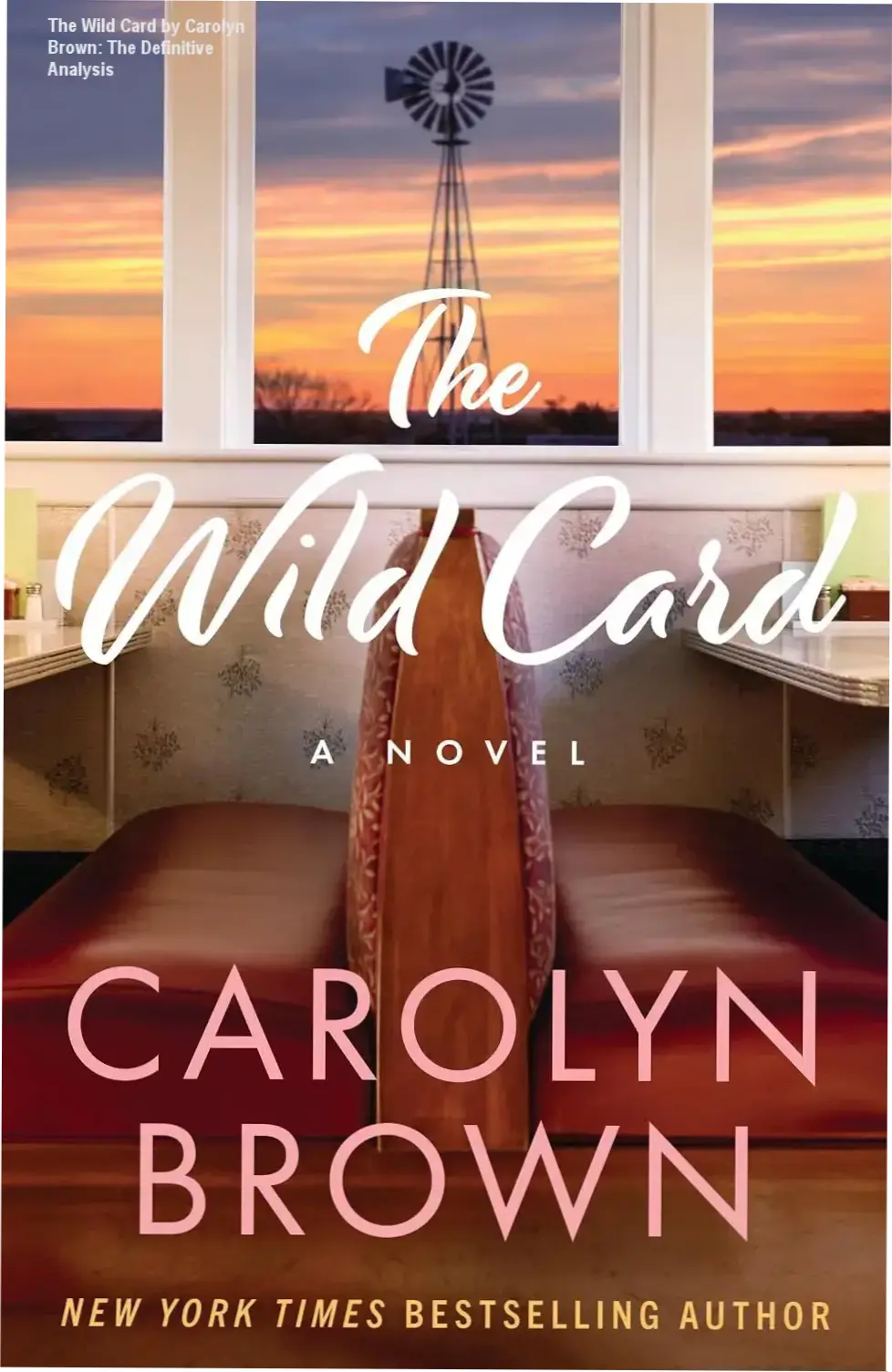
The Wild Card by Carolyn Brown: The Definitive Analysis
Most people spend their professional lives chasing a “big win,” believing that success is a destination reached through strategic risks and calculated moves. But there is a common, quiet desperation in the modern workforce—the desire to hit a reset button and trade a high-stress career for something tangible, like a small-town diner where the stakes are emotional rather than financial.
This specific fantasy of “starting over” is the engine that drives Carolyn Brown’s latest narrative. For readers who enjoy the intersection of high-stakes tension and domestic comfort, checking the current reception of The Wild Card reveals a pattern: it’s not just about the romance, but about the psychological relief of finding a place to belong when the world has stopped paying out.
Ready to dive into “The Wild Card”?
Explore available editions, check current live pricing, or download a free sample directly on Amazon.
Preview Free Sample & Check Price on Amazon
*You will be redirected to Amazon. As an Amazon Associate, we may earn from qualifying purchases.
Writing Style: The Art of the Breezy Narrative
Carolyn Brown doesn’t try to reinvent the wheel. She understands the “comfort read” market perfectly. Her prose is transparent, meaning it doesn’t get in the way of the story.
The pacing is brisk. At 270 pages, the novel avoids the common pitfall of mid-story stagnation. It moves with the efficiency of a professional dealer at a poker table.
Brown uses a conversational tone that mirrors the setting of a Texas diner. It feels lived-in. The dialogue is snappy and relies on the natural chemistry between the characters rather than forced exposition.
For a skeptical reader, the style might feel “too safe.” There are few linguistic risks here. However, in the romance genre, predictability is often a feature, not a bug.
Narrative Structure: Poker Metaphors and Emotional Stakes
The brilliance of the plot lies in its central metaphor. Carla Wilson is a professional poker player. Her life has been defined by “reading” people and calculating odds.
When she inherits the Tumbleweed Bus Stop and Diner, the narrative shifts. She is forced to move from a world of calculated deception to a world of radical honesty.
The structure follows a classic “fish out of water” arc. We see Carla struggle with the lack of control in a small town, where the “regulars” are the ones who hold the power.
The tension isn’t derived from whether the couple will end up together—we know they will—but from whether Carla will allow herself to stop calculating and start feeling.
“Maybe Lady Luck knew exactly what she was doing from the start.” This line encapsulates the book’s philosophy: the best things in life are often the ones we didn’t bet on.
Character Analysis: The Clash of Two Worlds
Carla is an interesting protagonist because she starts the book as a nomad. Her “wandering soul” is a shield against intimacy. She treats life like a game of Texas Hold ‘em.
Then there is Jackson Armstrong. He provides the perfect foil. As an ex-military heir to an oil fortune, he possesses a stability that Carla lacks, but he also carries his own weight of expectation.
The dynamic between them is built on mutual recognition. Both are tired of the roles they are expected to play. Jackson doesn’t see a “poker player”; he sees a woman looking for a home.
The supporting cast—the motherly cook and the sunny waitress—serves as the emotional anchor. They represent the community that Carla has spent her life avoiding.
| Character | Archetype | Core Conflict |
|---|---|---|
| Who Should Actually Read This? The Wild Card is precision-engineered for the “comfort reader.” If your ideal weekend involves a Hallmark movie or a cozy small-town mystery where the community eventually embraces the outsider, this is your target. It appeals specifically to those who enjoy the “fish out of water” trope combined with a slow-burn romance. The narrative works best for readers who prioritize emotional resolution over complex plot architecture. It’s a low-stress experience designed to provide an escape into a romanticized version of rural Texas. Who Should Skip ItAvoid this book if you are looking for a gritty, technical deep dive into professional poker. Despite the protagonist’s background, the cards are a catalyst for the plot, not the primary focus. You should also skip this if:
Value Analysis & Common MisstepsAt 270 pages, the book is a lean read. The value here isn’t in “intellectual challenge” but in “emotional efficiency.” It delivers exactly what the genre promises without unnecessary filler. The most common purchasing mistake is expecting a high-stakes gambling drama. This is a romance novel first and a poker story second. If you buy this expecting Rounders, you will be disappointed. If you buy it expecting a heartfelt story about belonging, it’s a win. Editorial VerdictCarolyn Brown understands her audience perfectly. The pacing is steady, the characters are archetypal but likable, and the setting is evocative. While it doesn’t reinvent the romance genre, it executes the established formulas with professional polish. It is a safe, satisfying bet for anyone needing a mental break. For those undecided, the best way to gauge if the prose matches your taste is to check the latest reader reviews and samples on Amazon. Final Editorial Verdict“The Wild Card” delivers on its core promise for its intended audience, offering compelling insights without fluff. As highlighted in our detailed edition breakdown, its practical depth and readability are its greatest strengths. We also recommend checking the official Kindle sample and reader ratings before making your final purchase decision. *You will be redirected to Amazon. As an Amazon Associate, we earn from qualifying purchases. Posts Similares
|