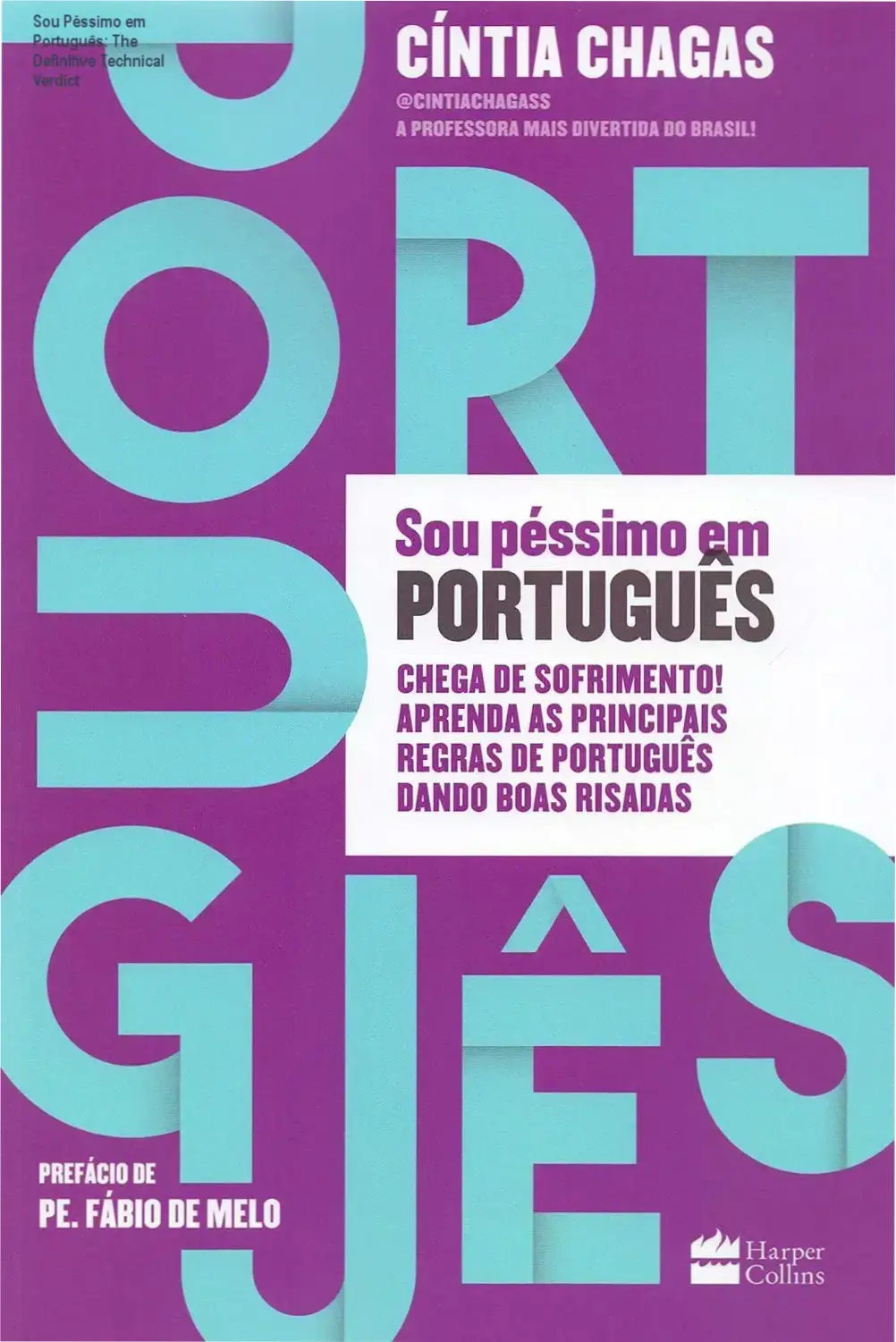
Sou Péssimo em Português: The Definitive Technical Verdict
We have all been there: staring at a professional email for ten minutes, paralyzed by a single doubt. Is it “assistir o” or “assistir ao”? Does “bastante” take an “s” in this specific sentence? For many, the Portuguese language feels less like a tool for communication and more like a minefield where one wrong step leads to social or professional embarrassment.
The anxiety of sounding “uneducated” often drives people toward dense, boring grammar manuals that feel like reading a legal contract. This is where Cíntia Chagas attempts to disrupt the market. Instead of rigid tables, she uses humor and irony to bridge the gap between academic correctness and daily usage. You can check the current reader reception and availability here to see if this unconventional method aligns with your learning style.
Ready to dive into “Sou Pessimo em Portugues”?
Explore available editions, check current live pricing, or download a free sample directly on Amazon.
Preview Free Sample & Check Price on Amazon
*You will be redirected to Amazon. As an Amazon Associate, we may earn from qualifying purchases.
The “Anti-Textbook” Strategy: Style and Pacing
Cíntia Chagas does not write a grammar book; she writes a series of comedic sketches that happen to teach grammar. The pacing is frantic and light, designed for the modern reader with a short attention span.
Most educational books fail because they prioritize the rule over the application. Chagas flips this. She starts with a relatable, often embarrassing, human situation—a bad date, a travel mishap, or a professional blunder—and uses that as the hook.
The grammar lesson is the “punchline.” By the time you realize you are learning the difference between “a longo prazo” and “em longo prazo,” you have already been entertained. This reduces the cognitive friction associated with studying a “difficult” subject.
However, from a skeptical perspective, this approach is a double-edged sword. While the humor makes the content digestible, the lack of a traditional linear structure means you cannot use this as a reference manual. You don’t “look up” a rule here; you stumble upon it through a story.
Core Narrative Structure and Practical Takeaways
The book is built on “micro-stories.” These are short, punchy narratives that isolate a specific linguistic error. This modular structure is perfect for those who can only spare 10 minutes a day to read.
The real-world value lies in the “low-hanging fruit.” Chagas focuses on the errors that most people make but few people correct. These are the “prestige” errors—the kind that make you look polished in a boardroom or an academic setting.
She tackles the common pitfalls of Brazilian Portuguese with a surgical precision, focusing on regency, agreement, and those annoying exceptions that usually require a PhD to memorize.
The takeaways are not theoretical. They are practical scripts. You learn not just the “why,” but the “how” to apply the rule immediately in your next WhatsApp message or corporate presentation.
| Feature | Traditional Grammar Book | “Sou Péssimo em Português” |
|---|---|---|
| Approach | Theoretical & Rule-based | Anecdotal & Humorous |
| Pacing | Slow, exhaustive | Fast, episodic |
| Retention | Rote memorization | Contextual association |
| Goal | Academic mastery | Social/Professional polish |
Expectation vs. Reality: Is it Actually “Educational”?
If you buy this book expecting a comprehensive guide to the Portuguese language, you will be disappointed. It is not a dictionary, nor is it a complete grammar course.
The “reality” is that this is a curation of the most common mistakes. It is a “cheat sheet” disguised as a memoir. For the average professional, this is exactly what is needed. For a linguist, it might feel superficial.
The author’s persona is a significant part of the product. Cíntia Chagas positions herself as the “grammar police” with a sense of humor. Some
Who This Book Is Actually For
This isn’t a textbook. If you are looking for a structured, academic course with exhaustive exercises and a formal syllabus, you are in the wrong place.
The ideal reader is the “grammar-phobic” professional. Someone who knows they make mistakes in emails or reports but finds traditional grammar books suffocating and boring.
It’s for those who learn better through association and storytelling rather than rote memorization. If you enjoy a sharp, slightly sarcastic tone and want to fix common errors (like the “assistir ao” vs “assistir o” dilemma) without feeling like you’re back in high school, this fits your profile.
Who Should Skip It
Avoid this book if you are a linguistics student or a professional editor seeking a comprehensive reference manual. Cíntia Chagas focuses on the most common pitfalls, not every obscure rule of the Portuguese language.
Also, if you are easily offended by a direct, “no-nonsense” teaching style, the author’s personality might clash with your learning preference.
The “Buyer’s Trap”: Managing Expectations
The biggest mistake buyers make is expecting a “quick fix” manual. You won’t find an index of every single rule here.
Instead, you get micro-stories. The grammar is the seasoning, not the main dish. The value lies in the memorability of the examples. You don’t just learn the rule; you remember the funny situation that illustrated it.
Value for Money: Is It Worth It?
From a purely technical standpoint, you could find these rules for free online. However, you aren’t paying for the rules; you’re paying for the curation and the delivery.
The “cost per insight” is low because the book is an easy read. It transforms a tedious task into entertainment. For the price of a paperback, the boost in professional confidence—knowing you aren’t making embarrassing mistakes in a board meeting—is a high return on investment.
If you want to see if the author’s tone aligns with your taste or check the latest reader feedback, you can examine the verified customer reviews on Amazon.
Final Editorial Verdict
“Sou Pessimo em Portugues – Chega de Sofrimento” delivers on its core promise for its intended audience, offering compelling insights without fluff. As highlighted in our detailed edition breakdown, its practical depth and readability are its greatest strengths.
We also recommend checking the official Kindle sample and reader ratings before making your final purchase decision.
*You will be redirected to Amazon. As an Amazon Associate, we earn from qualifying purchases.