The Correspondent by Virginia Evans: Expert Review & Verdict
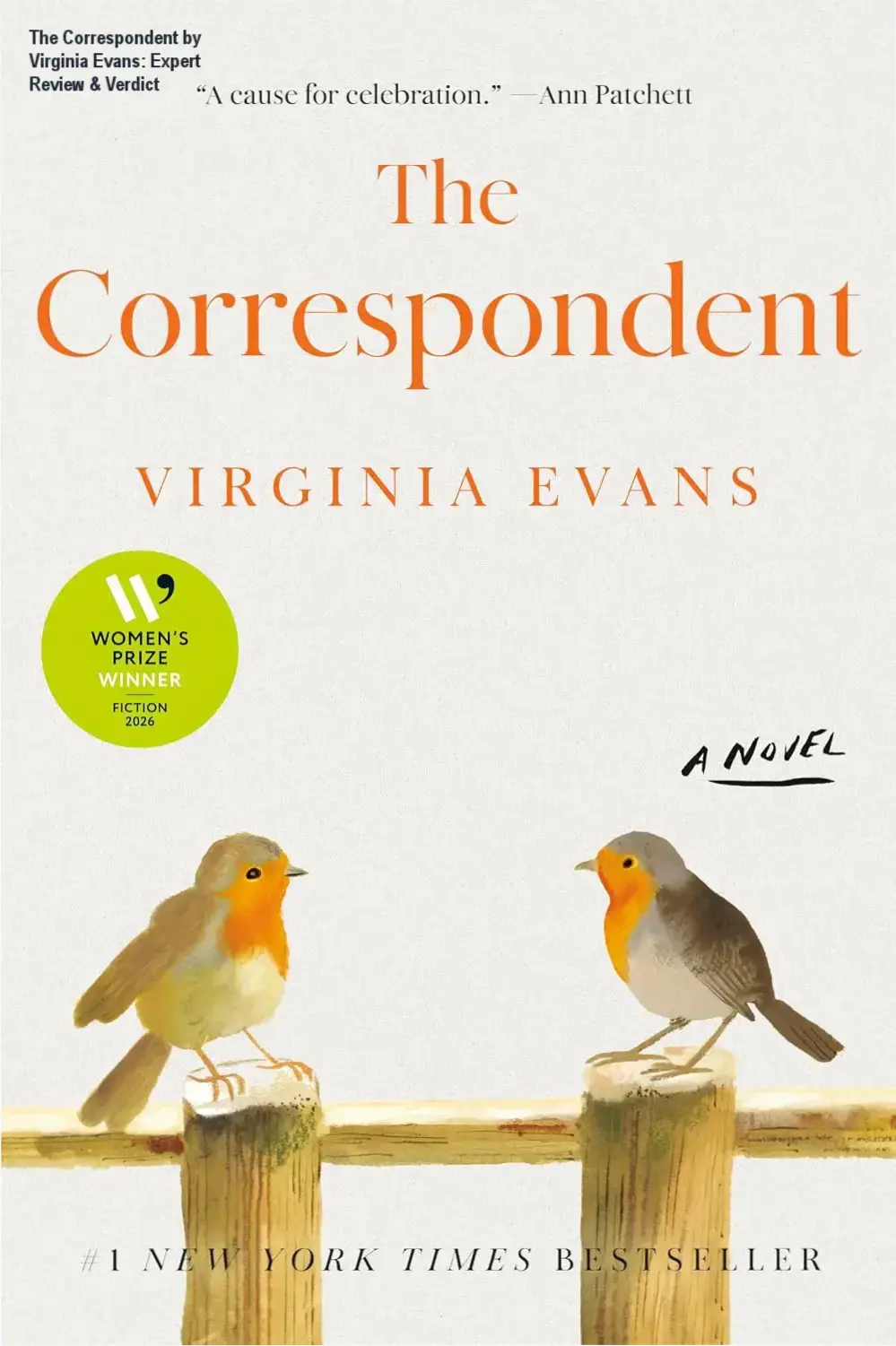
We spend our days drowning in notifications, yet starving for connection. The modern inbox is a graveyard of context—quick replies, reaction emojis, and threads that never truly resolve. We have confused communication with communion. This is the quiet crisis Virginia Evans walks into with The Correspondent. It is not a novel about the death of letter writing; it is a forensic examination of what we lost when we stopped waiting for the mail. The book arrives as a Los Angeles Times Book Prize winner and a New York Times #1 bestseller with over two million copies sold, but the sales figures are the least interesting thing about it. The real story is how a 291-page debut about an elderly woman writing letters became a word-of-mouth phenomenon in a market obsessed with high-concept thrillers. Readers are not buying a plot; they are buying a pace of life they miss. You can check the current reader reception and available editions right here.
The premise sounds deceptively slight on paper. Sybil Van Antwerp writes letters. That is the engine. She writes to her brother, her best friend, authors she admires, and a university president denying her an audit. Most crucially, she writes to one person she never sends the letter to. The tension isn’t “what happens next,” but “what happened then.” Evans structures the revelation like archaeology. We get the polished surface of Sybil’s present—distinguished lawyer, grandmother, divorcee—before the letters from the past crack the foundation. It is a masterclass in the unreliable narrator, except Sybil isn’t lying to us; she is lying to herself. The “transformative power of the written word” mentioned in the blurb isn’t a theme. It is the mechanism of the plot.
Ready to dive into “The Correspondent”?
Explore available editions, check current live pricing, or download a free sample directly on Amazon.
Preview Free Sample & Check Price on Amazon
*You will be redirected to Amazon. As an Amazon Associate, we may earn from qualifying purchases.
The Architecture of Slowness: Style and Pacing
Evans does not write “fast.” She writes deep. The prose mimics the physical act of handwriting—deliberate, weighted, irreversible. There is no delete key in Sybil’s world. This creates a specific reading friction that feels alien at first. The first fifty pages demand surrender. You cannot skim this book. Skimming breaks the logic of the epistolary form because the subtext lives in the salutations, the crossed-out words (implied), and the gaps between correspondence.
Readers on Goodreads frequently describe the opening as “slow to start” or “meandering.” That is a feature, not a bug. The pacing is diegetic. It matches Sybil’s metabolism. She is in her eighties. Her time is different. The novel forces the reader into “Sybil Time.” By the midpoint, the slowness reveals itself as tensile strength. The payoff lands harder because the foundation was poured slowly. One verified Amazon reviewer noted: “I almost put it down at page 40. By page 200, I was weeping. The slowness was the point.”
The “quietly dazzling” prose style noted by The New York Times relies on restraint. Evans rarely deploys pyrotechnics. She uses precision. A description of Sybil’s morning routine—tea, paper, pen—grounds the metaphysical themes in tactile reality. This groundedness prevents the “letters to famous authors” conceit from feeling gimmicky. The letters to Joan Didion and Larry McMurtry aren’t fan service; they are Sybil talking to her intellectual peers because her physical peers are gone. It is a profound portrait of intellectual loneliness.
Sybil Van Antwerp: A Character Study in Hubris and Grace
Sybil is not “likable” in the contemporary book-club sense. She is sharp, judgmental, privileged, and occasionally cruel. She uses her vocabulary as a weapon. She admits to “hubris of youth” but carries the hubris of age just as heavily. This is why she works. A saintly grandmother would be a caricature. Sybil is a person.
The central mystery—the unsent letter—acts as a gravitational center. We know the recipient before we know the crime. This dramatic irony shifts the reading experience from curiosity to dread. We are waiting for Sybil to catch up to herself. The “mistakes and acts of kindness” mentioned in the synopsis are not balanced
Who This Book Is Actually For
This novel lands best with readers who appreciate character-driven literary fiction over plot-heavy page-turners. If you loved Gilead or The Guernsey Literary and Potato Peel Pie Society, the epistolary rhythm here will feel familiar yet distinctively sharper. It suits the reader who enjoys “slow burn” narratives where the pleasure comes from voice, observation, and the accumulation of small details rather than cliffhangers.
Book clubs will find rich discussion material in the themes of aging, the unreliability of memory, and the ethics of unsent letters. It’s also a strong pick for anyone navigating midlife or later-life transitions—Sybil’s refusal to become invisible resonates deeply.
Who Should Probably Skip It
- Thriller or pacing junkies: The stakes are internal. There are no ticking clocks, just ticking hearts.
- Readers needing a tight cast: The letter format introduces many peripheral voices. It can feel fragmented initially.
- Anyone allergic to “cozy” aesthetics: Despite its literary heft, the cover and premise signal a gentleness that masks darker undercurrents. If you equate “quiet” with “lightweight,” you’ll misjudge this.
Common Purchasing Missteps
Don’t buy this expecting a romance novel. The “correspondent” dynamic suggests a pen-pal love story; it’s not that. The central relationship is Sybil with herself. Also, avoid the audiobook if you struggle with distinct voices—Sybil’s prose style is so specific that hearing it narrated can flatten the idiosyncrasies of her syntax. The print or Kindle edition preserves the visual layout of the letters, which matters structurally.
Contextual FAQ
Is it depressing? It deals with grief and regret, but the dominant tone is wry resilience, not despair. Think bittersweet, not tragic.
Do I need to know the literary references? No. References to Didion or McMurtry add texture for literary readers, but Sybil’s opinions stand on their own as character beats.
How long to read? 291 pages. Most readers finish in 4–6 sittings. The short letter chapters create natural stopping points.
Editorial Summary
The Correspondent earns its accolades by trusting the reader’s patience. It’s a masterclass in voice—Sybil Van Antwerp is that rare fictional creation who feels like she existed before page one and continues after the last. The epistolary constraint could feel gimmicky; instead, it becomes the novel’s argument: that writing is an act of witnessing, and witnessing is how we survive. The pacing drags slightly in the middle third when the historical flashbacks stall the present-day tension. But the payoff—the revelation of the unsent letter—lands with genuine emotional weight because Evans has earned it, sentence by careful sentence. For literary fiction fans, it’s a high-value purchase. For casual beach readers, it’s a mismatch. Check current reader sentiment and live pricing here.
Final Editorial Verdict
“The Correspondent” delivers on its core promise for its intended audience, offering compelling insights without fluff. As highlighted in our detailed edition breakdown, its practical depth and readability are its greatest strengths.
We also recommend checking the official Kindle sample and reader ratings before making your final purchase decision.
*You will be redirected to Amazon. As an Amazon Associate, we earn from qualifying purchases.