One Hot Summer Wedding Review: Forced Proximity Romance Verdict
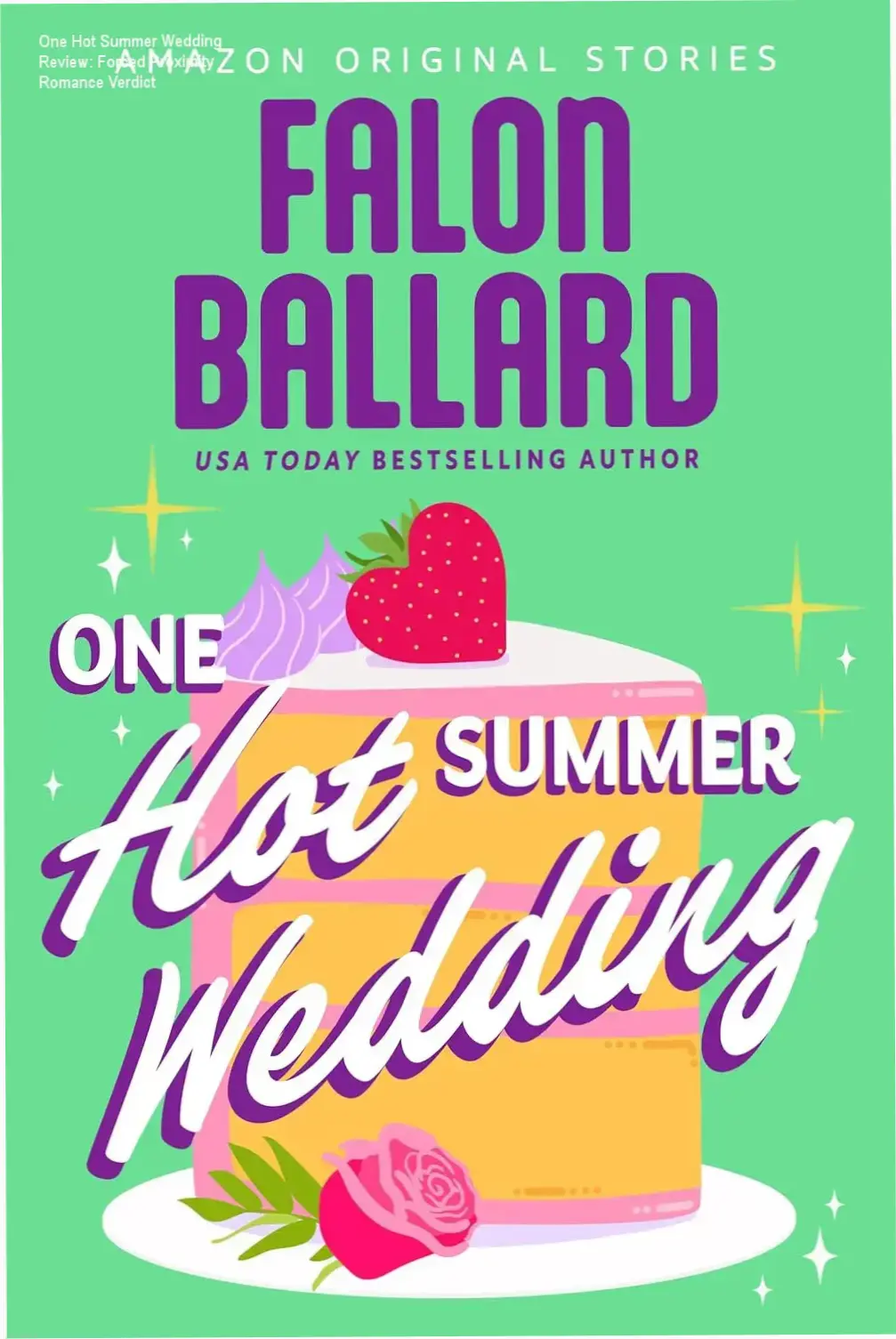
Summer reading lists are usually cluttered with doorstoppers that demand weeks of commitment, but sometimes the real challenge is finding a complete emotional arc you can finish before your sunscreen wears off. The novella format walks a razor-thin line: too short and the romance feels unearned; too long and it loses that “single sitting” appeal. Falon Ballard attempts this balancing act with a forced-proximity setup—ex-best friend’s wedding, sharing a room with the hot older brother—that is practically engineered for maximum tension in minimal pages. Readers craving that specific hit of nostalgia and heat without the filler can check the current Kindle price and sample chapters here.
The “Summer Lovin'” collection markets itself as “sweet and sultry,” a promise that sets a specific contract with the reader: low angst, high heat, guaranteed HEA. The risk with Book 3 of a 6-part interconnected series is context dependency. Does Lucy’s history with Sara and Beckett require reading the previous entries? The blurb suggests a standalone entry point, but series fatigue is real. Ballard has a solid track record with USA Today bestsellers, yet the 3.5-star average on 4,000+ Amazon ratings hints at a polarized reception—usually a sign that the “spice level” or the pacing missed the mark for a chunk of the target audience.
Ready to dive into “One Hot Summer Wedding”?
Explore available editions, check current live pricing, or download a free sample directly on Amazon.
Preview Free Sample & Check Price on Amazon
*You will be redirected to Amazon. As an Amazon Associate, we may earn from qualifying purchases.
The Novella Constraint: Pacing vs. Payoff
Fifty-three pages. That is the hard ceiling. In the romance genre, this length usually forces a choice: deep character study or high-concept trope execution. Ballard chooses the latter. The “one bed” trope is deployed immediately—chapter one, practically page one. There is zero fat on the bone. For the time-poor reader, this is a feature, not a bug. You get the meet-cute (re-meet), the forced proximity, the flashback exposition, and the resolution in roughly ninety minutes.
However, the compression shows in the emotional scaffolding. The “ten years estranged” backstory between Lucy and Beckett is told largely through internal monologue and rapid-fire dialogue dumps. We are told the wound is deep; we don’t always *feel* the decade of silence. Several Goodreads reviewers noted the “instalove” vibe creeping back in, arguing that the chemistry relies heavily on the reader accepting the *idea* of their history rather than witnessing it. If you need slow-burn tension, this is the wrong vehicle. This is a dragster: loud, fast, over in seconds.
The writing style is clean, dialogue-heavy, and cinematic. Ballard writes “visual” prose—Costa Rica humidity, the specific smell of rain on hot concrete, the tension of a shared bathroom counter. It translates well to the “beach read” goal. But the brevity forces a reliance on archetypes: the grumpy/sunshine dynamic, the protective brother, the misunderstood bad boy. They function as shorthand. Efficient? Yes. Memorable? Debatable.
Forced Proximity & The “One Bed” Mechanics
The central conceit—Lucy and Beckett sharing a hotel room due to a booking error—is the engine driving the plot. It is a classic for a reason: it strips away the ability to run. In a full novel, this lasts chapters. Here, it lasts scenes. The intimacy escalates rapidly: brushing teeth, changing clothes, the inevitable nighttime confession. Ballard handles the consent dynamics well; Beckett is careful, Lucy is agency-driven. It avoids the “dubcon” pitfalls that plague lesser entries in this trope.
Yet, the external conflict feels manufactured. The “misunderstanding” that drove them apart a decade ago resolves in a single conversation that feels anticlimactic given the buildup. Readers on Reddit’s r/romancebooks threads discussing the “Summer Lovin'” collection frequently cite this: the conflict resolution is *too* easy. The stakes evaporate the moment they speak honestly. Realistically, a ten-year rift involving family loyalty and teenage heartbreak requires more than a midnight chat to dismantle. The novella length simply
Who Should Buy This (And Who Should Skip)
This novella hits a very specific sweet spot: readers craving a complete romantic arc in the time it takes to drink a large coffee. If you enjoy the “Summer Lovin'” anthology vibe—low stakes, high heat, tropical escapism—this is the strongest entry so far. The forced proximity trope is executed with genuine tension rather than manufactured stupidity.
Ideal reader: Kindle Unlimited subscribers looking for a palate cleanser between heavy literary fiction or dense non-fiction. It works perfectly as a beach read, a flight companion, or a single-sitting decompression tool.
Skip it if: You require extensive world-building, complex subplots, or a slow-burn romance that spans years. This is a 53-page sprint. Character development happens through dialogue and internal monologue, not sweeping life events. Readers expecting a full-length novel structure will feel shortchanged by the abrupt “Happily Ever After” pacing.
Value Proposition: Price vs. Time
At 53 pages, the “cost per hour of entertainment” metric depends entirely on how you acquire it.
- Kindle Unlimited: Exceptional value. Zero marginal cost, high satisfaction per minute.
- Standalone purchase ($0.99 – $2.99 typical): Fair price for a curated short story, comparable to a premium magazine fiction piece.
- Audiobook (included in Audible Plus/Unlimited): High value. The narration adds texture to the “Costa Rica” atmosphere that the text only sketches.
A common misstep is buying Book 3 expecting a standalone novel with deep backstory for the whole series. It functions alone, but the emotional payoff relies on accepting the “estranged best friend” setup instantly. Don’t overthink the logistics of the invitation; lean into the romance logic.
Contextual FAQ
Do I need to read Books 1 & 2? No. Shared universe only. Different couples, same vibe.
Is it “spicy” or “sweet”? “Sweet and sultry” is accurate marketing. On-page heat is moderate (fade-to-black adjacent), emotional intimacy is the focus.
Cliffhanger? None. Complete HEA (Happily Ever After) within the page count.
Editorial Bottom Line
Ballard writes competent, comforting category romance. She respects the reader’s time. The prose won’t win awards for lyricism, but it disappears effectively, letting the chemistry drive the pace. For the price of a vending machine snack, you get a competent escape with a satisfying emotional resolution. If your TBR pile is full of 400-page doorstoppers, this is the strategic intermission you need. Check current pricing and reader sentiment here.
Final Editorial Verdict
“One Hot Summer Wedding” delivers on its core promise for its intended audience, offering compelling insights without fluff. As highlighted in our detailed edition breakdown, its practical depth and readability are its greatest strengths.
We also recommend checking the official Kindle sample and reader ratings before making your final purchase decision.
*You will be redirected to Amazon. As an Amazon Associate, we earn from qualifying purchases.