Pokécology: The Complete Scientific Dossier on Pokémon
Most Pokémon fans treat the Pokédex as a digital checklist—a set of stats, types, and brief, often contradictory snippets of lore. We accept that a Magcargo is hotter than the sun without questioning how that fits into a functioning planetary ecosystem. We play the game, but we rarely stop to ask how these creatures actually survive, hunt, or coexist in a wild environment.
This is where the gap between “gaming” and “world-building” opens up. For the collector or the curious mind, the desire isn’t just to catch them all, but to understand the biological logic behind them. You can check the reader reception to see how this book attempts to bridge that gap, transforming a gaming franchise into a legitimate study of fictional zoology.
Ready to dive into “Pokécology An Illustrated Guide to Pokémon Ecology”?
Explore available editions, check current live pricing, or download a free sample directly on Amazon.
Preview Free Sample & Check Price on Amazon
*You will be redirected to Amazon. As an Amazon Associate, we may earn from qualifying purchases.
The Academic Twist: When PhDs Analyze Pocket Monsters
Let’s be skeptical for a second. Usually, “illustrated guides” for franchises are just glorified art books with a few paragraphs of filler text. They are designed to be flipped through, not studied.
Pokécology breaks this mold by bringing in authors and illustrators who actually hold doctorate degrees in animal behavior and ecology. This isn’t just a marketing gimmick; it fundamentally changes the DNA of the content.
Instead of simply repeating Pokédex entries, the book applies actual biological principles to the Pokémon world. It looks at niche partitioning, symbiotic relationships, and evolutionary adaptations.
The result is a “pseudo-science” approach that feels authentic. It treats the Pokémon world as a real biome, analyzing why certain creatures evolved specific traits to survive in their respective habitats.
For the reader, this transforms the experience from a passive viewing of art to an active exercise in comparative biology. You aren’t just looking at a Pikachu; you’re looking at an electric-type rodent’s place in a food chain.
Visuals vs. Data: The Balance of Information
A book like this lives or dies by its layout. If it’s too text-heavy, it feels like a textbook; too image-heavy, and it’s just a sketchbook.
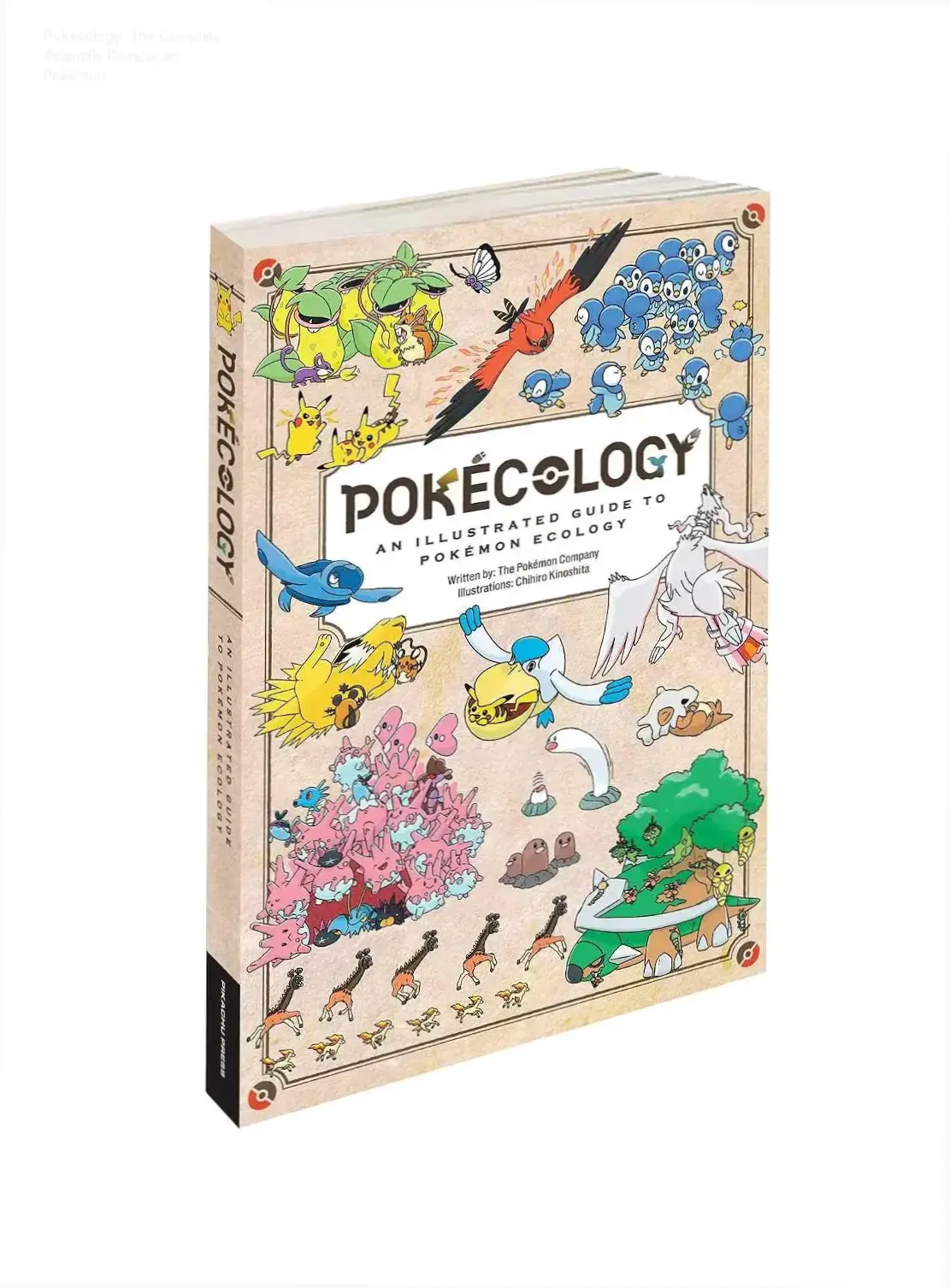
Pokécology manages a tightrope walk here. The illustrations are vivid and “spectacular,” as the description claims, but they serve a purpose. They aren’t just there to look pretty; they illustrate the ecological points being made.
The data is derived from the Pokédex, but it is synthesized. The book focuses on similarities and differences—grouping Pokémon not just by type, but by ecological function.
This structural choice allows the reader to see patterns. You begin to notice how different generations of Pokémon share biological markers, creating a cohesive sense of world-building that the games often ignore.
| Feature | Standard Guidebooks | Pokécology Approach |
|---|---|---|
| Content Source | Direct Pokédex Copy/Paste | Synthesized Ecological Analysis |
| Author Perspective | Corporate Writers | PhDs in Animal Behavior |
| Visual Goal | Aesthetic Appeal | Biological Illustration |
| Reading Goal | Reference/Collection | Conceptual Understanding |
Reading Experience and the “Age 8+” Paradox
The technical specifications list the reading age as 8 years and up. On the surface, this suggests a children’s book. In reality, this is a misnomer.
While the language is accessible enough for a 3rd grader, the conceptual depth is geared toward anyone with a passion for natural history. It’s a “gateway book.”
For a child, it’s an introduction to how ecology works. For an adult
Who Is This Actually For?
The Lore-Hunter. If you are the type of fan who spends more time reading Pokédex entries than actually battling, this is your goldmine. It transforms fragmented game data into a cohesive biological study.
The “Science-Curious” Child. With a reading age of 8+, it serves as a perfect bridge for kids to move from simple gaming to an interest in zoology and ecology, thanks to the academic background of the authors.
The Collector. Given the high-quality illustrations and the specific “field guide” aesthetic, it functions more as a coffee table piece than a paperback you toss in a backpack.
Who Should Skip This Book?
- Competitive Players: This is not a strategy guide. You will find zero tips on EVs, IVs, or competitive metas here.
- Casual “Quick-Look” Readers: If you want a simple list of Pokémon and their types, stick to a wiki. This book demands a slower, more analytical pace.
- Toddlers: Despite the colorful art, the conceptual depth of “ecology” and “behavioral analysis” will be lost on children under 8.
Value for Money: The Reality Check
At 208 pages, the value isn’t in the quantity of Pokémon covered, but in the depth of the perspective. You aren’t paying for a list; you’re paying for the synthesis provided by authors with PhDs in animal behavior.
The risk here is the “fan-tax.” Some might find it overpriced for a paperback. However, for those who value the intersection of science and fiction, the intellectual ROI is high.
Common Missteps to Avoid
Don’t buy this expecting a comprehensive encyclopedia of every single Pokémon ever created. It focuses on relationships and ecologies. It is a thematic study, not an exhaustive directory.
Editorial Verdict
Pokécology succeeds because it treats the Pokémon world with a level of seriousness that is rarely seen. It doesn’t just say “this Pokémon lives in the water”; it analyzes why its biology supports that habitat. It is a sophisticated piece of world-building that adds genuine weight to the franchise.
If you want to see how the community rates the accuracy of these ecological theories, you can check the latest user reviews and live pricing.
Final Editorial Verdict
“Pokécology: An Illustrated Guide to Pokémon Ecology” delivers on its core promise for its intended audience, offering compelling insights without fluff. As highlighted in our detailed edition breakdown, its practical depth and readability are its greatest strengths.
We also recommend checking the official Kindle sample and reader ratings before making your final purchase decision.
*You will be redirected to Amazon. As an Amazon Associate, we earn from qualifying purchases.