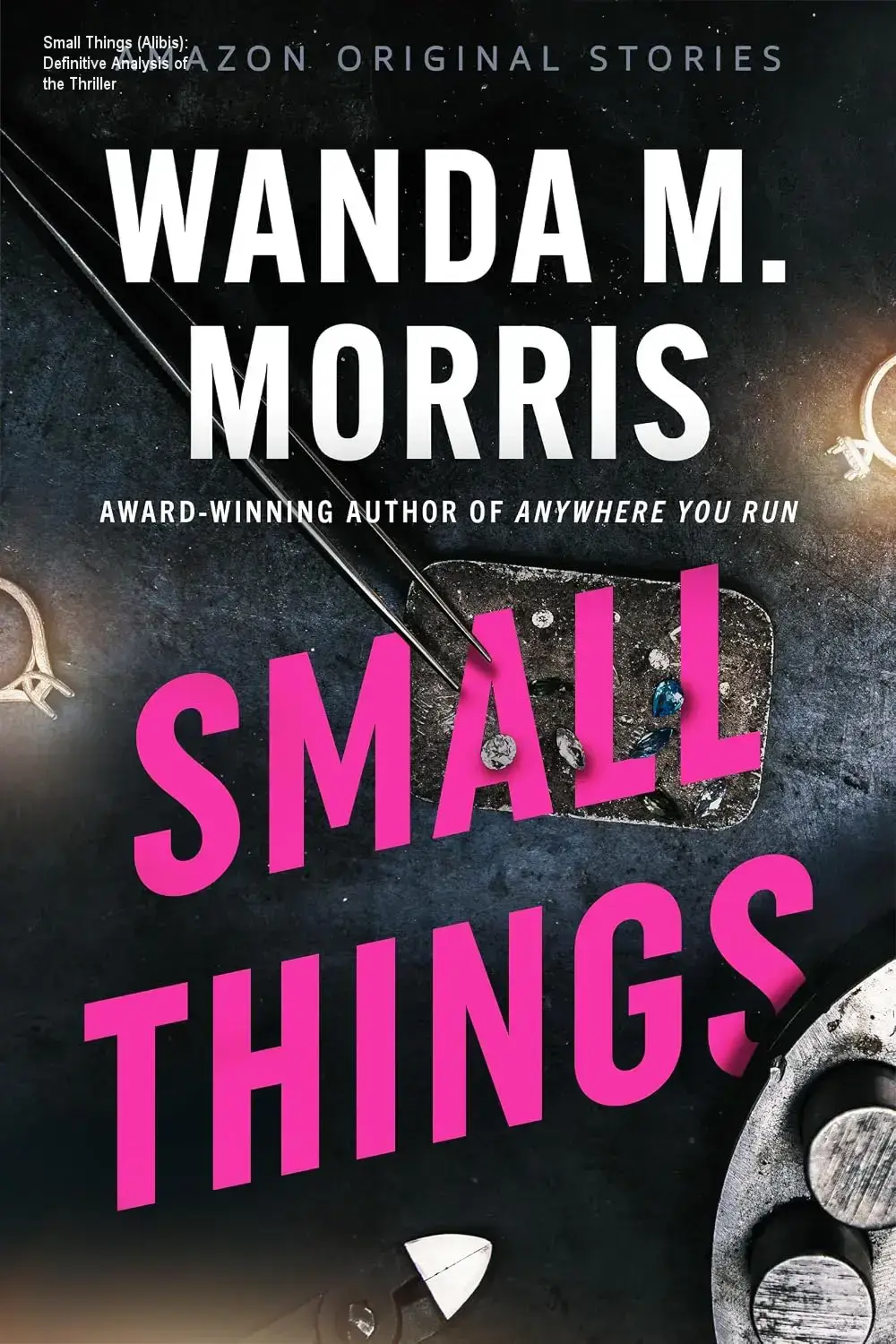
Domestic abuse rarely starts with a scream; it begins with the slow, methodical erosion of a partner’s autonomy. Most people imagine the “breaking point” as a sudden explosion, but for many, it is the loss of a tiny, insignificant sanctuary—a hobby, a hidden journal, or a quiet shed—that finally triggers the survival instinct.
Wanda M. Morris explores this psychological claustrophobia in “Small Things,” a lean, surgical entry in the Alibis collection. For readers seeking a sprawling epic, this 36-page story will be a shock, but for those who value narrative efficiency and high-tension stakes, it serves as a masterclass in the “short-form thriller.” You can check the current reader reception and pricing on Amazon to see if this bite-sized tension fits your current mood.
Ready to dive into “Small Things (Alibis collection)”?
Explore available editions, check current live pricing, or download a free sample directly on Amazon.
*You will be redirected to Amazon. As an Amazon Associate, we may earn from qualifying purchases.
Narrative Velocity and the Art of the Short Story
Writing a compelling thriller in 36 pages is a risky gamble. There is no room for subplots, no space for leisurely character development, and absolutely zero tolerance for filler. Morris understands this. The prose is stripped down, mirroring the protagonist Hannah’s own stripped-down existence.
The pacing doesn’t just move; it accelerates. From the first page, the reader is dropped into the stifling atmosphere of Hannah’s marriage. The contrast is sharp: the external “good life” versus the internal “emotional nightmare.”
This isn’t a slow burn. It’s a flash fire. The narrative structure is designed to lead you toward a single, inevitable conclusion, making the reading experience feel less like a novel and more like a high-tension short film.
However, the brevity is a double-edged sword. Some readers on Goodreads have noted that the emotional payoff can feel rushed. When you have only a few thousand words, the transition from “victim” to “architect of a plan” happens with a speed that might leave some skeptical about the character’s psychological shift.
The Symbolism of “Small Things”
The jewelry Hannah crafts isn’t just a hobby; it’s her only remaining tether to her own identity. In the context of abusive dynamics, the “small things” are often the only things the victim can control. When her husband threatens this final sanctuary, the stakes shift from emotional survival to physical liberation.
Morris uses the jewelry-making process as a metaphor for the crime Hannah is planning. Both require precision. Both require a steady hand. Both involve taking raw materials and shaping them into something permanent and cold.
“Hannah has a plan. Now it’s just a matter of pulling it off without leaving a single trace behind.”
This line encapsulates the core tension of the story. The transition from the creative act of making jewelry to the creative act of erasing a human being is where the story finds its dark, compelling irony.
From a technical standpoint, this thematic link prevents the story from being a generic “domestic noir” piece. It gives the plot a specific texture that lingers after the final page is turned.
Expectation vs. Reality: The Reader’s Verdict
Coming into “Small Things,” many readers expect a full-length psychological thriller. They are often surprised—and sometimes annoyed—by the Kindle Original format. This is a “one-sitting” read, designed for the modern attention span.
Analyzing the 3.6 to 3.9 rating spread across Goodreads and Amazon reveals a clear divide. The critics generally fall into two camps: those who find the length insufficient for deep character exploration, and those who praise the “punch-to-the-gut” efficiency of the plot.
If you are looking for a complex study of trauma, this isn’t it. If you are looking for a tight, deceptive plot about a woman taking her power back in the most permanent way possible, it hits the mark.
Who Should Actually Read This?
Small Things is not for the casual reader looking for a slow-burn novel. It is designed for the “high-intensity” reader. Specifically, those who enjoy domestic noir and psychological tension that peaks quickly.
If you appreciate the “one-sitting” experience—where the atmosphere is claustrophobic and the stakes are immediate—this fits your profile. It appeals to readers who value narrative efficiency over sprawling world-building.
Who Should Skip It?
You should probably pass on this if you have a low tolerance for stories centered on domestic abuse. The tension is derived from a nightmare scenario that some find too triggering or oppressive.
Additionally, skip this if you are looking for a complex, multi-layered plot with dozens of characters. With only 36 pages, there is no room for subplots. It is a laser-focused strike on a single emotional theme.
The “Value for Money” Reality Check
The most common purchasing mistake here is ignoring the print length. Some readers buy this expecting a full-length thriller and feel cheated by the page count.
However, viewed as a “Kindle Original Story,” the value isn’t in the quantity of words, but in the compression of tension. You aren’t paying for a journey; you’re paying for a precise, haunting vignette.
Quick Analytical FAQ
Is it a standalone? Yes, though part of the Alibis collection, it functions as a self-contained piece of deception.
How long does it take to read? Approximately 45 to 90 minutes, depending on your pace.
Is the ending satisfying? It follows the “Alibis” logic: it’s about what you can get away with, not necessarily a traditional “justice” arc.
Editorial Conclusion
Wanda M. Morris succeeds in creating a suffocating atmosphere in a very limited space. The jewelry-making metaphor serves as a sharp contrast to the brutality of the marriage, making the “small things” feel monumental.
It is a clinical study of desperation. If you want a quick, dark dose of psychological suspense without the fluff of a 400-page novel, this is a strategic choice. You can verify the current pricing and read actual buyer experiences via the official Amazon listing.
Final Editorial Verdict
“Small Things” delivers on its core promise for its intended audience, offering compelling insights without fluff. As highlighted in our detailed edition breakdown, its practical depth and readability are its greatest strengths.
We have spent decades arguing whether “they” are out there, trapped in a loop of grainy footage and government denials. But the conversation has shifted. The real tension now lies in the uncomfortable intersection where cutting-edge artificial intelligence meets ancient, unexplained encounters. Most readers enter this topic expecting a conspiracy manifesto. Instead, D. W. Pasulka…
We need to produce the first part of a professional analytical book review for the book “{{BOOK_TITLE}}” by {{AUTHOR_NAME}}. We must output only English, using HTML tags as specified: , , , , , , , , , . Must start with a paragraph of contextualization. Must not start with heading tags. Must include exactly…
We have an innate, almost pathological obsession with the lives of people who seem to have it all. Whether it is scrolling through a curated Instagram feed or peering through a fence, the human brain craves the gap between the public facade and the private mess. This voyeuristic impulse is the engine that drives psychological…
Finding a story that balances intense, uninhibited passion with complex emotional stakes is a rare feat in the crowded romance market. Many readers seek an escape from the mundane, looking for narratives that explore the darker, more primal sides of human desire without losing the heart of the characters. Marni Mann’s latest installment addresses the…
Most of us treat travel as an escape—a way to mute the noise of a failing marriage or a shattered career for a few weeks. We imagine that changing our coordinates on a map will magically reset our internal compass. But the reality is usually different: you just take your baggage to a prettier location….
The “enemies-to-lovers” trope is the backbone of commercial romance, but few authors manage to make a generations-old blood feud feel like a suffocating, immediate threat rather than a convenient plot device. Usually, the family conflict resolves the moment the leads kiss; in Emily McIntire’s Burning Daylight, the kiss is exactly where the nightmare begins. This…