Burning Daylight Review: Dark Romance, Feuds & HEA Verdict
The “enemies-to-lovers” trope is the backbone of commercial romance, but few authors manage to make a generations-old blood feud feel like a suffocating, immediate threat rather than a convenient plot device. Usually, the family conflict resolves the moment the leads kiss; in Emily McIntire’s Burning Daylight, the kiss is exactly where the nightmare begins. This is not a story about misunderstanding—it is a story about structural incompatibility, where the male lead’s very existence is an act of war against the female lead’s lineage. Readers tired of low-stakes banter masquerading as tension will find the stakes here are existential, not just emotional. You can check the current reader reception and available editions here.
McIntire has built a reputation for “gritty contemporary romance,” a label that often signals trauma plots without narrative payoff. Burning Daylight attempts to subvert that expectation by delivering a guaranteed HEA (Happily Ever After) within a single volume, despite being Book 1 of a series. The marketing promises darkness—trigger warnings are front-loaded—and the 505-page length suggests a marathon, not a sprint. The question isn’t just *if* they get together, but *how* a relationship survives when the foundation is built on lies, omission, and the kind of secrets that get people killed in Rosebrook Falls.
Ready to dive into “Burning Daylight”?
Explore available editions, check current live pricing, or download a free sample directly on Amazon.
Preview Free Sample & Check Price on Amazon
*You will be redirected to Amazon. As an Amazon Associate, we may earn from qualifying purchases.
Writing Style, Pacing, and the “Gritty” Label
McIntire writes with a cinematic velocity that masks the page count. The prose is accessible, dialogue-heavy, and ruthlessly paced for the first 60%. We open in media res—anonymous encounter, instant chemistry, zero exposition dump. This is a deliberate structural choice. By stripping names and history, the author forces the reader to bond with the dynamic before the context poisons it.
The “gritty” descriptor earns its keep through texture, not just trauma. Rosebrook Falls feels like a character: oppressive, humid, smelling of old money and older blood. The Montgomery and Calloway estates aren’t backdrops; they are panopticons. However, the middle third suffers from “secret-keeping bloat.” Roman’s refusal to disclose his identity—understandable strategically—becomes repetitive internally. Juliette’s internal monologue circles the same realizations: he lied, I’m hurt, but the chemistry. Goodreads reviewers frequently flag this “miscommunication drag” as the primary reason for 3-star ratings.
Pacing accelerates violently in the final act. The shift from romance to romantic suspense is abrupt. Action sequences—chases, confrontations, the inevitable confrontation with the patriarchs—are written with a clarity that many dark romance authors lack. You always know where bodies are in space. The epilogue delivers the promised HEA, but it feels earned through blood, not just paperwork.
Core Narrative Structure: Feud as Architecture
The Montgomery-Calloway feud isn’t flavor text; it is the plot engine. This is Romeo and Juliet if Romeo was a hidden weapon raised in the dark and Juliet was the polished daughter of the man who ordered the hit. The “interconnected standalone” label is accurate: the central arc closes, but the board is reset for the siblings’ stories (Books 2 and 3).
Structure-wise, the novel operates in three distinct gears:
- Act I (The Lie): Anonymous meet-cute. High heat, zero stakes. The strongest section.
- Act II (The Fallout): Identity reveal. The “impossible” phase. Heavy on internal conflict, lighter on external plot movement.
- Act III (The War): External forces converge. Fathers, brothers, hitmen. The romance becomes a survival mechanism.
Readers on Reddit’s r/RomanceBooks often compare this structure to The Godfather meets Cruel Intentions. The comparison holds. The “secret heir” trope (Roman) is executed
Who This Book Is For (And Who Should Skip It)
This hits the sweet spot for readers who crave high-stakes angst wrapped in a “touch her and die” obsession. If you devoured the Kingmakers series or crave the toxic-yet-magnetic tension of The Kiss Thief, the Montgomery-Calloway feud delivers that specific dopamine hit. The “secret heir” trope is executed with genuine grit; Roman isn’t just brooding—he’s calculated.
Hard pass if: You need a slow-burn friendship foundation. The insta-lust here is nuclear, bordering on insta-love, justified only by the “fated mates” energy the marketing leans into. Trigger warnings are extensive (SA, abuse, graphic violence)—this isn’t a cozy enemies-to-lovers palate cleanser. It’s dark romance wearing contemporary clothing.
Value Proposition: Hardcover vs. Kindle vs. KU
At 505 pages, the Kindle edition is the smart play for a debut series entry. You’re buying into a trilogy arc; digital lets you bail instantly if the Montgomery brothers’ spin-offs don’t hook you. Paperback quality reports are mixed—some copies arrive with spine cracking. If you’re a collector waiting for the special edition sprayed edges, wait for Book 3’s release bundle. Kindle Unlimited subscribers: Check enrollment status before clicking; Emily McIntire titles rotate in and out of KU unpredictably.
Common Buying Mistakes
- Expecting a standalone HEA that resets the board. The couple gets their ending, but the epilogue sets up the next brother’s chaos explicitly. You are buying a series commitment.
- Confusing “gritty” with “literary.” Prose is functional, dialogue-heavy, and paced for binge-reading. Don’t expect lyrical introspection.
- Ignoring the CW list. The “Reader Discretion Advised” note isn’t boilerplate. The opening chapters are visceral.
Quick FAQ
Is it necessary to read the Kingmakers series first? No. Interconnected world, distinct entry point. Easter eggs exist, but zero required context.
How “dark” is dark? Think captivity dynamics, moral ambiguity, and a hero who kills efficiently. It sits comfortably next to Rina Kent or Danielle Lori, lighter than J.D. Barker.
Cliffhanger? Couple arc: Resolved. Series arc: Wide open.
Editorial Bottom Line
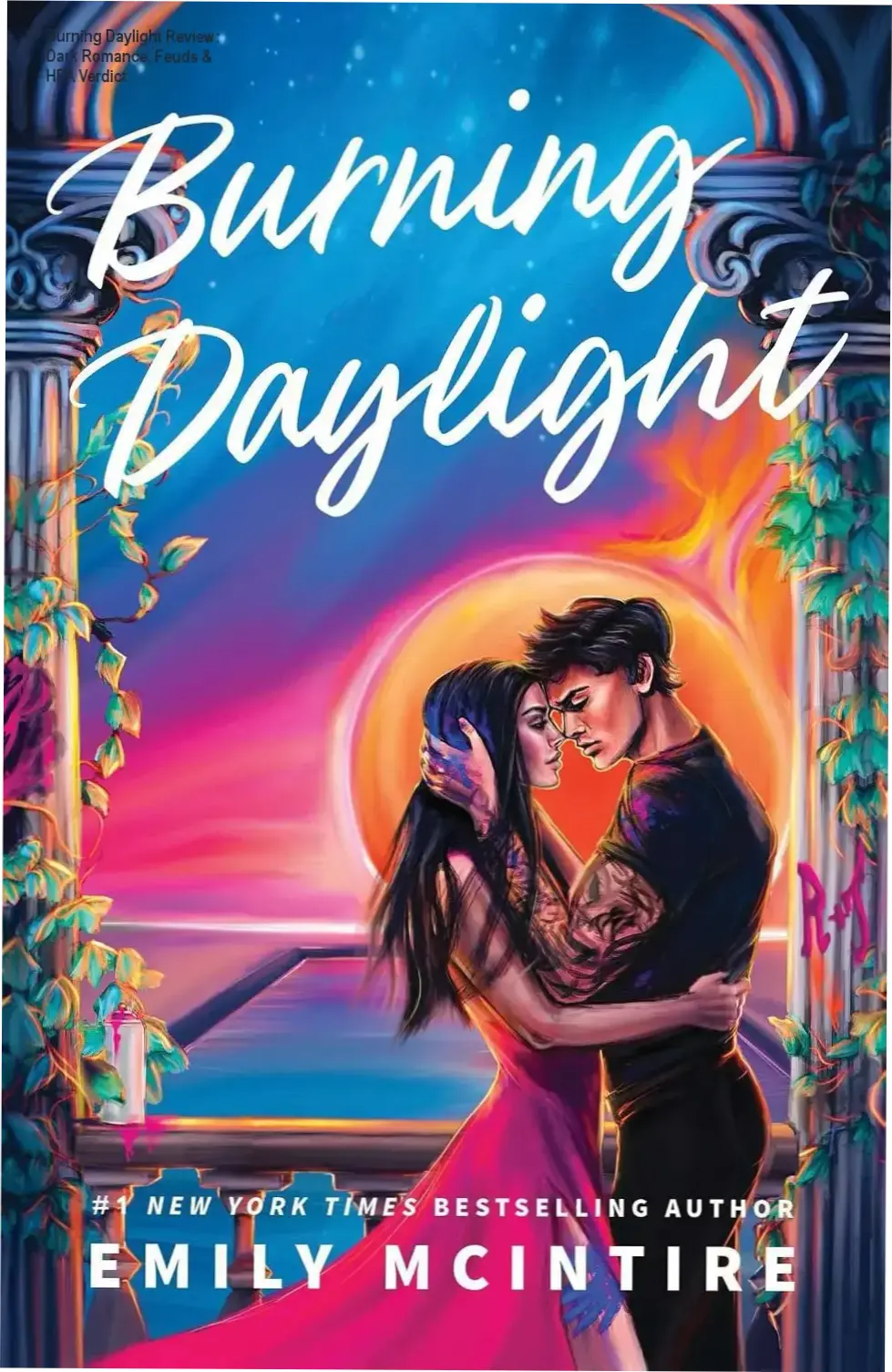
Burning Daylight delivers exactly what the cover promises: a violent, sexy, fast-paced entry ticket to a new mafia dynasty. It won’t convert genre skeptics, but it satisfies the core demographic with ruthless efficiency. The pacing drags slightly in the mid-section “hiding out” sequence, but the third act pays off the tension. For the current price point, it’s a competent commercial purchase. Check live discounts and verified reader sentiment here before the next brother drops.
Final Editorial Verdict
“Burning Daylight” delivers on its core promise for its intended audience, offering compelling insights without fluff. As highlighted in our detailed edition breakdown, its practical depth and readability are its greatest strengths.
We also recommend checking the official Kindle sample and reader ratings before making your final purchase decision.
*You will be redirected to Amazon. As an Amazon Associate, we earn from qualifying purchases.