A Parade of Horribles: Definitive Finale Analysis
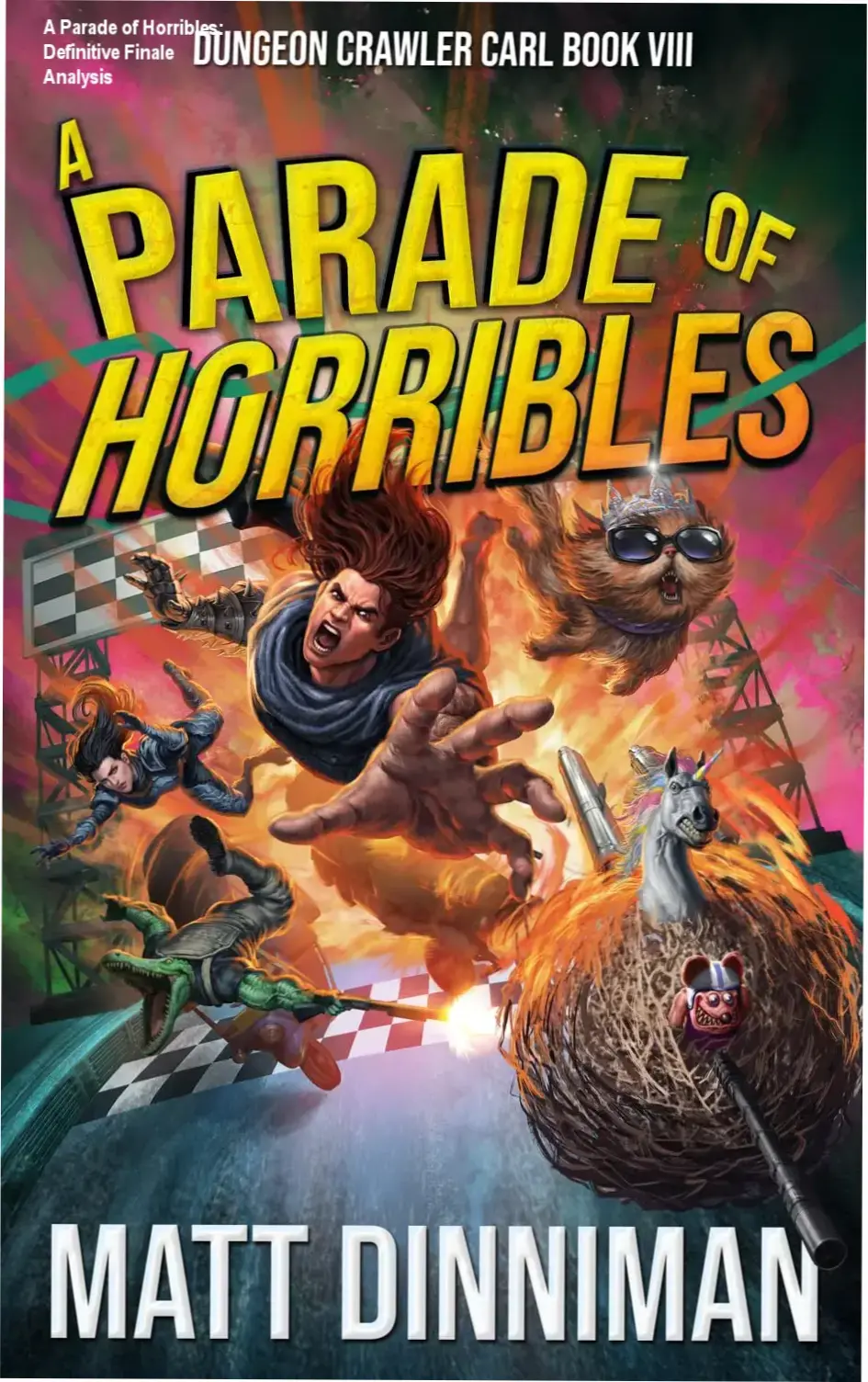
The problem with most long-running LitRPG series isn’t the power creep; it’s the emotional dilution. You invest years watching a character optimize builds and exploit system mechanics, only to realize the author forgot to make you care about the person holding the sword. Matt Dinniman’s Dungeon Crawler Carl has never had that problem. It hid a beating heart inside a cathode-ray tube of violence, memes, and cat propaganda. Now, with A Parade of Horribles, the eighth and final volume, the bill comes due. The race on Floor Ten feels like a breather—a Mario Kart interlude with vehicle upgrades and track hazards—but the glitches at the edges of the simulation tell a different story. The System AI calls the eleventh floor “a coming-out party for the ages.” Carl calls it a trap he intends to break. If you’ve been here since the apocalypse started in a boxer short aisle, you already know the stakes aren’t XP anymore. They’re existential. You can check the current reader reception and editions here before the spoilers find you.
This isn’t just a finale; it’s a referendum on agency. For seven books, Carl and Donut have been pawns in a galactic reality show, dancing for alien subscribers and sadistic producers. Floor Ten strips away the illusion of choice with scripted races, forcing Carl into a corner where the only winning move is flipping the table. The narrative tension shifts from “can he survive?” to “can he remain himself while dismantling the game?” That distinction separates a satisfying ending from a mere conclusion. The 766-page count suggests Dinniman isn’t rushing the goodbye, but page count is a vanity metric. The real question is density: does every race, every upgrade, every whisper about Floor Eleven earn its weight in narrative gold?
Ready to dive into “A Parade of Horribles: Dungeon Crawler Carl, Book 8”?
Explore available editions, check current live pricing, or download a free sample directly on Amazon.
Preview Free Sample & Check Price on Amazon
*You will be redirected to Amazon. As an Amazon Associate, we may earn from qualifying purchases.
The Racing Mechanic: Gameplay as Narrative Cage
On paper, a racing arc in a dungeon crawler sounds like filler. In practice, it’s a brilliant structural metaphor. The forced vehicle upgrades—choosing between shield generators, spike launchers, or glitch exploits—mirror Carl’s entire journey: optimizing a build he never chose for a game he hates. The tracks escalate from “avoid lava” to “physics is a suggestion,” perfectly pacing the rising systemic instability.
Readers on Reddit’s r/litrpg and r/dungeoncrawlercarl noted the jarring normality of the early races. “It feels wrong on purpose,” one top comment read. “Like the System is gaslighting us.” That friction is the point. The races deny Carl his signature chaos. He can’t talk his way out, hack the lore, or brute-force a unique solution. He has to drive. Fast. The removal of agency is the antagonist here, not the other racers.
But the mechanic serves a second master: the supporting cast. With Carl isolated in his own head (or comms), the POV shifts distribute the emotional labor. We get critical screen time for Princess Donut, Mordecai, and the AI companions. Their banter during the “downtime” between races carries the character work. It’s a smart way to service a massive ensemble without grinding the plot to a halt.
Donut’s Arc: The Anchor in the Storm
If Carl is the fist, Donut is the compass. Book 8 leans hard into her perspective, and it’s the series’ strongest writing. The “cat princess” joke matured into a legitimate sovereign entity centuries ago, but here she grapples with mortality—hers and Carl’s. The whispers about Floor Eleven affect her differently. She sees the code. She hears the real administrators.
There’s a specific sequence mid-book—no spoilers—where Donut makes a choice that violates her core programming. The Goodreads threads exploded over it. “Best character moment in 8 books,” one reviewer wrote. “Dinniman made me cry over a cat choosing a toy mouse over godhood.” It works because it’s earned. Her evolution from loot-obsessed sidekick to the moral center of the resistance feels inevitable in retrospect.
The dynamic shifts subtly. Carl protects Donut. Donut saves Carl’s soul. That reciprocity is the series’ thesis statement: survival is a team sport, even when the game forces solo queue.
The Glitches and the Eleventh Floor: Horror inWho Should Read This—and Who Should Skip It
This entry is strictly for series veterans. If you haven’t survived the first seven books, the emotional weight and intricate callbacks will fall flat. The narrative assumes deep familiarity with Carl’s trauma, Donut’s evolution, and the systemic absurdity of the crawler hierarchy.
Ideal readers crave high-stakes LitRPG progression fused with genuine character study. You want the numbers to matter, but you stay for the gallows humor and the found-family dynamic. The vehicle-racing mechanic on Floor 10 sounds gimmicky in isolation; in context, it’s a pressure cooker for Carl’s control issues.
Skip this if you prefer standalone arcs or dislike “system apocalypse” tropes that lean heavily into meta-commentary. The pacing is deliberate—setup heavy, payoff delayed. Readers expecting constant dungeon delving action might find the “race” format repetitive until the narrative rug gets pulled.
Common misstep: buying the Kindle edition expecting a quick weekend read. At 766 pages, this is a doorstopper. The density of stats, skill trees, and faction politics demands focus. Audiobook listeners get Jeff Hays’ stellar performance, which adds significant value for the runtime.
Value Proposition: Hardcover vs. Digital vs. Audio
The Kindle price point sits at a premium for a digital license, typical for major Tor releases. The hardcover is a collector’s item—foil stamping, deckled edges, the works. If you own the previous seven in hardcover, you buy the eighth to complete the shelf. No debate.
Value calculation: $15–$20 for 30+ hours of entertainment (reading) or 40+ hours (audio). That’s pennies per hour. The real cost is emotional bandwidth. Dinniman doesn’t write popcorn fluff; he writes catharsis disguised as a game show.
One caveat: the publication date is May 2026. Pre-orders lock in price protection, but early reviews are scarce. Trust the track record. Seven books of consistent quality is a stronger signal than any advance blurb.
Quick Contextual FAQ
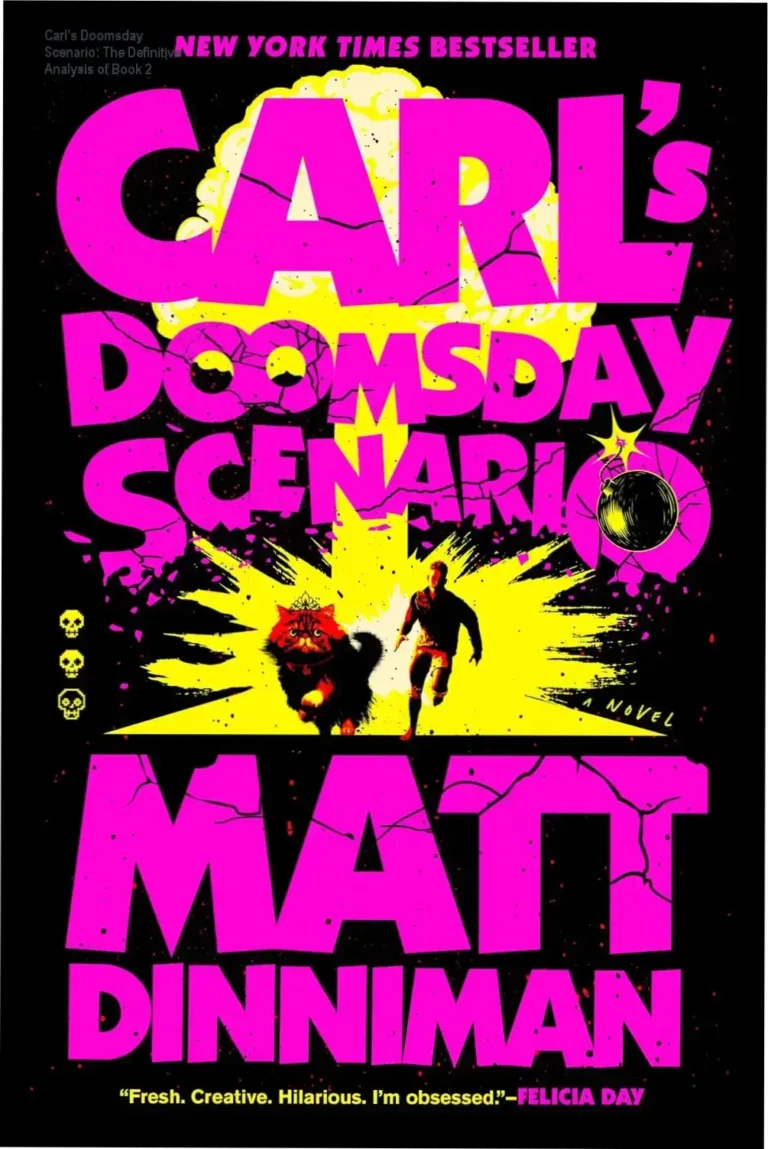
- Do I need to read the side stories? Yes. The Butcher’s Masquerade and Carl’s Doomsday Scenario are referenced. Skipping them creates blind spots.
- Is this the final book? Marketed as “Book 8 of 8,” but the epilogue structure leaves the door cracked for spin-offs. Treat it as a saga conclusion, not necessarily a universe conclusion.
- How brutal is the “Parade”? Expect significant character casualties. Plot armor is thinner than Floor 1 ice.
For readers ready to finish the fight, the conclusion delivers on eight books of promises. You can secure your copy here before the system crashes.
Final Editorial Verdict
“A Parade of Horribles: Dungeon Crawler Carl, Book 8” delivers on its core promise for its intended audience, offering compelling insights without fluff. As highlighted in our detailed edition breakdown, its practical depth and readability are its greatest strengths.
We also recommend checking the official Kindle sample and reader ratings before making your final purchase decision.
*You will be redirected to Amazon. As an Amazon Associate, we earn from qualifying purchases.