Whistler by Ann Patchett: Expert Literary Analysis
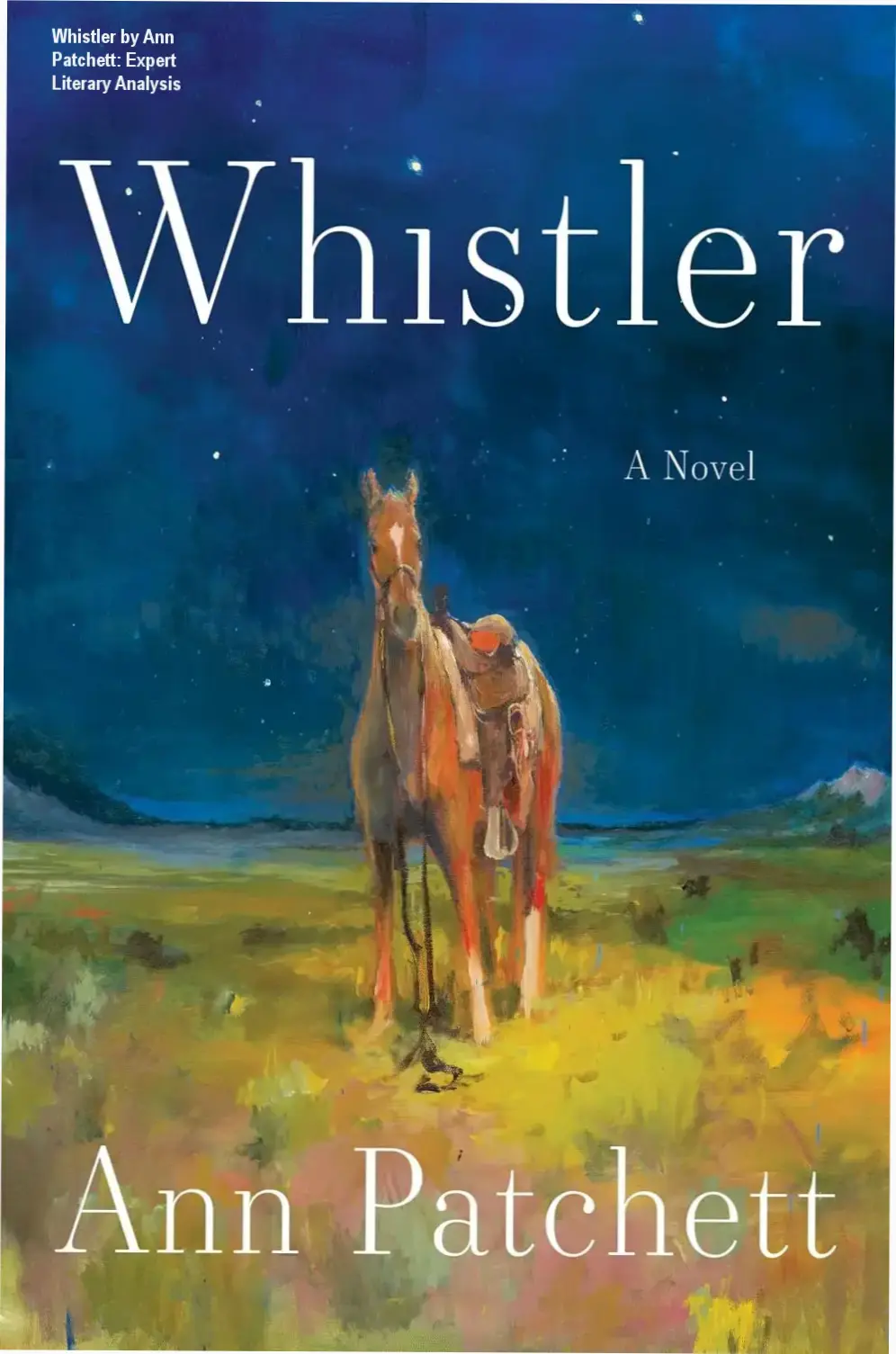
We often assume the people who shape us are the ones who stay. Ann Patchett’s latest novel, Whistler, dismantles that comfort with a quiet brutality. It asks what happens when a parental figure vanishes after a single, seismic year — only to reappear decades later in the marble hallway of the Met. The premise sounds like a contrivance, but Patchett treats it like a geological fault line. Daphne Fuller is fifty-three. Her stepfather, Eddie Triplett, hasn’t been a factor since she was nine. Their reunion isn’t a redemption arc; it’s a forensic examination of memory’s unreliability. You can check the current reader consensus and edition options here.
The marketing pushes the “uplifting” angle hard. The Boston Globe calls it “devastating yet ultimately uplifting.” Goodreads voters placed it high on anticipated lists. But the core tension — a woman and her former stepfather refusing to separate again — carries a distinct weight. It’s not romance. It’s not standard family drama. It’s a study of chosen kin versus biological accident. Patchett has built a career on these liminal spaces (The Dutch House, Tom Lake). Here, she compresses a lifetime of “what ifs” into 300 pages. The prose is typically crystalline, but the structure — two adults looking back over choices made and choices inflicted — demands a reader willing to sit in ambiguity.
Ready to dive into “Whistler”?
Explore available editions, check current live pricing, or download a free sample directly on Amazon.
Preview Free Sample & Check Price on Amazon
*You will be redirected to Amazon. As an Amazon Associate, we may earn from qualifying purchases.
Prose Rhythm and Narrative Compression
Patchett’s sentence-level control remains the gold standard. She doesn’t waste clauses. The opening scene at the Metropolitan Museum establishes geography, history, and emotional stakes in three pages. No exposition dumps. You learn Daphne’s age, her husband Jonathan’s presence, and the sheer oddity of Eddie’s white hair through gesture and observation.
Readers on Goodreads frequently highlight the “deceptive simplicity.” One top reviewer noted: “It reads fast, but you realize days later you’re still turning sentences over.” That’s the Patchett effect. The pacing mimics memory — long stretches of summary punctuated by vivid, almost painful scenes. The “fateful event” from Daphne’s childhood isn’t revealed immediately. It hangs like a held breath. When it lands, it reframes the previous hundred pages without a single flashback cheat.
The 300-page count is deliberate. A lesser novelist stretches this to 450. Patchett trusts the reader to carry the subtext. The Kindle edition flows cleanly; no formatting artifacts reported in early Amazon verified purchase reviews. Font scaling works. Footnotes (rare) link correctly. It’s a professional digital product.
The Stepfather Archetype Deconstructed
Eddie Triplett avoids every trap. He isn’t the abusive monster. He isn’t the saintly savior. He was a man who married a woman with a child, stayed thirteen months, and left. That’s it. The power lies in the brevity. Daphne’s memory inflated him into a giant. Reality serves a frail, elderly man tracking her down in a museum.
Reddit threads in r/books and r/AnnPatchett dissect this dynamic. A common sentiment: “I expected a thriller twist. Got a meditation on gratitude instead.” The “fateful event” — vaguely referenced in the blurb — involves a fire. But the novel cares less about the fire than the silence after. Eddie didn’t save Daphne. He just held her. That distinction drives the second half.
Jonathan, Daphne’s husband, functions as the reader’s proxy. He watches this stranger insert himself into their marriage. His discomfort is reasonable. Patchett never vilifies him. She lets him ask the questions Daphne suppresses: Why now? What does he want? Are we enough? The marriage survives, but the geometry shifts.
| Element | Assessment |
|---|---|
| Prose Density | High — every sentence earns its keep |
| Emotional Payoff | Delayed but earned; avoids cheap catharsis |
| Structural Risk | Non-linear memory weaving; pays off |
| Who This Book Is For (And Who Should Skip It) If you read The Dutch House or Tom Lake and appreciated the way Patchett excavates family mythology through quiet domestic moments, Whistler hits that same precise frequency. It is built for readers who value emotional architecture over plot velocity. The ideal audience here is the literary fiction loyalist who wants a novel that respects their intelligence—someone comfortable sitting with ambiguity and the slow accretion of memory. Book clubs will find rich veins for discussion: the ethics of step-parenting, the reliability of childhood memory, and the specific gravity of “almost” relationships. It’s a relatively short read at 300 pages, making it an accessible pick for a monthly rotation without sacrificing depth. Skip this if: You require high-stakes external conflict, thriller pacing, or a tidy moral resolution. There are no murders, no hidden fortunes, no dramatic courtroom reveals. The central “event” is referenced obliquely for much of the narrative; if you need the plot spelled out in neon lights, the payoff will feel muted. Readers allergic to non-linear timelines or shifting perspectives (the narrative slides between Daphne and Eddie, past and present) may find the structure frustrating rather than illuminating. Common Purchasing MisstepsThe marketing highlights the “reunion” hook, which suggests a romance or a redemption arc. It is neither. Do not buy this expecting a Nicholas Sparks style second-chance love story. The bond between Daphne and Eddie is filial, fractured, and deeply specific—it resists easy categorization. Another trap: assuming the “Metropolitan Museum” opening signals a New York social novel. The setting shifts quickly to the internal landscapes of the characters. The museum is a catalyst, not a backdrop. If you are buying for the atmosphere of the Met, you get about three pages. Contextual FAQ
Value Proposition: Hardcover vs. Kindle vs. LibraryAt 300 pages, the physical hardcover feels substantial but not intimidating—a good object for a shelf. The Kindle edition renders cleanly; there are no complex typographical experiments that break on e-ink. Given the re-readability factor (the first 50 pages land differently once you know the ending), owning a copy has merit. However, this is a prime library candidate: read it once, discuss it, pass it on. The price delta between formats is negligible right now, so format preference should drive the decision. You can check current pricing and reader sentiment here. Final Editorial Verdict“Whistler: A Novel” delivers on its core promise for its intended audience, offering compelling insights without fluff. As highlighted in our detailed edition breakdown, its practical depth and readability are its greatest strengths. We also recommend checking the official Kindle sample and reader ratings before making your final purchase decision. *You will be redirected to Amazon. As an Amazon Associate, we earn from qualifying purchases. Posts Similares
|