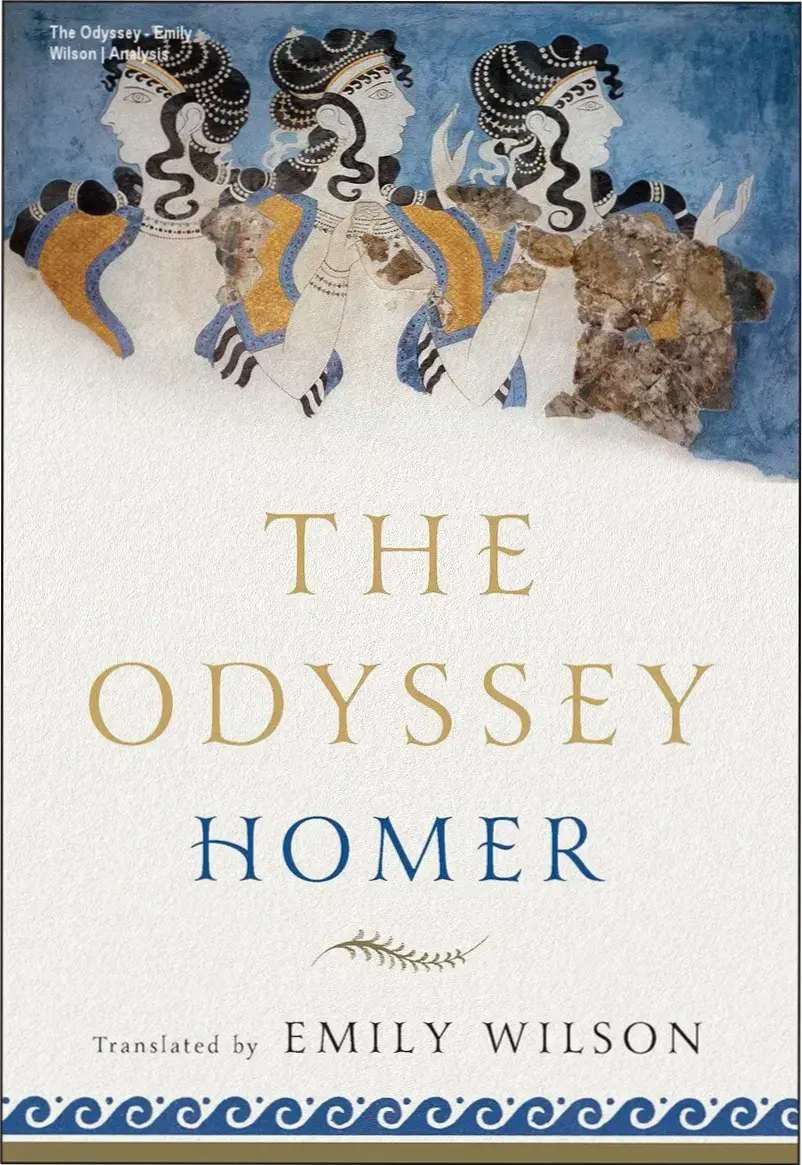
The Odyssey – Emily Wilson | Analysis
Most people avoid the classics because they expect a slog through dusty, archaic language that feels more like a chore than a story. There is a common misconception that to appreciate Homer, you must first endure a translation that sounds like a 19th-century textbook.
The reality is that The Odyssey is not a museum piece; it is a visceral narrative about survival, trauma, and the desperate yearning for home. If you have ever felt displaced or struggled to redefine yourself after a life-altering event, you can find this definitive version of the epic surprisingly relatable.
- The Problem: Classical texts often feel inaccessible due to overly formal translations.
- The Expectation: A dense, slow-paced poem that requires a PhD to decode.
- The Impact: Emily Wilson’s version has disrupted the market by prioritizing clarity and pace.
Entering this story is like stepping into the blueprint of all Western storytelling. From the “hero’s journey” trope to the psychological depth of its characters, it sets the stage for everything from The Lord of the Rings to modern cinematic epics.
- Genre: Epic Poetry / Classical Literature.
- Core Theme: The struggle for identity and the cost of homecoming.
- Market Position: The most contemporary and readable English translation available today.
Ready to dive into “The Odyssey”?
Explore available editions, check current live pricing, or download a free sample directly on Amazon.
Preview Free Sample & Check Price on Amazon
*You will be redirected to Amazon. As an Amazon Associate, we may earn from qualifying purchases.
The “Wilson Effect”: Writing Style and Pacing
Emily Wilson doesn’t just translate words; she translates the energy of the original Greek. While older versions lean into a heavy, ornamental style, Wilson uses a lean, contemporary idiom that moves with a relentless velocity.
The use of iambic pentameter provides a rhythmic drive that mimics the ocean’s pulse. It strips away the pretension, making the dialogue feel natural and the action sequences immediate.
- Lean Prose: Avoids the “thee” and “thou” clutter of Victorian translations.
- Rhythmic Precision: Iambic pentameter ensures the text “sings” when read aloud.
- Directness: The narrative doesn’t linger on unnecessary adjectives, mirroring Homer’s swift pace.
Skeptics might argue that “simplifying” the language loses the grandeur of the epic. However, the result is actually a more rigorous adherence to the original’s intent: to be a story told and heard, not just studied in a vacuum.
- Readability: High. It feels like a modern novel in poetic form.
- Tone: Fresh, unpretentious, and emotionally raw.
- Engagement: Much higher than academic translations.
Narrative Structure and the Art of the “Slow Burn”
The story doesn’t start at the beginning; it drops you into the middle of the crisis. This non-linear approach creates a psychological tension that keeps the reader questioning Odysseus’s reliability as a narrator.
We see the consequences of his absence before we see the causes. This structure transforms the book from a simple adventure story into a complex study of longing and anticipation.
- In Media Res: Starting in the middle of the action to hook the reader instantly.
- Parallel Plotlines: Balancing Telemachus’s growth with Odysseus’s struggle.
- Circular Narrative: The constant movement toward a center (home) that feels perpetually out of reach.
The pacing is deceptive. While some chapters feel like a whirlwind of monsters and gods, others are slow, meditative explorations of hospitality and social codes.
- High Peaks: The encounter with Polyphemus and the Sirens.
- Low Valleys: The domestic tension in Ithaca and the politics of the suitors.
- Balance: The shifts in pace prevent the reader from experiencing “epic fatigue.”
The “Complicated” Hero: Odysseus Under the Microscope
Odysseus is not a traditional “good guy.” He is a man of tricks, lies, and extreme ego. Wilson’s translation highlights his flaws, presenting him as a fully rounded, often frustrating human being.
His intelligence is his greatest weapon, but also his greatest liability. His need to “be known” and his pride often put his crew in unnecessary danger, adding a layer of moral ambiguity to the journey.
| Trait | Traditional View | Wilson’s Perspective |
|---|---|---|
| Intelligence | Divine Wisdom | Strategic Cunning / Manipulation |
Who Should Actually Read This Translation?This edition isn’t for the academic purist seeking archaic, flowery prose. It is designed for the modern reader who wants the story’s momentum without fighting the language. If you’ve tried other versions and felt bogged down by “thee” and “thou,” Wilson’s lean approach is a breath of fresh air.
On the flip side, some will find the “contemporary idiom” too stripped down. If you want a translation that feels like a museum piece, this isn’t it. Avoid this version if you are looking for a traditional prose novel. Remember, this is iambic pentameter—it’s a poem, not a paperback thriller.
Value Analysis: Is It Worth the Investment?At its price point, the value is high. You aren’t just paying for the text, but for the curated academic support included in the volume. The inclusion of maps and a pronunciation glossary removes the friction of navigating an ancient world, making the reading experience seamless.
A common purchasing misstep is expecting a “quick read.” Even with Wilson’s clarity, this is a 592-page epic about violence, power, and yearning. It requires patience. The “value” here lies in the fact that you won’t need a separate dictionary or guide to understand what’s happening.
Quick Reality Check (FAQ)Is it easier to read than other versions? Yes. Wilson uses a “lean” style that avoids unnecessary filler words and complex syntax. Is it a “simplified” version? No. It is a full, rigorous translation; it’s simply less pretentious in its delivery.
Ultimately, this is the most “human” version of the Odyssey available today. It strips away the academic ego to let the raw drama of the story shine through. To see how this translation stacks up against other editions, you can check the latest user ratings and live discounts on Amazon. RelacionadoPosts Similares
|