Our Nanny is a Vampire: Final Verdict & Review
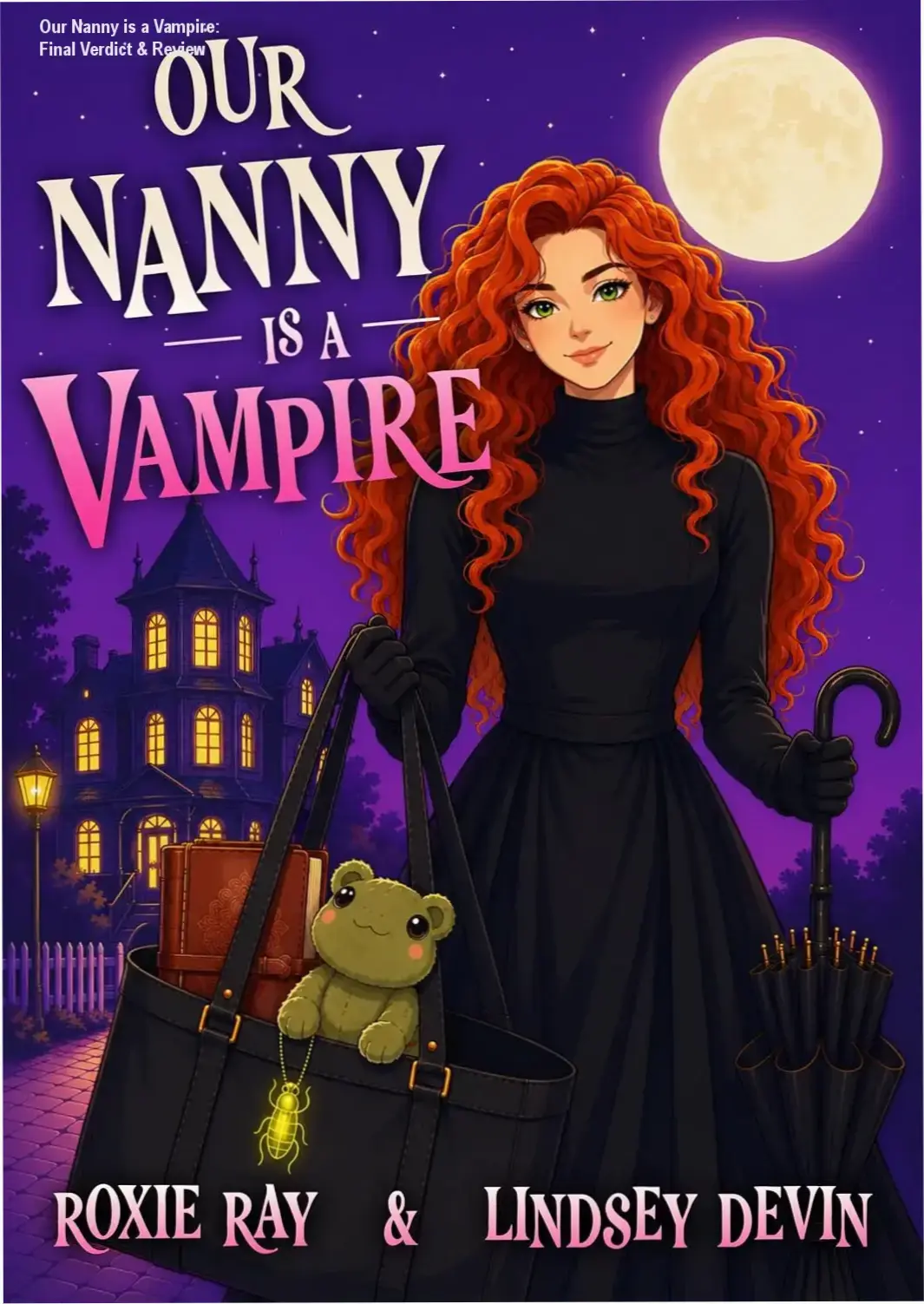
Finding a paranormal romance that respects the intelligence of its reader while delivering the specific dopamine hit of a high-trope crossover is harder than it looks. The market is flooded with “grumpy x sunshine” dynamics that forget the grump needs a reason to grunt and the sunshine needs a pulse. Readers hunting for that specific blend of workplace proximity, single-parent chaos, and immortal stakes often end up with shallow world-building or children who function solely as plot props. Our Nanny is a Vampire by Lindsey Devin and Roxie Ray enters this chat with a distinct proposition: a two-hundred-year-old vampire nanny who has seen it all, paired with a widower drowning in grief and “creatively hostile” offspring. It currently sits at the top of the Workplace Romance charts, a signal that the execution matches the high-concept pitch. You can check the current reader reception and availability right here.
The premise hook — Conrad Lawrence burning through nine nannies in three years — sets a comedic baseline that the authors smartly refuse to treat as pure farce. The kids aren’t just monsters; they are grieving. Conrad isn’t just grumpy; he is paralyzed by loss. Winnie isn’t just “unbothered”; she is survivorship personified. This grounding transforms a potential cartoon into a story about the terrifying vulnerability of choosing to stay. The central tension isn’t just “will they kiss,” but “can a creature built for escape build a home?” That question carries weight far beyond the genre shelf.
Ready to dive into “Our Nanny is a Vampire”?
Explore available editions, check current live pricing, or download a free sample directly on Amazon.
Preview Free Sample & Check Price on Amazon
*You will be redirected to Amazon. As an Amazon Associate, we may earn from qualifying purchases.
Writing Style, Pacing, and the Dual POV Balance
The prose moves with a crisp, dialogue-heavy rhythm that prioritizes voice over purple prose. Devin and Ray write banter that crackles — Winnie’s internal monologue is centuries of dry wit, Conrad’s is exhausted sincerity. The dual POV switches are clean, usually chapter-by-chapter, giving equal weight to the vampire’s existential boredom and the human’s raw nerve endings.
Pacing follows a “slow burn with high heat” architecture. The first third is domestic immersion: school runs, crickets in suitcases, the texture of a house learning to breathe again. Some readers on Goodreads flagged the opening as “slow,” but the consensus shifts quickly once the external threat — Winnie’s past — crashes the gate. The transition from domestic comedy to paranormal thriller is handled without whiplash because the emotional stakes were established in the quiet chapters. The spice level is explicit but earned; it serves the intimacy arc rather than interrupting the plot.
One technical standout: the authors avoid the “miscommunication trope” as a primary conflict driver. When secrets surface, characters communicate like adults (mostly). The friction comes from legitimate incompatibility — mortality vs. immortality, exposure vs. safety — not manufactured stupidity. This respect for the reader’s intelligence is a major differentiator in a crowded sub-genre.
Character Dynamics: Grief, Grumps, and “Creatively Hostile” Kids
Conrad Lawrence is a masterclass in the “grumpy widower” archetype done right. His grief isn’t backstory wallpaper; it is the operating system he runs on. He parents from fear. He works from obligation. He loves from a place of terror. Watching Winnie dismantle his defenses not with magic, but with competence and calm boundaries, is the emotional engine of the book.
Winnie is the surprise MVP. A 200-year-old vampire who presents as a Mary Poppins adjacent figure — sensible shoes, packed lunches, zero tolerance for nonsense — but harbors a violence capacity that terrifies the narrative into honesty. Her “unbothered” energy is a trauma response, not a personality trait. The peel-back of her history — the maker/ex hunting her, the centuries of running — gives the paranormal plot teeth.
The children (Billie, specifically) are written with rare authenticity for the genre. They are brats. They are hurting. They test boundaries. They are not mini-adults or cute accessories. Billie releasing crickets into a nanny’s suitcase is the kind of specific, chaotic detail that sells the reality of this household. Reddit threads in r
Who Should Read This (And Who Shouldn’t)
This hits a sweet spot for readers who want paranormal romance without the high-stakes saving-the-world fatigue. If you like your vampires domestic, your grumpy widowers softening slowly, and your “found family” tropes earned rather than gifted, this works.
The slow burn is genuine. It relies on proximity and emotional vulnerability instead of manufactured misunderstandings. Winnie’s 200-year perspective grounds the romance in something heavier than instant lust.
Ideal reader: Fans of The Dead Romantics or A Discovery of Witches who want lower stakes and higher cozy factor. People who enjoy “competence porn” — watching a capable nanny handle chaos while the dad watches, stunned.
Skip if: You need explicit spice early and often. The heat level sits at “closed door” to “fade to black.” You dislike child POV chapters — the kids get significant page time and distinct voices. You want complex vampire politics or lore dumps. The world-building is soft; the rules serve the romance, not the other way around.
Value Proposition: Time vs. Payoff
567 pages sounds long for a category romance. It reads faster than the count suggests. White space, dialogue-heavy pacing, and short chapters pull you through.
Kindle pricing usually sits under $5. At that level, the entertainment-per-dollar ratio is high. Paperback runs closer to $15–$18 — fair for a debut duo delivering this much voice control, but wait for a sale if budget is tight.
Re-read value is moderate. The mystery plot resolves cleanly; the joy is in the character beats. You’ll re-read specific scenes (the cricket incident, the coffin reveal, the first kitchen dance) rather than the full arc.
Common Missteps Buyers Make
- Expecting Twilight or Black Dagger Brotherhood. This is contemporary romance with fangs, not urban fantasy with a romance subplot.
- Assuming “nanny romance” means power imbalance ick. Conrad never leverages employment against Winnie. She holds supernatural leverage; he holds emotional need. The dynamic stays respectful.
- Buying the audiobook without checking narrators. Dual POV needs distinct voices. Sample first.
Quick FAQ
Is it a series? Marketed as standalone. The ending closes the main arc and the external threat. Door left open for sibling spin-offs, but no cliffhanger.
How graphic is the vampire content? Blood drinking happens on-page but framed sensually/medically, not horrifically. No gore. Sunlight, stakes, and classic weaknesses apply but don’t drive the plot.
Do the kids feel like plot devices? No. Billie (10) and Gus (7) have arcs, agency, and dialogue that sounds like actual children — precocious but not cartoonish. Their grief mirrors Conrad’s without being performative.
Editorial Bottom Line
Devin and Ray understand their lane. They didn’t try to reinvent the vampire mythos; they built a relationship worth caring about inside a familiar frame. The writing is clean, the pacing disciplined, and the emotional beats land. It knows exactly what it is: a comfort read with teeth.
If you’ve been burned by “paranormal romance” that forgets the romance, or “cozy fantasy” that forgets the stakes, this balances both. Check current pricing and reader sentiment here.
Final Editorial Verdict
“Our Nanny is a Vampire” delivers on its core promise for its intended audience, offering compelling insights without fluff. As highlighted in our detailed edition breakdown, its practical depth and readability are its greatest strengths.
We also recommend checking the official Kindle sample and reader ratings before making your final purchase decision.
*You will be redirected to Amazon. As an Amazon Associate, we earn from qualifying purchases.