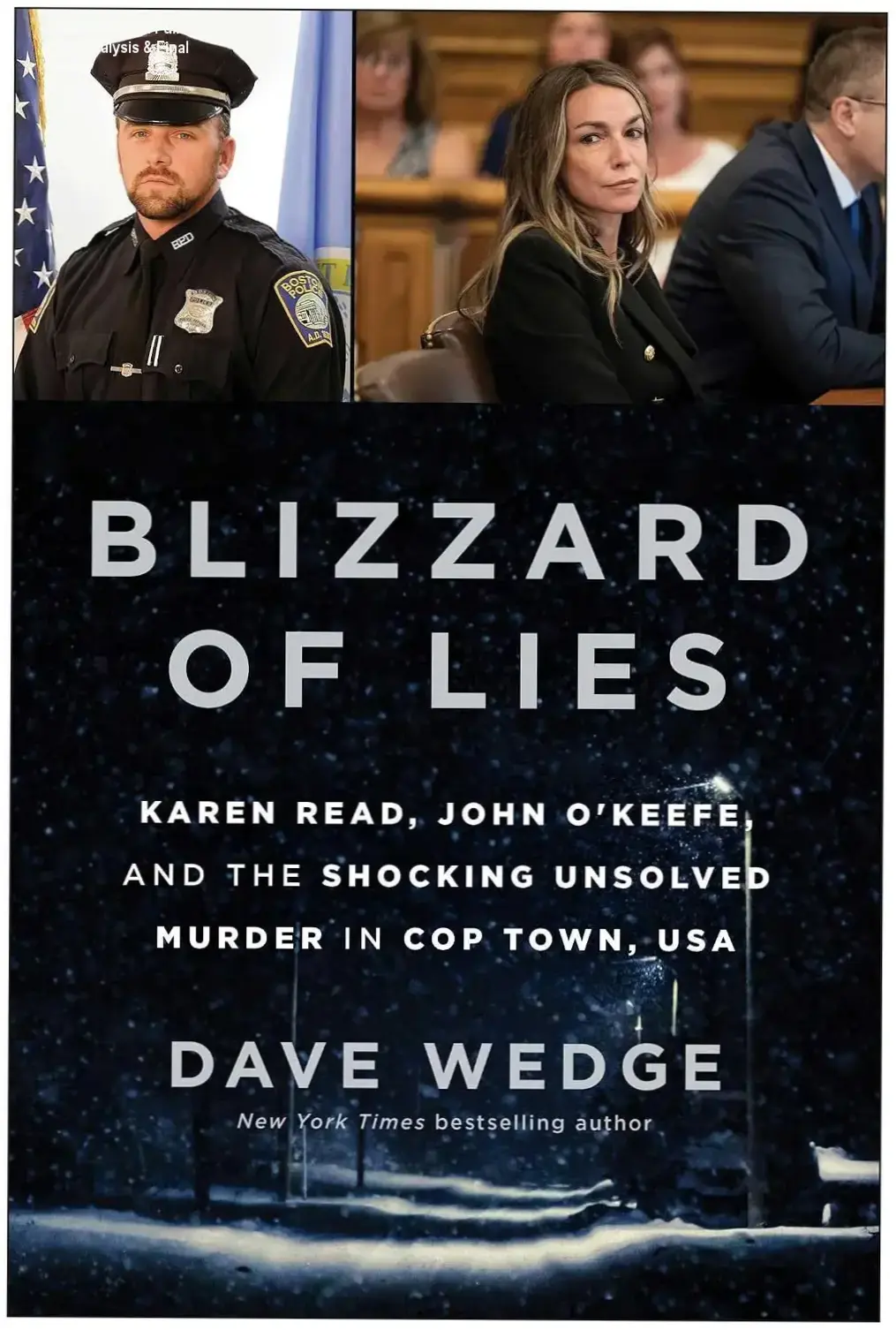
Blizzard of Lies: Full Case Analysis & Final Verdict
True crime often sells the illusion of closure. We crave the moment the handcuffs click and the mystery evaporates, leaving behind a neat, tidy explanation for a horrific act. But real life—especially when it intersects with institutional power—is rarely that convenient.
The case of Karen Read and the death of John O’Keefe is a masterclass in how “open-and-shut” narratives can be weaponized. For those tracking the chaos of “Cop Town,” Blizzard of Lies serves as the definitive autopsy of a legal circus where the truth was the first casualty.
Ready to dive into “Blizzard of Lies”?
Explore available editions, check current live pricing, or download a free sample directly on Amazon.
Preview Free Sample & Check Price on Amazon
*You will be redirected to Amazon. As an Amazon Associate, we may earn from qualifying purchases.
Journalistic Precision vs. Courtroom Chaos
Dave Wedge doesn’t write like a novelist trying to manufacture suspense. He writes like a veteran reporter who has seen too many press conferences and knows exactly where the lies are hidden.
The pacing is propulsive. It mimics the acceleration of the case itself—starting with a cold body in the snow and spiraling into a systemic collapse of trust in the Massachusetts law enforcement scene.
Wedge avoids the trap of taking a side too early. Instead, he lets the contradictions in the evidence do the heavy lifting. He presents the prosecution’s “simple” hit-and-run theory and then systematically dismantles it with the reality of the investigation.
For the reader, this creates a sense of intellectual vertigo. You start by wanting to know who killed O’Keefe and end by wondering how many other cases in “Cop Town” were compromised by the same culture of silence.
The Anatomy of a “Cop Town” Conspiracy
The core of the book isn’t just a murder mystery; it’s a sociological study of institutional corruption. The term “Cop Town” isn’t just a nickname—it’s a warning.
Wedge explores the “blue wall of silence” with a skeptical eye. He documents how a case that should have been straightforward devolved into a mixture of excluded evidence and questionable police conduct.
“The apparently open-and-shut manslaughter case quickly devolved into a chaotic mixture of lies, institutional corruption, and police cover-ups.”
The narrative highlights a terrifying possibility: that the machinery of justice can be pivoted to protect the institution rather than solve the crime. This is where the book moves from “true crime” to “political thriller.”
The inclusion of interviews from both sides—the O’Keefe family and Karen Read’s legal team—prevents the book from becoming a one-sided manifesto. It remains a balanced, albeit damning, account.
Reader Expectations vs. The 2025 Reality
Many readers enter this book expecting a resolution. They want a name, a motive, and a conviction. However, the 2025 acquittal of Karen Read turns the book into a tragedy of unresolved questions.
On Goodreads and Amazon, a recurring theme in reviews is the frustration with the “lack of closure.” But that is precisely the point Wedge is making.
The “reality” of the book is that the truth was buried under so many layers of misconduct that it may never be fully recovered. The book doesn’t give you a neat bow; it gives you a mirror reflecting a broken system.
| Reader Expectation | The Book’s Reality |
|---|---|
| A clear “Whodunnit” answer | A complex “Who covered it up?” analysis |
| Legal triumph or tragedy | Institutional failure and systemic doubt |
| Simple hit-and-run story | A web of rogue journalists and mistrials |
Technical Value and Learning Curve
This isn’t a light beach read. At 296 pages, it’s lean, but the density of names, dates, and legal maneuvers requires active attention.
Wedge manages the “learning curve” well by anchoring the story in the emotional toll on the families. This prevents the technical legal jargon from becoming dry or alienating.
The most valuable takeaway is the insight into how evidence is excluded from courtrooms. Wedge exposes the gap between what the public knows (via social media and leaks) and what the jury is actually allowed to see.
It serves as a cautionary tale for anyone who believes that “the facts
Who Should Actually Read This Book?
Blizzard of Lies isn’t for the casual true crime fan looking for a tidy bow at the end. If you crave a definitive “smoking gun” or a satisfying resolution where the villain is handcuffed in the final chapter, you will find this narrative frustrating.
This is a book for the skeptics. It’s for readers who are fascinated by the intersection of law enforcement, local politics, and systemic failure. If you enjoy dissecting how a “small town” mentality can warp a criminal investigation, Dave Wedge provides the necessary blueprints here.
You should probably SKIP this if:
- You are looking for a fast-paced, fictionalized thriller. This is rigorous journalism, not a novel.
- You cannot handle ambiguity. The case remains an unresolved mystery, and the book reflects that tension.
- You prefer “whodunit” puzzles over “how-it-happened” institutional critiques.
Value for Money & Realistic Expectations
At 296 pages, the book is lean. It avoids the bloated padding common in modern true crime. You aren’t paying for filler; you’re paying for Wedge’s access and his ability to synthesize a chaotic trial into a readable timeline.
A common purchasing mistake is treating this as a legal manual or a courtroom drama. While it covers the trial and the 2025 acquittal, the real value lies in the peripheral revelations—the other cases put in jeopardy and the internal rot of the “Cop Town” culture.
Quick Verdict: The information density is high. The prose is direct. For the price of a hardcover, you get a definitive record of one of the most polarizing cases in recent Massachusetts history.
Ultimately, Wedge doesn’t just tell a story; he documents a collapse of trust. Whether you believe Karen Read is innocent or simply “not proven guilty,” the journalistic rigor here is undeniable. To see how other readers are reacting to the revelations in this case, you can check the latest user reviews and ratings on Amazon.
Final Editorial Verdict
“Blizzard of Lies” delivers on its core promise for its intended audience, offering compelling insights without fluff. As highlighted in our detailed edition breakdown, its practical depth and readability are its greatest strengths.
We also recommend checking the official Kindle sample and reader ratings before making your final purchase decision.
*You will be redirected to Amazon. As an Amazon Associate, we earn from qualifying purchases.