Biological War: Annie Jacobsen’s Complete Scenario Analysis
Most people imagine the end of the world as a sudden, blinding flash—a nuclear mushroom cloud that erases cities in seconds. It is a cinematic, loud, and immediate catastrophe. But the actual most probable path to societal collapse is far quieter. It starts with something invisible, something microscopic, and something that doesn’t announce its arrival until it is already too late to stop it.
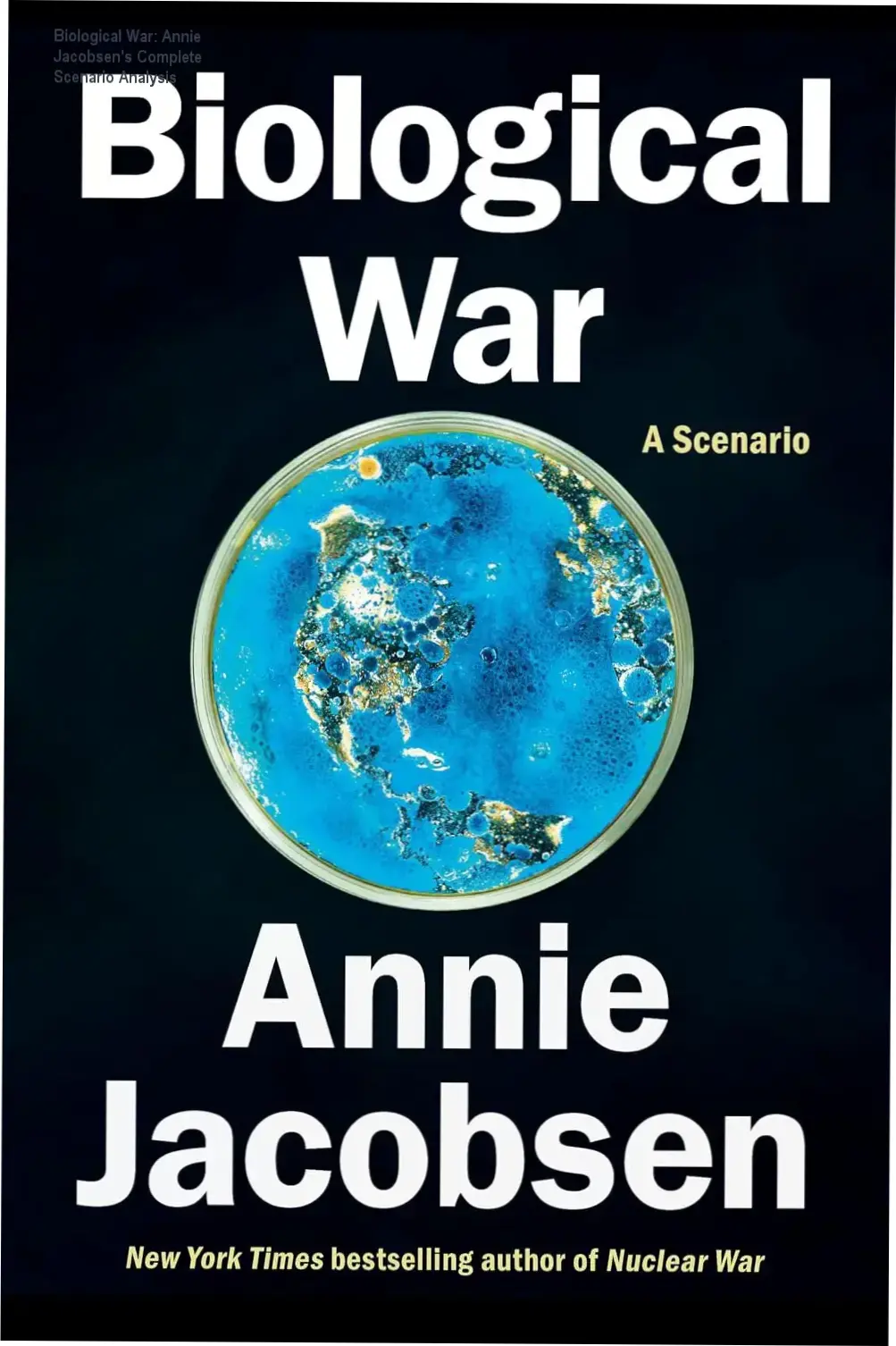
Annie Jacobsen explores this terrifying gap between our perceived safety and the reality of biological vulnerability. For those who followed her previous work on nuclear escalation, the expectation is a clinical yet visceral breakdown of how a single mistake or a malicious act could trigger a global domino effect. You can check the current reader reception and availability of Biological War: A Scenario to see why it has quickly climbed the New York Times bestseller list.
Ready to dive into “Biological War: A Scenario”?
Explore available editions, check current live pricing, or download a free sample directly on Amazon.
Preview Free Sample & Check Price on Amazon
*You will be redirected to Amazon. As an Amazon Associate, we may earn from qualifying purchases.
The Ticking-Clock Narrative: Style and Pacing
Jacobsen doesn’t write a dry textbook on epidemiology. She writes a countdown. The pacing is designed to mimic the acceleration of a pandemic, starting with a slow, eerie realization and spiraling into absolute chaos.
The “Scenario” format is the book’s strongest asset. Instead of arguing that a bio-attack could happen, she maps out exactly how it would happen, hour by hour, day by day. It transforms theoretical risk into a tangible timeline.
Some readers on Goodreads have noted that this style can be claustrophobic. It is not a “comfort read.” The prose is stripped down and urgent, leaving little room for hope, which serves the purpose of the book: to alarm the reader into recognizing the fragility of our existence.
The Anatomy of Collapse: Core Arguments
The central thesis is simple: our infrastructure is a house of cards. Jacobsen argues that the systems we rely on—hospitals, supply chains, electricity, law enforcement—are not built for a biological event of scale.
She focuses on the “invisible” nature of the threat. Unlike a bomb, a biological agent has an incubation period. This means the enemy is already inside the gates before the alarm even sounds.
The book meticulously details the transition from a medical crisis to a societal one. It isn’t just about the virus; it is about the insurrection, the anarchy, and the breakdown of trust that follows when the state fails to protect its citizens.
| Analysis Pillar | Focus Area | Impact Level |
|---|---|---|
| Technical Accuracy | Expert interviews & military protocols | High |
| Psychological Tension | Ticking-clock scenario structure | Extreme |
| Societal Critique | Infrastructure fragility & gov response | Medium-High |
Research vs. Speculation: The Journalist’s Edge
What separates this from a techno-thriller novel is the sourcing. Jacobsen leans heavily on dozens of interviews with people who actually hold the keys to these labs and bunkers.
Who This Book Is Actually For
This isn’t a beach read. It’s a high-tension simulation of the worst possible outcome for human civilization. Biological War: A Scenario is designed for a very specific profile of reader.
You’ll find immense value here if you are a fan of “black swan” event analysis or if you read Annie Jacobsen’s previous work on nuclear war. It appeals to those who prefer a narrative-driven approach to non-fiction—where facts are delivered via a ticking-clock timeline rather than a dry academic lecture.
Who should skip this book:
- The Pandemic-Fatigued: If the mere mention of a global virus triggers genuine anxiety or burnout, this book will be an endurance test, not a pleasure.
- The “How-To” Prepper: This is a scenario analysis, not a survival manual. You won’t find a list of supplies to buy; you’ll find a description of why those supplies might be useless.
- Academic Purists: While based on expert interviews, the “scenario” format prioritizes gripping narrative over a traditional peer-reviewed structure.
Value Analysis & Common Missteps
The most common mistake buyers make with this title is expecting a fast-paced technothriller. While it reads like one, it is rooted in journalistic reporting. The “value” here isn’t in the plot, but in the institutional insight.
Jacobsen leverages high-level military and medical sources to show the gap between our “official” preparedness and the actual reality of a biological breach. That gap is where the real value of the book lies.
| Expectation | Reality |
|---|---|
| A survival guide | A systemic collapse roadmap |
| Pure speculation | Expert-backed journalistic scenario |
| Quick summary | 432 pages of granular detail |
Editorial Verdict
Is it alarmist? Yes. Is it necessary? Also yes. Jacobsen doesn’t just tell you that biological weapons are dangerous; she demonstrates the velocity of failure. She shows how quickly infrastructure turns into a liability.
The book succeeds because it treats biological warfare as the “invisible” version of a nuclear strike. There is no flash, just a slow, agonizing realization that the world has changed. It is a sobering, meticulously researched piece of forward-looking journalism that serves as a grim mirror to our current global vulnerabilities.
If you want to understand the fragility of the modern state, it’s worth the investment. You can check the current pricing and read unfiltered user experiences via the official Amazon product page.
Final Editorial Verdict
“Biological War: A Scenario” delivers on its core promise for its intended audience, offering compelling insights without fluff. As highlighted in our detailed edition breakdown, its practical depth and readability are its greatest strengths.
We also recommend checking the official Kindle sample and reader ratings before making your final purchase decision.
*You will be redirected to Amazon. As an Amazon Associate, we earn from qualifying purchases.