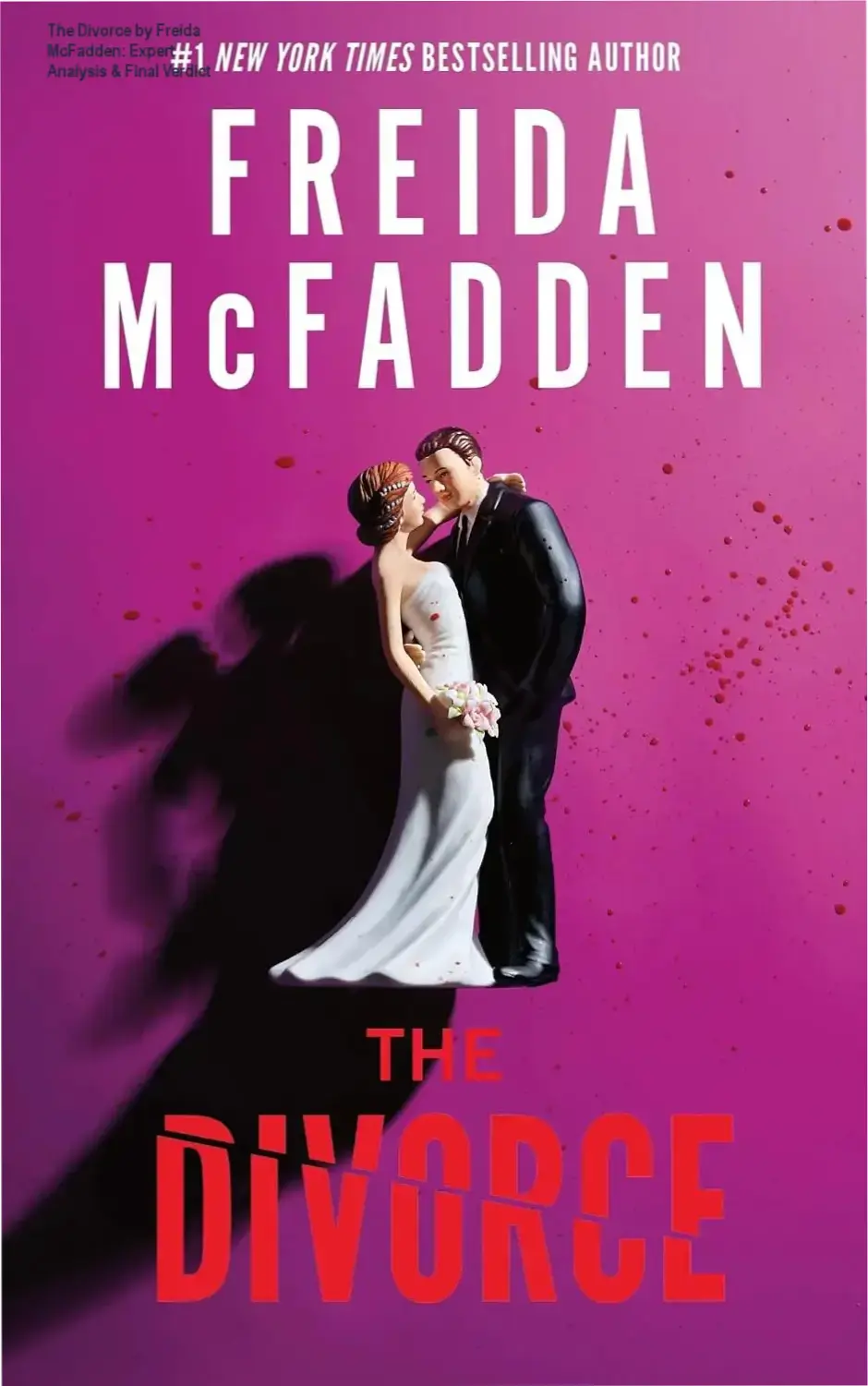
The Divorce by Freida McFadden: Expert Analysis & Final Verdict
Divorce thrillers usually sell a fantasy of clean justice or cinematic revenge, but the reality of a high-conflict split is rarely that tidy—it’s a grind of legal fees, gaslighting, and the slow erosion of self-trust. Freida McFadden understands this friction better than most, and with The Divorce, she weaponizes the mundane cruelty of family court into a pressure cooker that feels less like escapism and more like a warning shot. The premise hooks you instantly: Naomi isn’t just discarded; she’s financially eviscerated by a husband who upgrades to a younger model while weaponizing the legal system. It’s the kind of setup that triggers a visceral “what would I do?” response, and that question drives the narrative engine harder than any twist. If you want to gauge the temperature of the current thriller market or see why this hit Instant #1 New York Times Bestseller status out of the gate, the reader reception alone is a case study in pacing meeting pain points.
McFadden’s dominance in the “domestic suspense” subgenre isn’t accidental; she writes with a ruthless economy that respects the reader’s time but exploits their anxiety. This isn’t literary fiction pretending to be a thriller—it knows exactly what it is. The 368-page count (Poisoned Pen Press, May 2026) signals a tight, no-fluff structure designed for two-sitting consumption. But the 3.9 Goodreads average across nearly 250k ratings hints at a polarization: readers who crave plausibility often clash with those chasing pure adrenaline. That tension is exactly where the interesting analysis lives.
Ready to dive into “The Divorce”?
Explore available editions, check current live pricing, or download a free sample directly on Amazon.
Preview Free Sample & Check Price on Amazon
*You will be redirected to Amazon. As an Amazon Associate, we may earn from qualifying purchases.
Writing Style: Ruthless Economy & The “Chapter End” Hook
McFadden writes in short, declarative sentences. No purple prose. No atmospheric meandering. She treats prose like a utility—functional, invisible, designed solely to accelerate the reader toward the next reveal. This is a deliberate craft choice, not a limitation. The pacing is aggressive; chapters often clock in at 3–5 pages, ending on a micro-cliffhanger (a text notification, a door opening, a realization). It creates a “just one more” compulsion loop that is the gold standard for commercial thriller pacing.
However, this speed has a cost. Interiority is sacrificed for momentum. We are told Naomi is smart, resourceful, and desperate, but we rarely *feel* the cognitive load of her planning in real-time. We see the output, not the processing. On Reddit’s r/thrillerbooks, a common sentiment echoes: “I flew through it, but I can’t remember a single sentence.” That is the trade-off. If you read for voice, look elsewhere. If you read for plot velocity, this is the benchmark.
The dialogue is functional to a fault. Characters speak in exposition dumps disguised as conversation. It serves the plot mechanics but rings false in quiet moments. The husband, Adam, veers into cartoon villain territory early—draining accounts, hiring the “best lawyers,” the 20-something girlfriend. It lacks the banality of evil that makes real high-conflict divorces terrifying. He is a plot device in a suit.
NarrativeWho Should Read This (And Who Shouldn’t)
If you inhaled The Housemaid or The Teacher in a single sitting, this is your next dopamine hit. McFadden writes for the commuter, the insomniac, the reader who wants a plot that moves like a freight train. The ideal buyer craves high-stakes domestic suspense with unreliable narrators and zero literary pretension.
Skip it if: You need psychological realism or plausible police procedure. Naomi makes decisions that will make you scream at the page. The logic gaps widen in the final act. If you hated the “trapped woman” trope in Gone Girl or The Woman in the Window, this leans harder into the melodrama.
Value for Money: Paperback vs. Digital
At 368 pages, the paperback feels substantial—good font, decent margins, Poisoned Pen Press quality. It’s a true “airport book”: buy it, read it, leave it on the seat. The Kindle version often drops below $5.99; at that price, it’s impulse-buy territory. Hardcover is overkill unless you’re a completionist collector.
Re-read value is low. The twist relies on information withholding. Once you know the mechanism, the tension evaporates. Treat it as a rental experience, not a library anchor.
Common Buying Missteps
- Expecting a legal thriller: The divorce is the inciting incident, not the subject matter. Courtroom scenes are nonexistent.
- Buying for the “marriage advice” angle: This is revenge fantasy, not relationship counseling.
- Audiobook trap: The narrator is competent, but the text relies on visual formatting (texts, emails, time jumps) that loses impact in audio.
Quick Contextual FAQ
Is it a sequel? No. Standalone. Same author, same vibe, zero shared characters.
How graphic is the violence? Moderate. Psychological cruelty > physical gore. One scene borders on body horror; mostly it’s emotional terrorism.
Does the dog die? No pets harmed. Small mercies.
Editorial Bottom Line
The Divorce delivers exactly what the cover promises: a slick, twisty, morally bankrupt ride. It won’t change your worldview, but it will kill a rainy afternoon perfectly. It sits comfortably in the “B+ entertainment” tier—flawed logic, elite pacing. If your TBR pile is heavy on literary fiction, use this as a palate cleanser. Check current pricing and reader sentiment here before you commit.
Final Editorial Verdict
“The Divorce” delivers on its core promise for its intended audience, offering compelling insights without fluff. As highlighted in our detailed edition breakdown, its practical depth and readability are its greatest strengths.
We also recommend checking the official Kindle sample and reader ratings before making your final purchase decision.
*You will be redirected to Amazon. As an Amazon Associate, we earn from qualifying purchases.