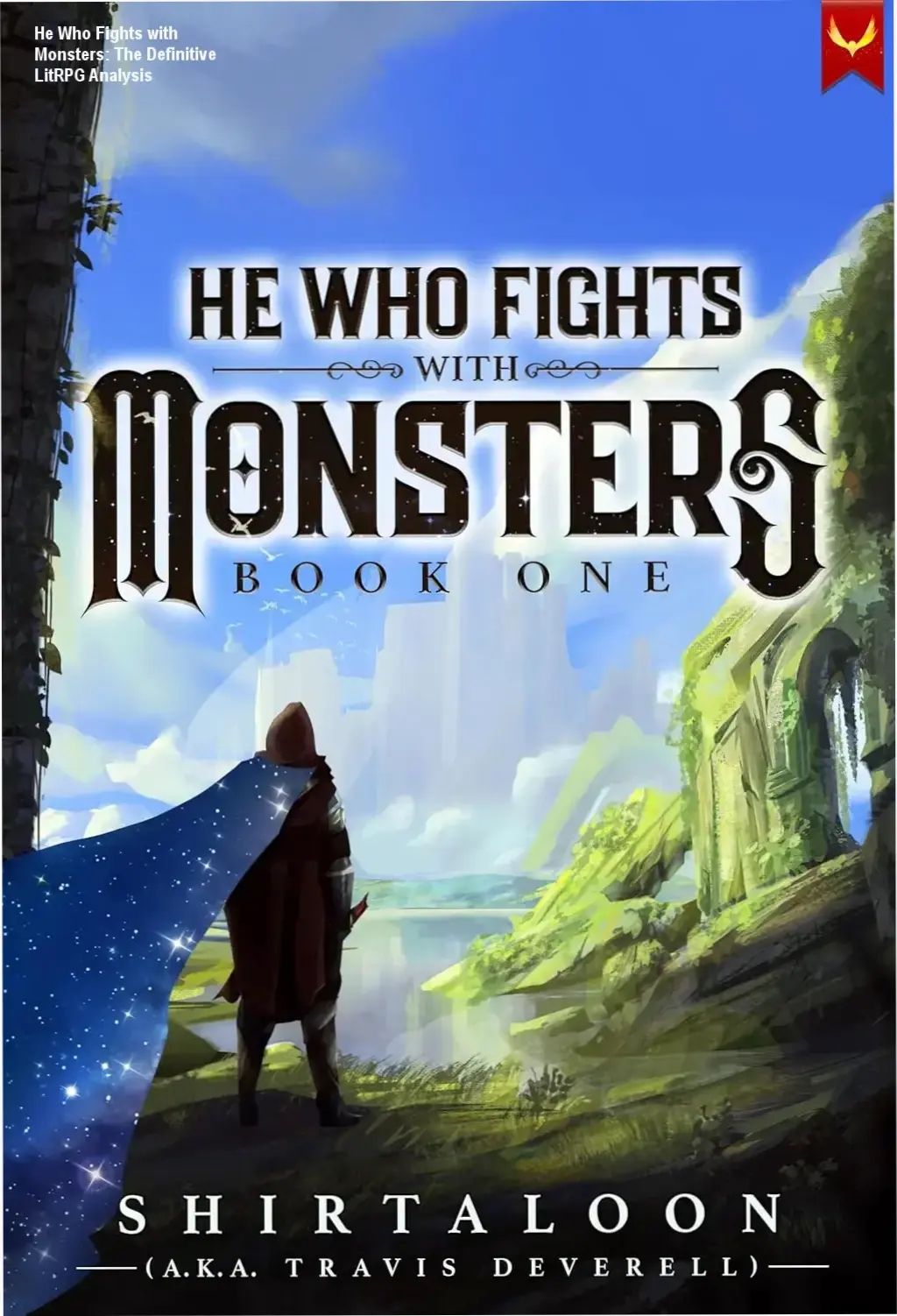
He Who Fights with Monsters: The Definitive LitRPG Analysis
Most of us spend our adult lives in a slow-motion grind. We trade our best hours for a paycheck, navigating the sterile politics of middle management while wondering if this is all there is. The “Isekai” genre—stories about being transported to another world—isn’t just about magic; it’s a collective psychological scream for a fresh start where effort actually yields visible progress.
When you check the reception of He Who Fights with Monsters, you realize it taps into this exact frustration. It doesn’t just offer a fantasy escape; it gamifies the idea of self-improvement, turning the slog of existence into a progression system where you can actually see your “stats” increase.
Ready to dive into “He Who Fights with Monsters”?
Explore available editions, check current live pricing, or download a free sample directly on Amazon.
Preview Free Sample & Check Price on Amazon
*You will be redirected to Amazon. As an Amazon Associate, we may earn from qualifying purchases.
The “Web Novel” DNA: Style and Pacing
Let’s be honest: books that migrate from Royal Road to Kindle often carry “web novel baggage.” This usually means bloated dialogue and repetitive internal monologues. Shirtaloon (Travis Deverell) manages to avoid the worst of this, but the influence is still there.
The prose is conversational. It’s not “literary” in the sense of poetic descriptions, but it’s highly efficient. It reads like a smart friend telling you a story over a beer. The pacing starts as a slow burn—focusing on the confusion of waking up in a new world—before accelerating into a high-stakes political and magical chess match.
The humor is the secret weapon here. Jason, our protagonist, is an Australian. That specific brand of dry, self-deprecating sarcasm provides a necessary buffer against the often-dense LitRPG mechanics. He doesn’t just fight monsters; he mocks the absurdity of his situation while doing it.
The Progression Engine: Cultivation meets LitRPG
Most LitRPGs rely on a “blue box” system—you kill a wolf, you get XP, you level up. It’s basic. *He Who Fights with Monsters* is more ambitious. It blends traditional game stats with “Cultivation,” a staple of Eastern fantasy where power is grown through meditation and essence absorption.
The result is a system that feels earned. Jason doesn’t just stumble into godhood. He has to strategically pick abilities that synergize. The tension comes from the “evil” nature of his powers. He wants to be a good person, but his kit is designed for affliction, decay, and suffering.
This creates a compelling psychological conflict. Can you maintain your morality when your primary tool for survival is making your enemies bleed from their pores? It’s a clever twist that elevates the book from a simple power fantasy to a study in contradiction.
| Feature | Execution | Verdict |
|---|---|---|
| World Building | Deep, layered, political | Excellent |
| Combat System | Synergy-based abilities | Innovative |
| Protagonist | Sarcastic, morally conflicted | Refreshing |
| Pacing | Slow start, explosive finish | Mixed |
Expectation vs. Reality: The “Overpowered” Trap
A common complaint in this genre is the “Gary Stu” effect—a character who is instantly the best at everything. Many readers enter this book expecting Jason to dominate from page one. That’s not what happens.
Jason is powerful, yes, but he is constantly outclassed by the world around him. He is
Who is this book actually for?
This isn’t a standard “hero’s journey.” If you enjoy the intersection of sarcastic humor, intricate power systems, and slow-burn world-building, this is your territory. It appeals specifically to readers who crave “Progression Fantasy”—where the satisfaction comes from the mechanical climb from weakness to power.
The ideal reader is someone who appreciates a protagonist who thinks their way out of a fight as often as they fight their way out of a problem. If you liked the “fish out of water” trope but want it seasoned with a heavy dose of Australian cynicism and a complex magic system that feels like a blend of a video game and spiritual cultivation, you’ll find this highly addictive.
Who should probably SKIP this book?
- The “Fast-Pace” Purists: At 680 pages for the first volume, this is a commitment. If you want a tight, 200-page action novella, the pacing here will feel sluggish.
- Traditional Fantasy Lovers: If the sight of “stat blocks,” levels, or game-like interfaces pulls you out of the immersion, avoid this. The LitRPG elements are baked into the DNA of the story.
- Moral Absolutists: Jason’s powers are “evil.” While he tries to be a good person, the narrative plays with gray morality and dark aesthetics. If you need a pristine, shining knight, look elsewhere.
The “Buyer’s Trap”: Realistic Expectations
A common mistake is treating this as a standalone novel. It is Book 1 of 13. Buying this expecting a complete, closed-arc story is a recipe for frustration. You are buying into an ecosystem, not just a book.
Furthermore, don’t expect a manual on magic. The system is explained through experience and failure. You learn the rules as Jason breaks them, which means there are moments of intentional ambiguity that can frustrate readers who want every mechanic explained in a glossary upfront.
Editorial Verdict: Is it worth the investment?
From a value-per-page perspective, the investment is easy to justify. The sheer volume of content, combined with a plot that successfully balances political intrigue and monster hunting, makes it a heavyweight in the genre. It doesn’t just rely on “bigger numbers” to create tension; it builds genuine stakes through character relationships.
The transition from Royal Road to Kindle has preserved the series’ charm while polishing the delivery. If you’re ready for a long-term narrative commitment, it’s worth seeing why millions of readers are obsessed. You can check the current reader ratings and live pricing on Amazon to see if the community consensus aligns with your tastes.
Final Editorial Verdict
“He Who Fights with Monsters: A LitRPG Adventure” delivers on its core promise for its intended audience, offering compelling insights without fluff. As highlighted in our detailed edition breakdown, its practical depth and readability are its greatest strengths.
We also recommend checking the official Kindle sample and reader ratings before making your final purchase decision.
*You will be redirected to Amazon. As an Amazon Associate, we earn from qualifying purchases.