
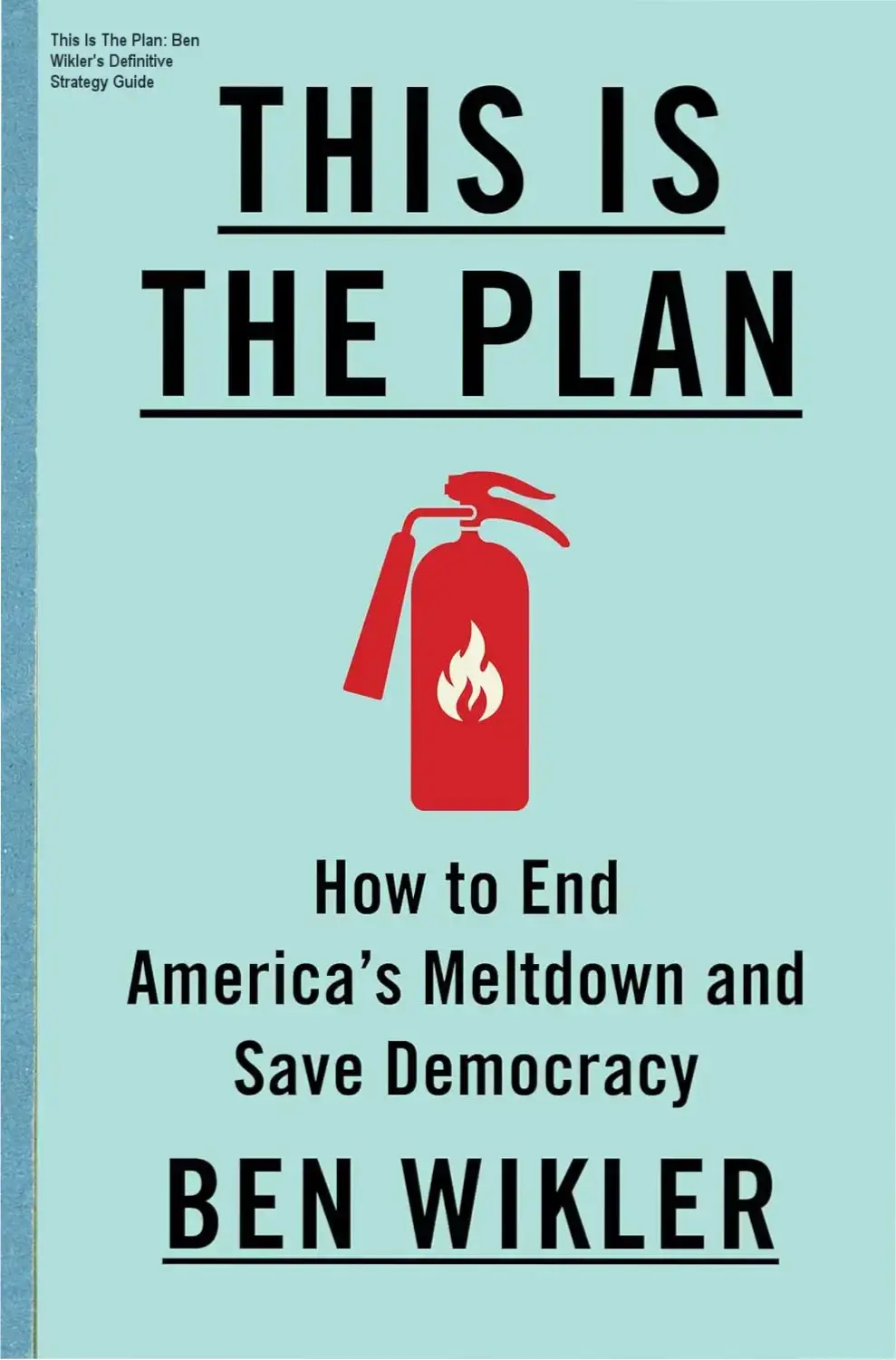
This Is The Plan: Ben Wikler’s Definitive Strategy Guide
Most people approach political crises with a mixture of paralyzed anxiety and doom-scrolling. We see the headlines about authoritarianism and “democracy deserts” and feel like a single vote is a pebble thrown into a hurricane. The common misconception is that saving a republic requires a miracle or a sudden shift in the national mood.
Ben Wikler suggests a different premise: democracy isn’t saved by hope, but by infrastructure. For those tired of theoretical warnings and looking for a tactical manual, This Is The Plan arrives not as a manifesto, but as a strategic playbook from the trenches of Wisconsin’s political wars.
Ready to dive into “This Is The Plan”?
Explore available editions, check current live pricing, or download a free sample directly on Amazon.
Preview Free Sample & Check Price on Amazon
*You will be redirected to Amazon. As an Amazon Associate, we may earn from qualifying purchases.
The Campaign Manager’s Prose: Pacing and Style
Wikler doesn’t write like a political scientist or a distant academic. He writes like a man who has spent too many hours in windowless campaign offices drinking lukewarm coffee.
The pacing is aggressive and conversational. He avoids the dense, jargon-heavy prose typical of political theory, opting instead for a “here is the problem, here is the fix” rhythm.
His use of humor—specifically regarding the absurdity of local politics—keeps the text from becoming a grim lecture. It feels less like a book and more like a high-level briefing for a team that needs to win a war.
The “Democracy Desert” Framework: Core Arguments
The central thesis revolves around the concept of the “democracy desert.” This is where political systems are so rigged or decayed that fair competition becomes impossible.
Wikler argues that MAGA isn’t just a movement, but a strategic exploitation of these deserts. He posits that you cannot fight a structural problem with mere rhetoric.
The solution? Building “people-powered” infrastructure. He breaks down the science of winning in divided states, focusing on the boring but essential parts of politics: voter registration, local organizing, and the “plumbing” of the electoral process.
| Key Technical Detail | Specification |
|---|---|
| Core Objective | Dictator-proofing the US government |
| Primary Case Study | Democratic Party of Wisconsin |
| Reading Level | Accessible / Strategic |
| Genre Position | #1 Best Seller in Human Rights |
From County Coroners to Presidents: Practical Takeaways
The most refreshing part of the book is the focus on the “hyper-local.” Wikler discusses a race for county coroner that hinged on the issue of “zombification.”
While it sounds like a joke, the lesson is serious: power is built from the bottom up. He demonstrates that ignoring local offices is a strategic failure.
He provides
Who This Book Is Actually For
This isn’t a book for the passive observer or the political theorist. It is designed for the “frustrated doer.”
If you spend your nights doom-scrolling through political crises and feel a paralyzing sense of helplessness, Wikler provides the antidote: a strategic operational manual. It appeals most to grassroots organizers, local campaign volunteers, and anyone who believes that structural change happens through precise, mathematical victory rather than vague hope.
The value lies in the transition from “what is happening” to “how to stop it.” Wikler treats democracy like a logistics problem, making this a high-utility read for those who value tactical execution over ideological debate.
Who Should Skip This
You should probably skip this book if you are looking for a neutral, non-partisan academic study of American governance. This is a partisan playbook. It is written by a Democratic operative for people who want to defeat a specific movement (MAGA).
Avoid this if:
- You prefer theoretical political science over “in-the-trenches” campaign stories.
- You believe the American system is fundamentally broken beyond the point of electoral repair.
- You are looking for a quick, 10-step “hack” to save democracy without putting in the actual community organizing work.
The “Value for Money” Reality Check
Many readers make the mistake of purchasing political books expecting a magic wand. This is not a magic wand; it is a map.
The investment is justified not by the “prediction” of the future, but by the “methodology” of the past. Wikler’s experience in Wisconsin—a “democracy desert”—provides a proven case study. You aren’t paying for opinion; you are paying for a blueprint of improbable victories.
In terms of information density, the book avoids the fluff typical of political memoirs. It focuses on power structures, voting patterns, and the psychology of winning.
Editorial Conclusion
This Is The Plan succeeds because it replaces anxiety with agency. While some may find the tone overly optimistic or too focused on the Democratic machinery, the technical breakdown of how to “dictator-proof” a government is rare and valuable.
It is a necessary read for anyone who wants to move from being a spectator of the collapse to an architect of the recovery. To see how other strategic readers are applying these lessons or to find the best current price, you can check the latest user reviews and discounts on Amazon.
Final Editorial Verdict
“This Is The Plan: How to End America’s Meltdown and Save Democracy” delivers on its core promise for its intended audience, offering compelling insights without fluff. As highlighted in our detailed edition breakdown, its practical depth and readability are its greatest strengths.
We also recommend checking the official Kindle sample and reader ratings before making your final purchase decision.
*You will be redirected to Amazon. As an Amazon Associate, we earn from qualifying purchases.