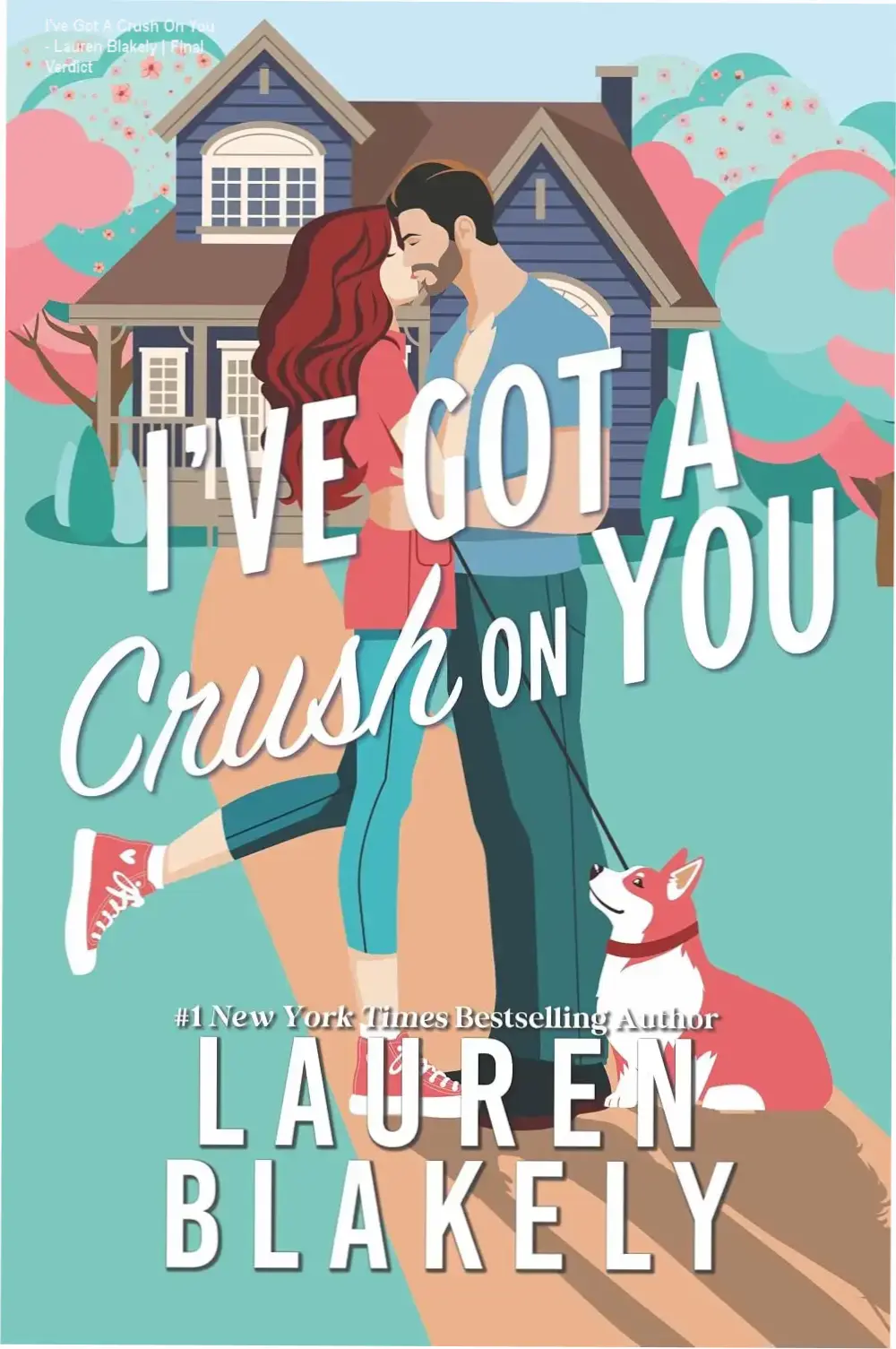
I’ve Got A Crush On You – Lauren Blakely | Final Verdict
Finding love in the workplace is a gamble most of us avoid. One wrong move and your professional reputation becomes a punchline in the breakroom, or worse, a HR nightmare.
Lauren Blakely taps into this anxiety in I’ve Got A Crush On You, blending the fear of professional failure with the visceral thrill of forbidden chemistry.
- The Risk: Mixing business with pleasure in a small town.
- The Reward: High-tension romantic payoff and emotional healing.
- The Genre: A polished, steamy Small Town Rom-Com.
Readers typically enter this story expecting a predictable “enemies-to-lovers” arc, but the real draw is the tension between professional boundaries and irresistible physical attraction.
It’s a narrative about overcoming past romantic trauma while navigating the awkwardness of a one-night stand that becomes a daily business meeting.
- Expectation: Fluffy romance with dogs.
- Reality: A sophisticated balance of steam and emotional growth.
- Impact: Solidifies the Darling Springs series as a benchmark for trope execution.
Ready to dive into “I’ve Got A Crush On You”?
Explore available editions, check current live pricing, or download a free sample directly on Amazon.
Preview Free Sample & Check Price on Amazon
*You will be redirected to Amazon. As an Amazon Associate, we may earn from qualifying purchases.
The Trope Alchemy: Grumpy vs. Sunshine
The core of this novel relies on the Grumpy/Sunshine dynamic. Chloe is the radiant dog trainer; Sawyer is the rigid, tailored-suit owner of the doggy daycare.
Blakely avoids the common pitfall of making the “grumpy” lead unbearable. Sawyer isn’t mean; he’s structured, which creates a perfect friction against Chloe’s spontaneity.
- Chloe: Optimistic, resilient, and emotionally open.
- Sawyer: Disciplined, reserved, and secretly yearning for chaos.
- The Friction: Professional distance vs. primal attraction.
This contrast is most effective during their workplace interactions. The “forced proximity” isn’t just about sharing a room, but sharing a business goal.
The tension builds not through grand gestures, but through small, tactile moments—a brush of a shoulder or a lingering look while training a dog.
- Tactile Tension: High.
- Dialogue Sharpness: Quick-witted and playful.
- Character Chemistry: Organic and believable.
Narrative Pacing and the “Oops” Factor
The plot kicks off with a high-energy “one-night stand” catalyst. This is a classic romance move, but Blakely uses it to establish immediate stakes.
The transition from a steamy night to a formal business contract creates an immediate power imbalance that keeps the reader engaged.
- The Hook: An accidental lake rescue leading to a passionate night.
- The Twist: The stranger is the boss/contractor.
- The Conflict: Trying to maintain professionalism while remembering the chemistry.
The pacing is steady, avoiding the “middle-book slump” often found in 400+ page novels. The plot moves logically from denial to reluctant acceptance.
By introducing the charity dance plot, Blakely adds a secondary layer of forced proximity that pushes the characters toward an inevitable breaking point.
- Plot Progression: Linear and satisfying.
- Steam Level: High, but balanced with plot.
- Conflict Resolution: Earned, not rushed.