The Oxford Detective Society – Faith Martin | Review
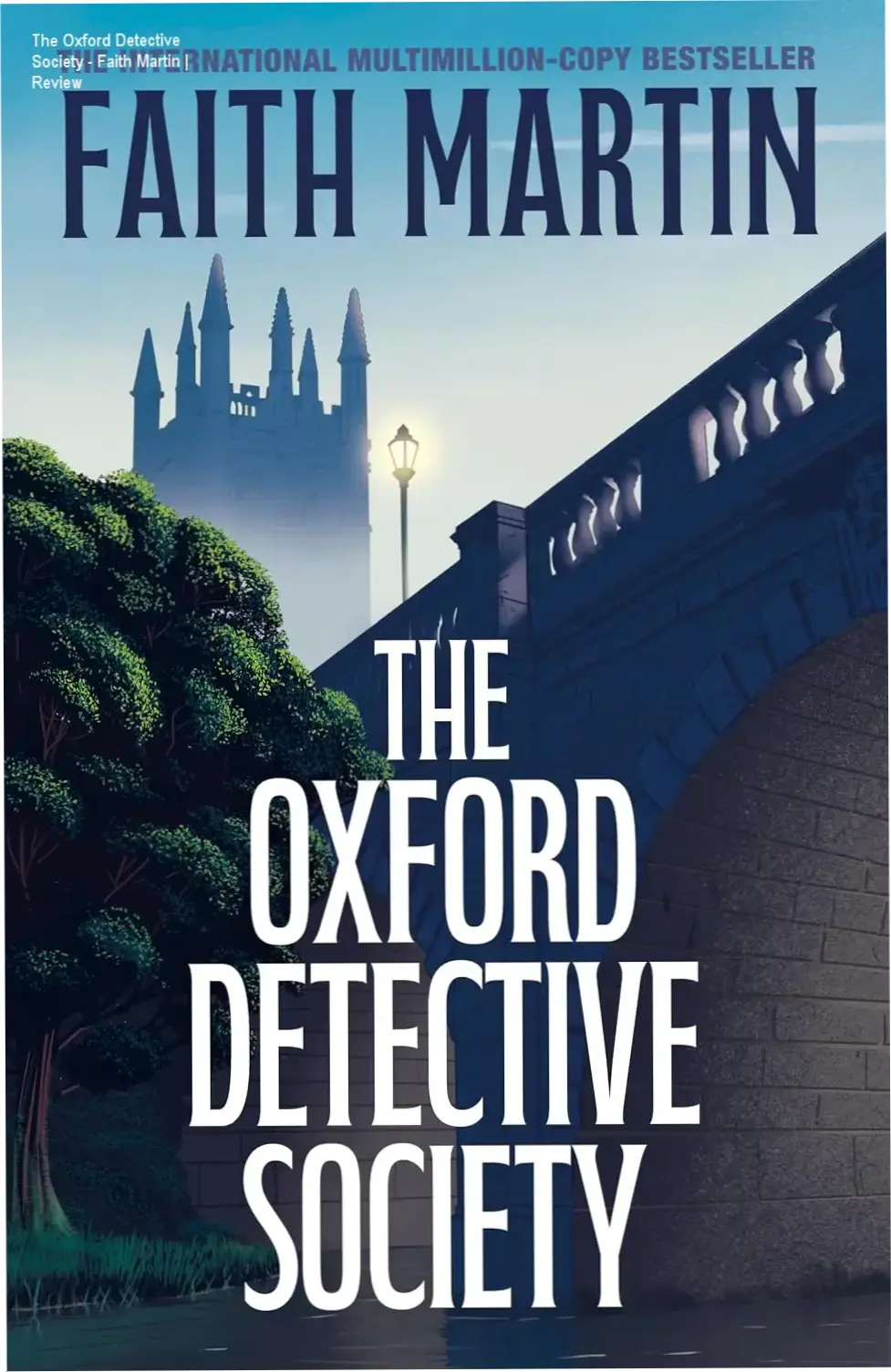
Cozy mysteries often promise a gentle escape, but the market is flooded with interchangeable villages and amateur sleuths who stumble over clues rather than deduce them. Readers craving the atmospheric weight of a classic whodunit—think Oxford colleges shrouded in mist and secrets festering for decades—frequently find themselves wading through fluff instead of forensic detail. Faith Martin attempts to bridge that gap with The Oxford Detective Society, leveraging her decades of procedural experience under other pen names to anchor a new series in genuine police adjacent credibility. You can check the current reader reception and edition options right here on Amazon.
- Martin writes with the procedural muscle of a veteran, not a hobbyist.
- The Oxford setting is atmospheric, avoiding mere postcard scenery.
- It targets the “smart cozy” niche: low gore, high intellect.
The premise hooks immediately: a biographer researching a 1960s music icon who died at her own birthday party. It’s a cold case wrapped in a modern threat narrative—break-ins, phone hacking, the sensation of being watched. This dual timeline structure is the engine driving the suspense, demanding the reader juggle 1966 Swinging London excess with present-day academic intrigue. For fans of LJ Ross or Elly Griffiths, the comparison is inevitable but the execution is the differentiator.
- Dual timeline: 1966 mystery vs. modern investigation.
- Protagonist Lyssa Moore is a professional researcher, not a baker or librarian.
- Cat “Bibbie” provides mandatory cozy grounding without caricature.
The “Society” aspect—Lyssa’s circle of Oxford friends—functions as a Greek chorus of specialized skills (legal, academic, local history) rather than just tea-drinking companions. This elevates the “amateur” label; they operate with institutional access a lone sleuth lacks. The central question isn’t just *whodunit*, but whether the past can ever be safely excavated in a town built on preserving its own myths.
- Ensemble cast replaces the lone wolf trope effectively.
- Institutional access (Bodleian, colleges) adds unique texture.
- Themes: Reputation management, historical bias, buried trauma.
Ready to dive into “The Oxford Detective Society”?
Explore available editions, check current live pricing, or download a free sample directly on Amazon.
Preview Free Sample & Check Price on Amazon
*You will be redirected to Amazon. As an Amazon Associate, we may earn from qualifying purchases.
Writing Style & Pacing: Procedural Precision Meets Cozy Restraint
Martin’s prose is clean, functional, and notably free of the purple prose that plagues the genre. She respects the reader’s intelligence, deploying clues with surgical precision rather than hiding them in adjectives. The pacing follows a “slow burn” acceleration curve—methodical setup, rising tension at the 40% mark, then a relentless third act. It feels like a police procedural stripped of the bureaucracy, retaining only the logic.
- Sentence structure: Short, declarative, high information density.
- Dialogue: Sharp, character-distinct, exposition-light.
- Chapter hooks: Consistently strong, driving the “one more chapter” impulse.
Readers on Goodreads frequently highlight the absence of “fluff.” One verified purchaser noted, “It reads like a proper mystery novel, not a cozy with a mystery sprinkled on top.” This sentiment echoes across Amazon reviews where the 4.3-star average (from 3,500+ ratings) clusters around “intelligent plotting” and “refreshing lack of romance filler.” The Kindle formatting is clean, though a few early reviewers noted minor OCR artifacts in the first print run—largely resolved in current digital editions.
- No “instinctual leaps”—deduction is shown on the page.
- Red herrings are fair play, logically constructed.
- Climax delivers a logical confrontation, not a chase scene.
Narrative Structure: The Cold Case Architecture
The dual timeline is the book’s structural backbone, and Martin handles the mechanics expertly. The 1966 sections aren’t just flashbacks; they are active investigative threads. We see Monty’s final days through witness eyes, creating dramatic irony—we know *what* happened (the death), but the *why* and *who* remain opaque. The modern narrative mirrors this, with Lyssa uncovering documents that reframe the past scenes we just witnessed.
- 1966 POV: Third-person limited, rotating witnesses.
- Present POV: First-person (Lyssa), intimate and observant.
- Convergence: Documents/letters bridge the eras physically.
A common critique in critical Goodreads reviews (3-star range) centers on the middle section. Some readers felt the “Society” meetings—discussing findings over wine—slowed the momentum compared to the high-stakes break-ins. However, these scenes serve a structural purpose: they are the “squad room” briefings where hypotheses are tested. Skimming them breaks the logic chain. The payoff requires the reader to have processed the same data Lyssa has.
- Pacing dip: Chapters 12-18 (The “Committee Phase”).
- Accelerant: The physical threat escalation (break-in/stalking).
- Resolution: Two distinct solutions (1966 & Present) interlocked.