The Last Time I Lied: Final Verdict on Riley Sager’s Novel
Most of us have a place we promise never to return to. A childhood home, a failed relationship, or a specific street corner that triggers a visceral sense of dread. We tell ourselves that time heals, but trauma is more like a stain—it doesn’t disappear; it just fades until something rubs it the wrong way.
When readers pick up a psychological thriller, they aren’t looking for a comforting story. They want the thrill of being lied to by an author they trust. Riley Sager has built a career on this deception. In The Last Time I Lied, he taps into the specific horror of “summer camp” nostalgia, twisting a place of growth into a site of haunting.
Ready to dive into “The Last Time I Lied”?
Explore available editions, check current live pricing, or download a free sample directly on Amazon.
Preview Free Sample & Check Price on Amazon
*You will be redirected to Amazon. As an Amazon Associate, we may earn from qualifying purchases.
Atmospheric Tension and the “Sager Pace”
Riley Sager doesn’t do “subtle.” He does “atmospheric.” From the first chapter, the reader is dropped into a claustrophobic blend of New York art galleries and the damp, oppressive woods of Camp Nightingale.
The pacing follows a calculated rhythm. It starts as a slow burn, focusing on Emma’s internal guilt and the haunting nature of her paintings. Then, it accelerates into a frantic search for the truth.
Sager uses the environment as a character. The lake isn’t just water; it’s a void. The woods aren’t just trees; they are walls. This creates a sense of inevitable entrapment that mirrors the protagonist’s psychological state.
However, for some, the “slow burn” might feel like a “slow crawl.” If you prefer high-octane action from page one, the first third of the book may test your patience.
| Element | Analysis | Impact on Reader |
|---|---|---|
| Setting | Isolated summer camp / Urban NYC | High contrast; creates a feeling of displacement. |
| Pacing | Gradual escalation | Builds dread, though can feel sluggish initially. |
| Tone | Melancholic and Paranoid | Keeps the reader questioning every character’s motive. |
The Narrative Architecture: Two Truths and a Lie
The book centers on a game: “Two Truths and a Lie.” This isn’t just a plot device; it is the actual blueprint of the narrative structure.
Emma is an unreliable narrator—not because she is malicious, but because she is traumatized. Her memories are fragmented. She is literally painting her way back to the truth.
Sager plays with the reader’s expectations by feeding us information in increments. He gives you two facts and one deception, then waits for you to guess which is which.
This creates an active reading experience. You aren’t just consuming a story; you are attempting to solve a puzzle where the pieces are constantly changing shape.
“The most dangerous lies are the ones we tell ourselves to survive the night.”
This quote encapsulates the core conflict. The horror isn’t just what happened at the camp; it’s the mental gymnastics Emma performed for fifteen years to ignore it.
Expectation vs. Reality: The Twist Factor
Who This Book Is Actually For
This isn’t a literary exercise in prose; it’s a high-tension puzzle. If you enjoy the “unreliable narrator” trope where the protagonist’s memory is a minefield, this is for you.
It appeals specifically to readers who crave atmospheric isolation—think foggy lakes, oppressive forests, and the lingering dread of childhood trauma.
If you liked the cinematic tension of The Guest List or the psychological layering of The Girl on the Train, Sager’s pacing will hit the mark.
Who Should Skip This Book
Skip this if you demand airtight, procedural logic over atmospheric tension. Sager prioritizes the “twist” and the “vibe” over meticulous forensic detail.
Also, if you are fatigued by the “returning to a childhood place to solve a mystery” cliché, you will likely find the plot beats predictable within the first 50 pages.
Readers seeking deep, transformative character arcs will find the protagonists here to be more like chess pieces moving toward a reveal than fully fleshed-out humans.
Value for Money: Entertainment vs. Depth
At 402 pages, the pacing is aggressive. You aren’t paying for philosophical insights; you’re paying for a curated experience of suspense.
The value lies in the “binge-ability.” It is a “one-sitting” book. The high information gain per page—in terms of plot progression—makes the price-to-entertainment ratio favorable for casual readers.
Editorial Verdict: Realistic Expectations
Is it a quick read? Yes. The chapter structure is designed to trigger a “just one more” response.
Is the twist satisfying? It is divisive. While some find the resolution brilliant, skeptics may find it leans too heavily on shock value rather than earned foreshadowing.
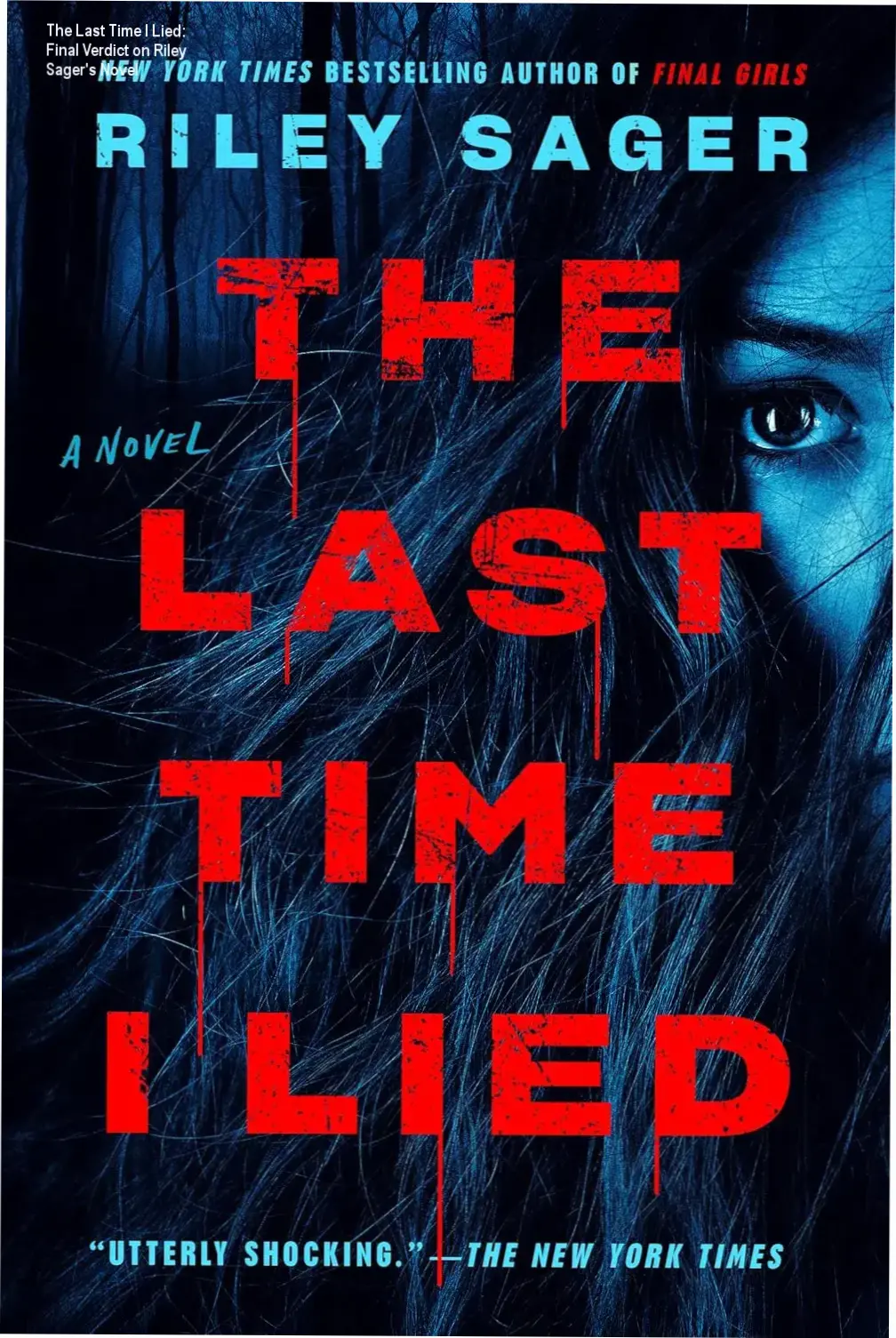
Ultimately, it’s a polished piece of commercial fiction. It delivers exactly what the cover promises: a tense, twisty, and slightly claustrophobic summer camp mystery.
To verify if the current edition fits your budget or to browse the latest verified buyer critiques, you can check the live listings on Amazon.
Final Editorial Verdict
“The Last Time I Lied” delivers on its core promise for its intended audience, offering compelling insights without fluff. As highlighted in our detailed edition breakdown, its practical depth and readability are its greatest strengths.
We also recommend checking the official Kindle sample and reader ratings before making your final purchase decision.
Posts Similares
West with Giraffes: Expert Analysis of Lynda Rutledge’s Bestseller
Historical fiction often struggles to balance meticulous research with a pulse-pounding narrative, frequently drowning the reader in period detail while the plot gasps for air. Lynda Rutledge sidesteps this trap entirely by anchoring a massive, improbable event—the cross-country transport of two giraffes in 1938—through the intimate, weathered voice of a 105-year-old man looking back. It…
The Oxford Detective Society – Faith Martin | Review
Cozy mysteries often promise a gentle escape, but the market is flooded with interchangeable villages and amateur sleuths who stumble over clues rather than deduce them. Readers craving the atmospheric weight of a classic whodunit—think Oxford colleges shrouded in mist and secrets festering for decades—frequently find themselves wading through fluff instead of forensic detail. Faith…
Her First Lie: Complete Technical Analysis & Plot Verdict
We like to believe we can escape our origins. We tell ourselves that the trauma of our parents or the dysfunction of our childhood is a ghost we can outrun if we just move far enough away or work hard enough. But psychological thrillers like Her First Lie thrive on the uncomfortable truth that we…
Witch Collector – Charissa Weaks | Analise
We need to produce first part of professional analytical book review for “{{BOOK_TITLE}}” by {{AUTHOR_NAME}}. Must start with a contextualization paragraph, max 3 lines? Actually each paragraph must be max 3 lines, but we can have multiple paragraphs. Must include bulleted list after every 2 paragraphs. Must include exactly 1 contextual affiliate link in first…
The Things We Never Say by Elizabeth Strout: Complete Dossier
There is a specific kind of quiet desperation that settles in the chest after three decades of marriage. It isn’t hatred. It isn’t even boredom, exactly. It is the terrifying realization that the person sleeping beside you has become a landscape you no longer recognize, mapped by secrets you never agreed to keep. Elizabeth Strout…
Baby Girl (Sugar Life #4): Definitive Finale Analysis
Finishing a long-running “why choose” series is rarely just about closing plot loops; it is about landing the emotional plane after hundreds of pages of escalating tension. Readers invest not just in the romance, but in the specific architecture of the polyamorous dynamic—watching how distinct personalities balance a shared relationship without collapsing into chaos. The…