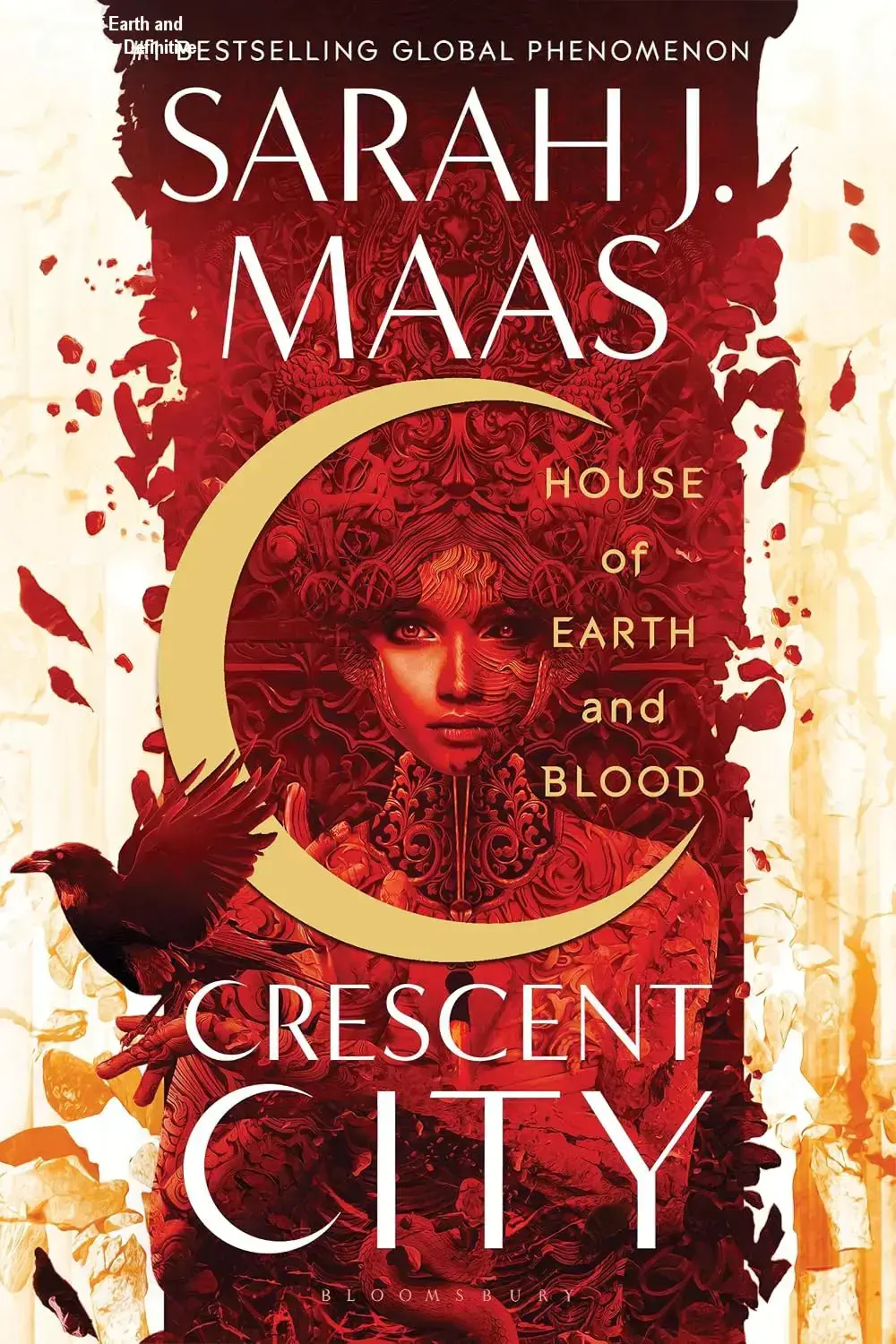
House of Earth and Blood: The Definitive Analysis
Most readers enter the world of Urban Fantasy seeking a specific escape: a reality where the mundane grit of city life clashes with the impossible. We want the neon lights and the smartphones, but we also want the wings, the demons, and the cosmic stakes. The challenge for any author is balancing this without letting the “world-building” become a textbook that kills the narrative momentum.
Sarah J. Maas arrives at this project with a massive shadow looming over her—the legacy of the ACOTAR series. Expectations aren’t just high; they are borderline suffocating. For those wondering if this transition to a modern setting works, you can check the current reader reception and availability here to see how the community has reacted to this shift in genre.
Ready to dive into “House of Earth and Blood”?
Explore available editions, check current live pricing, or download a free sample directly on Amazon.
Preview Free Sample & Check Price on Amazon
*You will be redirected to Amazon. As an Amazon Associate, we may earn from qualifying purchases.
The “Doorstopper” Dilemma: Pacing and Volume
Let’s be honest: 816 pages is an intimidating commitment. In the modern reading market, where attention spans are shrinking, Maas decides to go in the opposite direction. She doesn’t just tell a story; she builds a metropolis.
The pacing is the most contested point among readers on platforms like Reddit and Goodreads. The first half of the book feels like a slow climb. Maas spends a significant amount of time establishing the social hierarchy of Crescent City—the tension between humans, angels, and shifters.
For some, this is immersive. For the skeptical reader, it can feel like “filler.” However, the narrative structure is designed as a slow-burn mystery. The payoff in the final 200 pages is where the book transforms from a procedural investigation into a high-stakes fantasy epic.
If you are looking for instant gratification, this isn’t it. But if you enjoy the feeling of a world gradually unveiling its secrets, the length becomes a tool rather than a hurdle.
World-Building: Magic meets Modernity
The brilliance of Crescent City lies in its “Urban” execution. We aren’t just seeing magic in a city; we are seeing how magic would actually integrate into a capitalist, bureaucratic society.
Think about it: how do you regulate a population of winged beings in a city with skyscrapers? How does the legal system handle a demon murder? Maas handles these details with a level of curiosity that prevents the world from feeling like a generic backdrop.
The integration of technology—phones, clubs, and digital records—contrasted with ancient blood-debts and Archangels creates a friction that drives the plot forward. It’s a world that feels lived-in, scarred, and deeply unfair.
| Feature | Execution | Verdict |
|---|---|---|
| World Detail | High density of lore and social rules | Immersive but heavy |
| Magic System | Blended with modern urban life | Innovative and consistent |
| Narrative Pace | Slow start, explosive finale | Polarizing |
Character Dynamics: The Bryce and Hunt Equation
Bryce Quinlan is not your typical fantasy protagonist. She is loud, loves to party, and is deeply flawed. Her grief is the emotional engine of the story, and it’s handled with a raw honesty that grounds the more fantastical elements.
This isn’t a book for the casual reader looking for a light weekend distraction. With over 800 pages, House of Earth and Blood is a commitment. It is specifically engineered for the “Romantasy” enthusiast who craves dense world-building and high-stakes emotional tension.
The ideal reader is someone who enjoys the “slow burn.” If you appreciate a narrative that spends significant time establishing the political landscape and the visceral pain of loss before hitting its stride, you will find this rewarding.
Who should skip this book:
- The “Fast-Pace” Purist: If you get frustrated by extensive exposition or “info-dumping” in the first 200 pages, this will feel like a slog.
- The Minimalist: Readers who prefer lean, tight plotting over sprawling urban fantasy epics.
- The Plot-Only Reader: If romance and interpersonal dynamics feel like “filler” to you, the pacing here will feel off.
Value for Money: The “Brick” Analysis
From a purely technical standpoint, the value is high. You are getting a massive amount of content for the price of a standard paperback. However, the real cost here is time.
A common purchasing mistake is treating this as a standalone murder mystery. It is not. This is the foundational volume of a trilogy. Buying this book is an entry fee into a much larger ecosystem. If you aren’t prepared to commit to the subsequent volumes, the ending may feel like a cliffhanger rather than a conclusion.
Editorial Verdict: The Trade-Off
Sarah J. Maas succeeds in creating a vivid, gritty metropolis, but the book suffers from its own ambition. The first half is heavy on setup, which can feel disjointed. Yet, once the chemistry between Bryce and Hunt ignites and the mystery tightens, the momentum becomes nearly impossible to stop.
It is a calculated risk of a book: high entry barrier, but a massive payoff for those who stick with it. If you can push through the initial density, the emotional resonance of the finale justifies the length.
To see if the writing style aligns with your taste, we recommend checking the current reader sentiment and verified user reviews on Amazon.
Final Editorial Verdict
“House of Earth and Blood” delivers on its core promise for its intended audience, offering compelling insights without fluff. As highlighted in our detailed edition breakdown, its practical depth and readability are its greatest strengths.
We also recommend checking the official Kindle sample and reader ratings before making your final purchase decision.
*You will be redirected to Amazon. As an Amazon Associate, we earn from qualifying purchases.