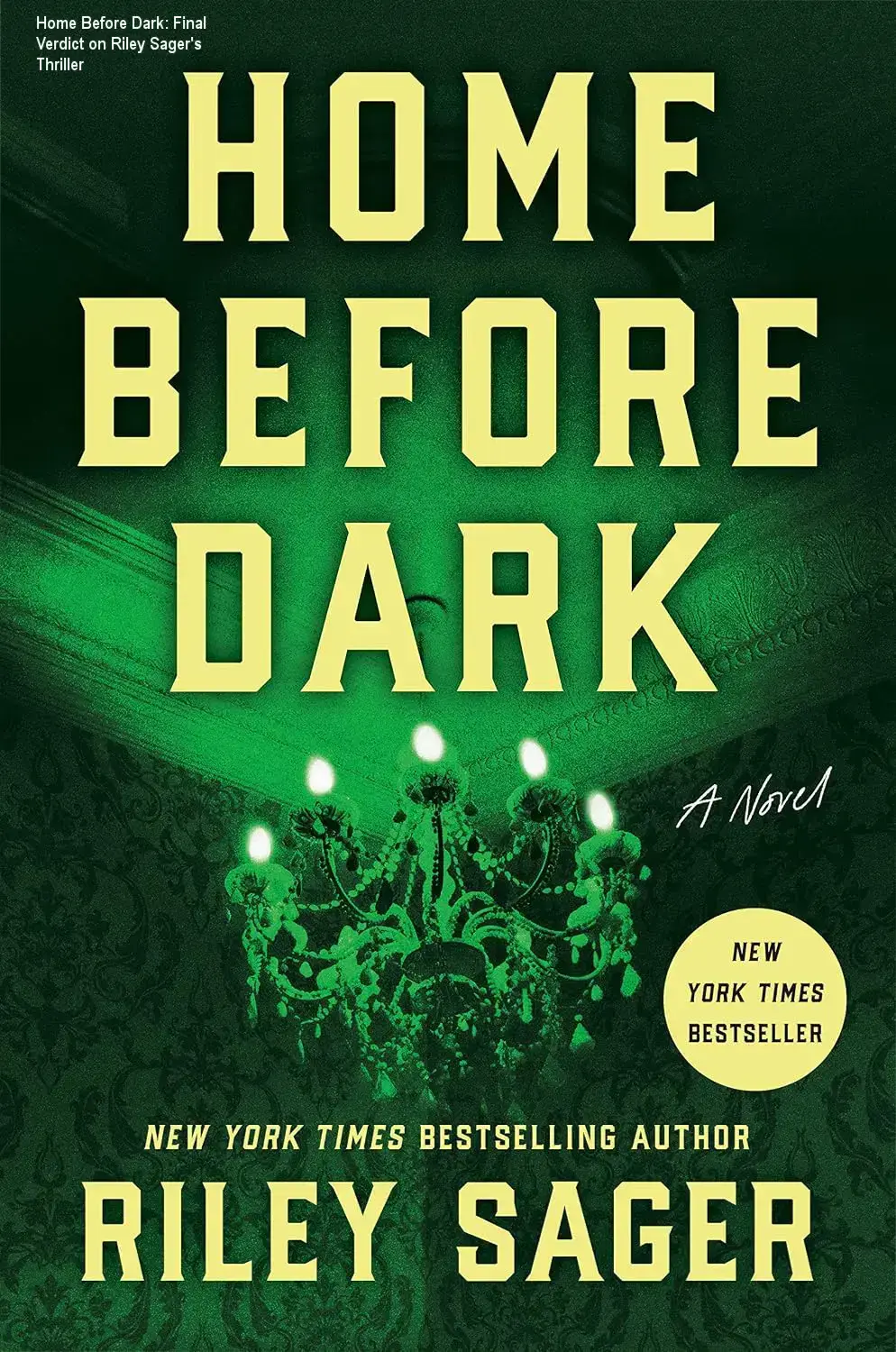
Home Before Dark: Final Verdict on Riley Sager’s Thriller
Most of us have a family story that sounds like a total lie—a legendary ancestor, a mysterious tragedy, or a childhood event that everyone remembers except you. It is a strange, isolating feeling to be the only skeptic in a room full of believers, especially when the “truth” has been commodified into a bestselling book.
Riley Sager plays with this psychological tension in Home Before Dark, blending the Gothic atmosphere of a haunted house with the cold logic of a psychological thriller. If you are looking to see if this narrative holds up against the hype or if it’s just another ghost story trope, you can check the current reader reception and availability on Amazon.
Ready to dive into “Home Before Dark”?
Explore available editions, check current live pricing, or download a free sample directly on Amazon.
Preview Free Sample & Check Price on Amazon
*You will be redirected to Amazon. As an Amazon Associate, we may earn from qualifying purchases.
The Sager Blueprint: Pacing and Cinematic Prose
Riley Sager doesn’t write novels; he writes screenplays in book form. The pacing is aggressive. He understands the “one more chapter” psychology perfectly, ending almost every section on a cliffhanger or a disturbing revelation.
The prose is lean. There is very little fluff. Sager avoids the dense, flowery descriptions typical of Gothic novels, opting instead for a direct, modern style that keeps the plot moving at a breakneck speed.
However, for some, this “cinematic” approach feels a bit mechanical. If you prefer deep, lyrical explorations of grief, you might find the narrative too focused on the “what happens next” rather than the “why it matters.” But for a weekend binge-read, it’s highly effective.
| Technical Aspect | Analysis | Verdict |
|---|---|---|
| Narrative Pace | High-velocity, short chapters | Excellent for engagement |
| Atmosphere | Claustrophobic, eerie, Victorian | Strongly immersive |
| Complexity | Linear with strategic flashbacks | Easy to follow |
| Genre Blend | Ghost Story vs. Crime Thriller | Balanced |
The Skeptic’s Journey: Expectation vs. Reality
The core of the book is Maggie Holt’s skepticism. She is a restorer of old homes, someone who deals with the physical reality of wood, stone, and nails. She doesn’t believe in ghosts because ghosts aren’t practical.
This creates a fantastic tension. The reader is placed in a tug-of-war: do we believe the father’s famous memoir, House of Horrors, or do we trust Maggie’s rational mind? Sager expertly feeds the reader just enough “supernatural” evidence to make you doubt the skeptic.
Based on discussions in the Goodreads community, many readers appreciate that Maggie isn’t a “damsel in distress.” She is competent and stubborn. The conflict isn’t just about the house; it’s about a daughter trying to dismantle the myth her father built for profit.
“The most terrifying thing about Baneberry Hall isn’t the possibility of ghosts, but the realization that the people we trust are the ones capable of the most calculated horrors.”
Baneberry Hall: The House as a Character
The setting is not just a backdrop; it’s an antagonist. Baneberry Hall is described with a level of detail that makes it feel alive. The creaks, the shadows, and the oppressive Victorian architecture contribute to a feeling of constant surveillance.
Sager uses the house to mirror Maggie’s internal state. As she strips away the wallpaper and removes the old floorboards, she is simultaneously stripping away the lies of her childhood. The act of renovation becomes a metaphor for uncovering the truth.
Critics often point out that the “haunted house” trope is exhausted. Sager knows this. He leans into the cliché only to subvert it. He plays with the reader’s knowledge of the genre, making you expect a jump-scare when he’s actually setting up a plot twist.
The “Sager Twist” and Reader Consensus
Let’s be skeptical for a moment. Riley Sager is known for his twists. Some readers on Reddit argue that his
Who Should Actually Read This?
Home Before Dark isn’t for everyone. If you are looking for a traditional, jump-scare-heavy ghost story, you might find the pacing frustrating. This is a psychological puzzle wrapped in a Gothic atmosphere.
The ideal reader:
- Fans of “The Haunting of Hill House” who enjoy the tension between sanity and supernatural occurrences.
- Readers who appreciate the “skeptic protagonist” trope—someone who actively fights against the evidence of the paranormal.
- Those who enjoy slow-burn mysteries where the house itself feels like a living, breathing antagonist.
Who should skip it:
- Readers who demand fast-paced, high-action thrillers from page one.
- People who are allergic to “twist” endings that require you to re-evaluate everything you just read.
- Those seeking a purely supernatural horror novel without a grounded, logical explanation.
Value for Money & Market Positioning
At nearly 400 pages, the book offers significant “bang for your buck” in terms of immersion. Sager excels at building a claustrophobic environment that justifies the length. You aren’t paying for fluff; you’re paying for a meticulously constructed trap.
A common purchasing mistake is treating this as a quick “beach read.” While the prose is accessible, the narrative structure requires attention to detail. If you skim, you’ll miss the breadcrumbs that make the climax satisfying.
Editorial Verdict: Logic vs. Lore
The strength of the novel lies in its cynicism. Maggie Holt is a refreshing protagonist because she refuses to be a victim of her father’s narrative. The tension doesn’t come from “Is there a ghost?” but rather “What is the actual, human truth behind the lie?”
While some may find the resolution polarizing, the execution is technically sound. It avoids the clichés of the “haunted house” genre by pivoting into a study of family trauma and the cost of fame. It’s a calculated read that delivers a high return on emotional investment.
For those undecided on whether the plot twists hold up, we recommend browsing the latest reader reviews and community ratings to see if the ending aligns with your taste in thrillers.
Final Editorial Verdict
“Home Before Dark” delivers on its core promise for its intended audience, offering compelling insights without fluff. As highlighted in our detailed edition breakdown, its practical depth and readability are its greatest strengths.
We also recommend checking the official Kindle sample and reader ratings before making your final purchase decision.
*You will be redirected to Amazon. As an Amazon Associate, we earn from qualifying purchases.