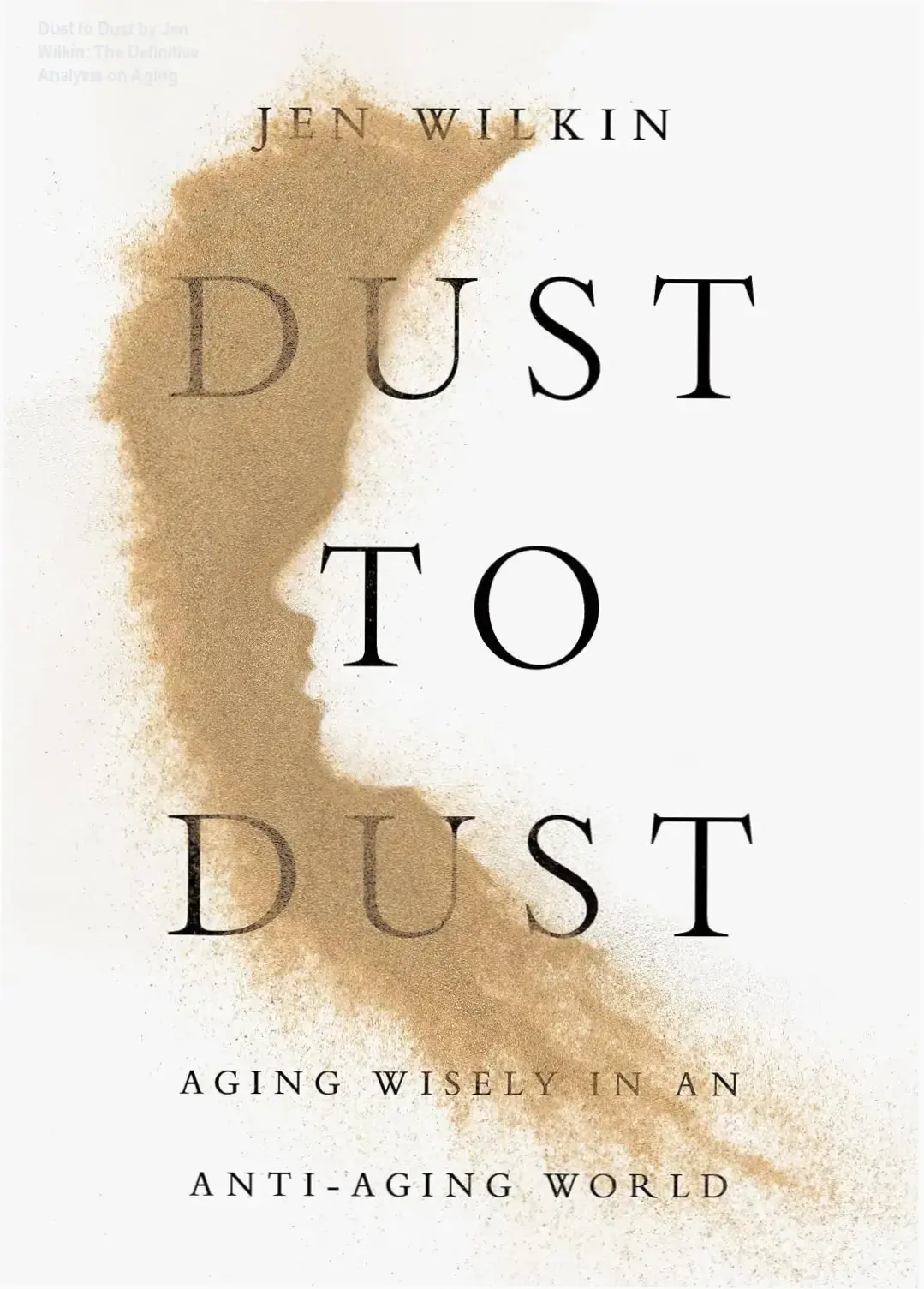
Dust to Dust by Jen Wilkin: The Definitive Analysis on Aging
We live in a culture obsessed with the “forever young” aesthetic. From aggressive skincare routines to the psychological terror of the first wrinkle, the modern narrative is clear: aging is a failure, a steep descent into irrelevance that must be fought with every available chemical and surgical tool.
For the faith-driven reader, this creates a cognitive dissonance between the world’s panic and the biblical promise of wisdom. Jen Wilkin’s latest work attempts to dismantle this anti-aging mindset, offering a framework where aging is not a loss of value, but a shift in it. You can check the current reception of Dust to Dust to see how readers are reacting to this counter-cultural perspective.
Ready to dive into “Dust to Dust: Aging Wisely in an Anti-Aging World”?
Explore available editions, check current live pricing, or download a free sample directly on Amazon.
Preview Free Sample & Check Price on Amazon
*You will be redirected to Amazon. As an Amazon Associate, we may earn from qualifying purchases.
The Analytical Approach to Decay
Jen Wilkin isn’t known for “fluffy” inspirational writing. She is a technician of the text. In Dust to Dust, she applies this same precision to the concept of biological and spiritual aging.
The book avoids the common trap of sentimentalizing old age. Instead, it treats aging as a structural reality of the human condition. Wilkin argues that the “anti-aging” movement is essentially a lie that diminishes both the young and the elderly.
By framing aging as a “give-and-take design,” she moves the conversation from “how do I stop this?” to “what is God doing through this?” It is a cold shower for those hoping for a quick fix to the fear of death.
Symmetry and the Chiastic Life
One of the most striking elements of the book is Wilkin’s use of the chiastic poem metaphor. For the uninitiated, a chiasm is a literary structure where ideas are presented in one order and then repeated in reverse (A-B-B-A).
Wilkin uses this to draw poetic parallels between the first half of life and the second. She explores how the dependency of infancy mirrors the dependency of late age, not as a tragedy, but as a symmetrical design.
This intellectual framework transforms the reading experience from a simple devotional into a theological study. It forces the reader to see their life not as a straight line ending in a cliff, but as a completed arc.
| Technical Detail | Specification |
|---|---|
| Core Metaphor | Chiastic Symmetry (Life’s Arc) |
| Primary Goal | Replacing “Anti-Aging” with “Biblical Wisdom” |
| Length | 208 Pages (Concise and Direct) |
| Key Focus | Caregiving, Body Image, and Stewardship of Time |
Practical Takeaways vs. Theological Theory
A common criticism of highly analytical authors is that they stay in the clouds. Wilkin manages to ground her theory in the grit of daily life. She doesn’t ignore the pain of failing health or the frustration of diminishing abilities.
She tackles body image with a refreshing skepticism toward cultural standards. The focus shifts from “maintaining a look” to “honoring an image-bearer.”
The sections on caregiving are particularly poignant. She addresses the tension of the “sandwich generation”—those caring for children and aging parents simultaneously—providing a theological justification for the burden.
“The world tells us that aging is a steep descent into irrelevance. Scripture reveals a pattern of increasing value.”
Reader Sentiment and Market Fit
Looking at feedback from Goodreads and Amazon, the consensus is that this book is an “anchor.” Readers in their 20s report a shift in how they view their elders, while those in their 60s feel a sense of validation that is rare in modern media.
Some critics might find the tone too academic or “dry” if they are looking for emotional comfort. However, for those who prefer a logical argument over a heartfelt anecdote, Wilkin hits the mark perfectly.
It occupies a unique space in the “Christian Meditation” genre. It isn’t a “how-to” guide for retirement; it’s a “why-to” guide for existing in a decaying body.
The Learning Curve: Who is this for?
This is not a beach read. It requires a level of mental engagement and a willingness to confront the reality of one’s own mortality. The “difficulty” isn’t in the vocabulary, but in the conviction.
If you are looking for a book that tells you that you can “stay 25 forever” through positive thinking, this will irritate you. If you are tired of
Who This Book Is Actually For
Jen Wilkin isn’t writing for the bio-hacking crowd. If you are looking for a guide on intermittent fasting, skincare routines, or the latest longevity supplements, this is not your book.
This is a theological realignment. It is designed for the Christian who feels the quiet anxiety of a mirror that doesn’t look the same as it did ten years ago, or the professional who fears they are sliding into irrelevance.
- The Young Adult: To build a foundation of wisdom before the crisis of middle age hits.
- The Mid-Lifer: To navigate the “give-and-take” of caregiving—both for children and aging parents.
- The Elder: To reclaim their value in a culture that treats aging as a failure of maintenance.
The “Skip This” Warning
You should probably skip Dust to Dust if you prefer a linear, “5-step plan” manual. Wilkin uses a chiastic structure—a poetic symmetry. It’s a meditation, not a checklist.
If you are allergic to biblical metaphors or are seeking a purely secular psychological approach to aging, the heavy integration of Scripture will feel restrictive rather than liberating.
Value for Money: Analysis
At 208 pages, the book avoids the typical “filler” found in many devotional works. The value lies in the shift of perspective: moving from anti-aging (fighting a losing battle) to biblical aging (stewarding a divine design).
The investment is low for the psychological relief it provides. It replaces the panic of “losing youth” with the pursuit of “gaining wisdom.” It’s an intellectual pivot that saves more in mental energy than it costs in currency.
Editorial Verdict
Dust to Dust is a sobering but hopeful corrective. It doesn’t promise you’ll feel young; it promises that being old is actually a position of increasing value.
It is a lean, focused work that challenges the modern obsession with youth. For those ready to stop fighting the clock and start numbering their days, it’s an essential read. You can check the current reader ratings and availability via the official Amazon listing.
Final Editorial Verdict
“Dust to Dust: Aging Wisely in an Anti-Aging World” delivers on its core promise for its intended audience, offering compelling insights without fluff. As highlighted in our detailed edition breakdown, its practical depth and readability are its greatest strengths.
We also recommend checking the official Kindle sample and reader ratings before making your final purchase decision.
*You will be redirected to Amazon. As an Amazon Associate, we earn from qualifying purchases.