Fame is a brutal currency. In Hollywood, the transition from “royalty” to “has-been” doesn’t happen over decades; it happens in the blink of a tabloid cycle. Most of us will never walk a red carpet, but we all know the feeling of being replaced—whether by a younger colleague at work or a newer version of a product we once loved.
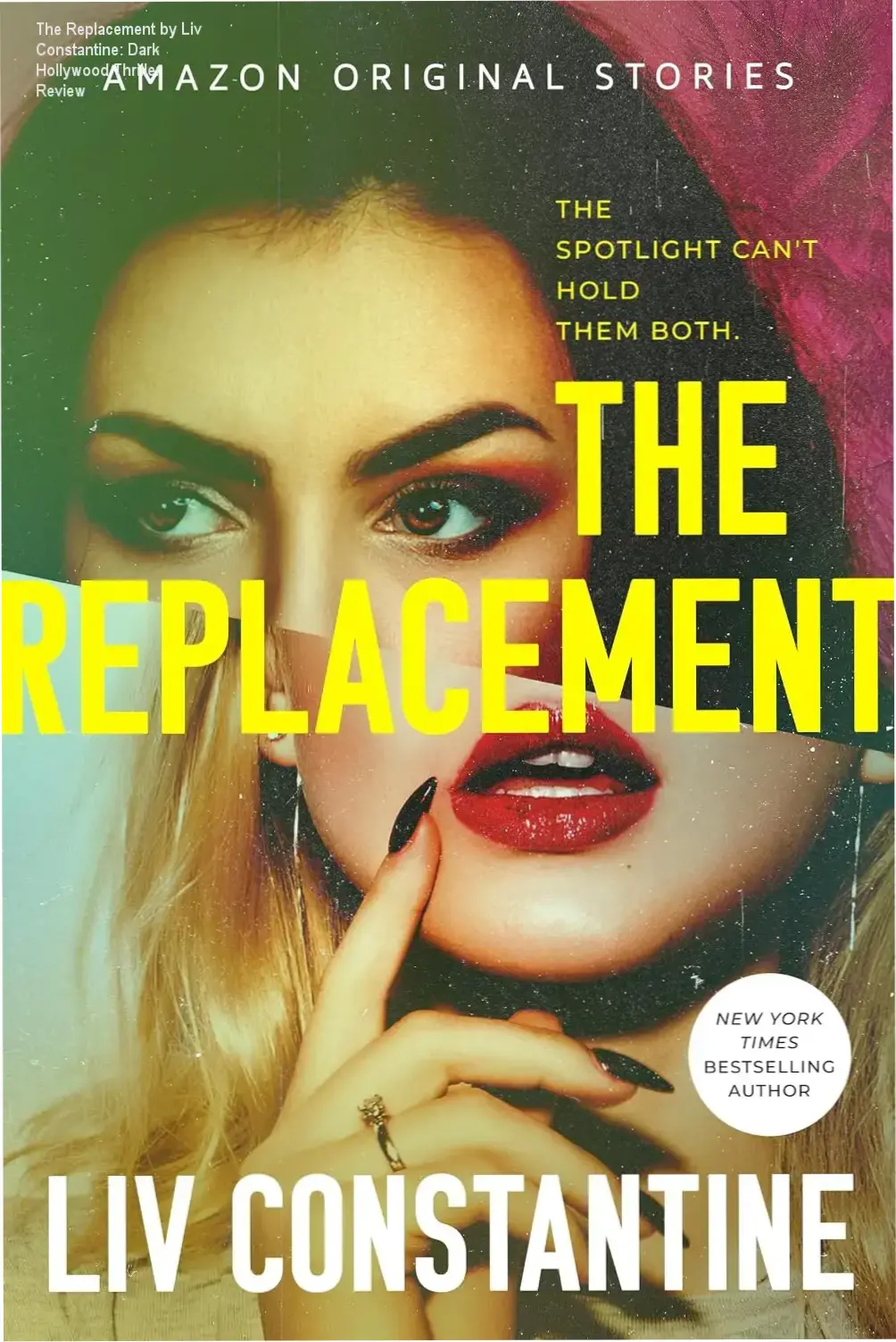
Liv Constantine explores this parasitic relationship in “The Replacement,” a lean narrative that strips away the glamour to reveal the desperation beneath. For readers looking for a quick, psychological punch without the fluff of a 400-page novel, checking the current reception and availability on Amazon reveals a story that divides opinion primarily on its brevity versus its impact.
Ready to dive into “The Replacement”?
Explore available editions, check current live pricing, or download a free sample directly on Amazon.
*You will be redirected to Amazon. As an Amazon Associate, we may earn from qualifying purchases.
The “Short Story” Gamble: Pacing and Density
At 48 pages, “The Replacement” isn’t a novel; it’s a sprint. Constantine doesn’t have the luxury of slow-burn world-building. She drops us directly into the anxiety of Veronica Van Arden, a woman watching her legacy erode in real-time.
The pacing is aggressive. Every sentence serves a dual purpose: moving the plot forward while seeding the inevitable betrayal. For a skeptical reader, this efficiency is the book’s strongest asset.
However, this density is a double-edged sword. Some readers on Goodreads argue that the emotional stakes feel rushed. When you condense a psychological collapse into under 50 pages, you risk the “cliff-notes” effect, where the twist arrives before the reader is fully invested in the characters.
That said, for the modern reader with a shrinking attention span, this format is a masterclass in narrative economy. It removes the filler and delivers the “payoff” with surgical precision.
Power Dynamics: The Mentor and the Parasite
The core of the story is the relationship between Veronica and Sienna. It starts as a classic mentorship: the fading star and the rising ingenue. But the subtext is purely predatory.
Constantine expertly handles the “bright lights, dark shadows” trope. Veronica sees Sienna as a lifeline—a way to regain relevance by association. Sienna, conversely, sees Veronica as a blueprint to be studied and eventually discarded.
This isn’t just about Hollywood; it’s a study of narcissism. Both characters are mirrors of each other, differing only in their current stage of the fame cycle. The tension arises from the reader knowing that this “friendship” is a zero-sum game.
“The brightest lights cast the darkest shadows.” This isn’t just marketing copy; it’s the structural foundation of the plot.
Expectation vs. Reality: The 3.6 Star Dilemma
Looking at the ratings (3.6 on Amazon, 3.5 on Goodreads), there is a clear divide. Why isn’t this a 4.5? The answer lies in the “Kindle Edition” expectation.
Many readers purchase this expecting a novella or a short novel. When they realize it’s a short story, there’s an immediate feeling of “under-delivery,” regardless of the actual quality of the writing.
Technically, the story delivers on its promise of being “twisty.” But for seasoned thriller fans, the twists might feel familiar. Constantine uses a blueprint seen in many “domestic noir” hits: the unreliable ally and the hidden agenda.
If you go in expecting a deep character study, you’ll be disappointed. If you go in expecting a high-tension psychological exercise that you can finish in one sitting, it hits the mark.
Feature
Analysis
Verdict
Who This Is For (And Who Should Skip It)
This story hits a sweet spot for readers who enjoy character-driven psychological tension over high-octane plot twists. If you appreciate the “single-sitting” satisfaction of a novella—something you can finish on a commute or a quiet evening—this delivers.
Fans of Constantine’s full-length novels (The Last Mrs. Parrish, The Wife Stalker) will recognize the signature DNA here: unreliable female dynamics, class friction, and that slow-burn realization that the “helper” might be the predator.
Skip it if: You need a fully fleshed-out cast of 20 characters or a complex police procedural. At 48 pages, there is zero room for subplots. You also shouldn’t buy this expecting a “how-to” on Hollywood mechanics; the setting is backdrop, not subject matter.
Value Proposition: The “Amazon Original” Calculus
Let’s talk price-to-time ratio. This is an Amazon Original Stories release. Often, these are included with Kindle Unlimited. If you have KU, it’s a zero-risk download. If you’re buying outright, you’re paying a premium per page compared to a $4.99 full novel.
Is it worth $1.99–$2.99 (typical price range)? For a tight, well-executed thriller short? Yes. It functions like a pilot episode for a limited series—high concept, high execution, immediate payoff. The “cost” is the lack of lingering resonance; you won’t be unpacking themes weeks later. It’s a palette cleanser, not a main course.
Common Buying Missteps
Expecting a “Short Novel”: It’s a short story. Pacing is accelerated. Character arcs compress into single scenes.
Ignoring the Format: This is digital-first (Kindle Edition). No physical paperback exists for this specific ISBN. Don’t search for a hardcover to gift.
Over-indexing on the Twist: The ending lands, but the journey (Veronica’s paranoia, Sienna’s calculation) is the actual product. Reading just for the “gotcha” misses the craft.
Quick Contextual FAQ
Do I need to read other Liv Constantine books first? No. Standalone completely.
Is it scary or just suspenseful? Suspense. Zero gore, zero supernatural. Pure psychological pressure.
Audiobook? Yes, narrated by January LaVoy. Excellent if you prefer listening; runtime is roughly 1 hour.
Editorial Bottom Line
The Replacement is a masterclass in economic storytelling. It proves you don’t need 300 pages to build a toxic dynamic that feels lived-in. Veronica and Sienna feel like people you’ve met at industry mixers—desperate, polished, dangerous. The constraint of the format forces Constantine to sharpen every sentence; there is no fat here.
The limitation is structural: you crave just one more chapter to see the fallout, but the story ends exactly where it should. That frustration is a compliment. For the price of a coffee, you get a concentrated hit of high-quality domestic noir. Check current pricing and reader sentiment here.
Final Editorial Verdict
“The Replacement: A Short Story” delivers on its core promise for its intended audience, offering compelling insights without fluff. As highlighted in our detailed edition breakdown, its practical depth and readability are its greatest strengths.
Cozy mysteries often promise a gentle escape, but the market is flooded with interchangeable villages and amateur sleuths who stumble over clues rather than deduce them. Readers craving the atmospheric weight of a classic whodunit—think Oxford colleges shrouded in mist and secrets festering for decades—frequently find themselves wading through fluff instead of forensic detail. Faith…
Most people view the concept of “home” as a sanctuary, a place where the world’s noise stops and safety begins. But for some, the front door isn’t a barrier against external threats—it’s the seal of a prison where the predator is the person meant to protect them. True crime often leans into the voyeurism of…
Teaching a two-year-old the concept of sharing is less like education and more like a high-stakes hostage negotiation. Most parents enter the fray hoping for a miracle tool—something that transforms a screaming “Mine!” into a peaceful “Yours!” without a total emotional meltdown. That is where The Rainbow Fish enters the frame. It is not just…
Most of us spend our adult lives building a fortress of predictability. We chase tenure, stable salaries, and a calendar that leaves nothing to chance. But there is a quiet, persistent terror in realizing that a perfectly planned life can still feel entirely empty. This is the psychological precipice where Jacqueline Firkins places her protagonist….
We often treat war as a series of headlines—statistics on casualties, geopolitical shifts, and strategic maps. But for the people living through it, war isn’t a map; it’s the sudden, violent end of a Tuesday afternoon. Most readers turn to fiction to escape reality, yet there is a specific, visceral need to process global trauma…
We have all been there: the suffocating pressure of a family dinner where the only topic of conversation is your lack of a partner. For many, the “perfect mate” is less of a romantic goal and more of a social quota to be filled to keep grandparents happy. It is a universal human friction—the gap…