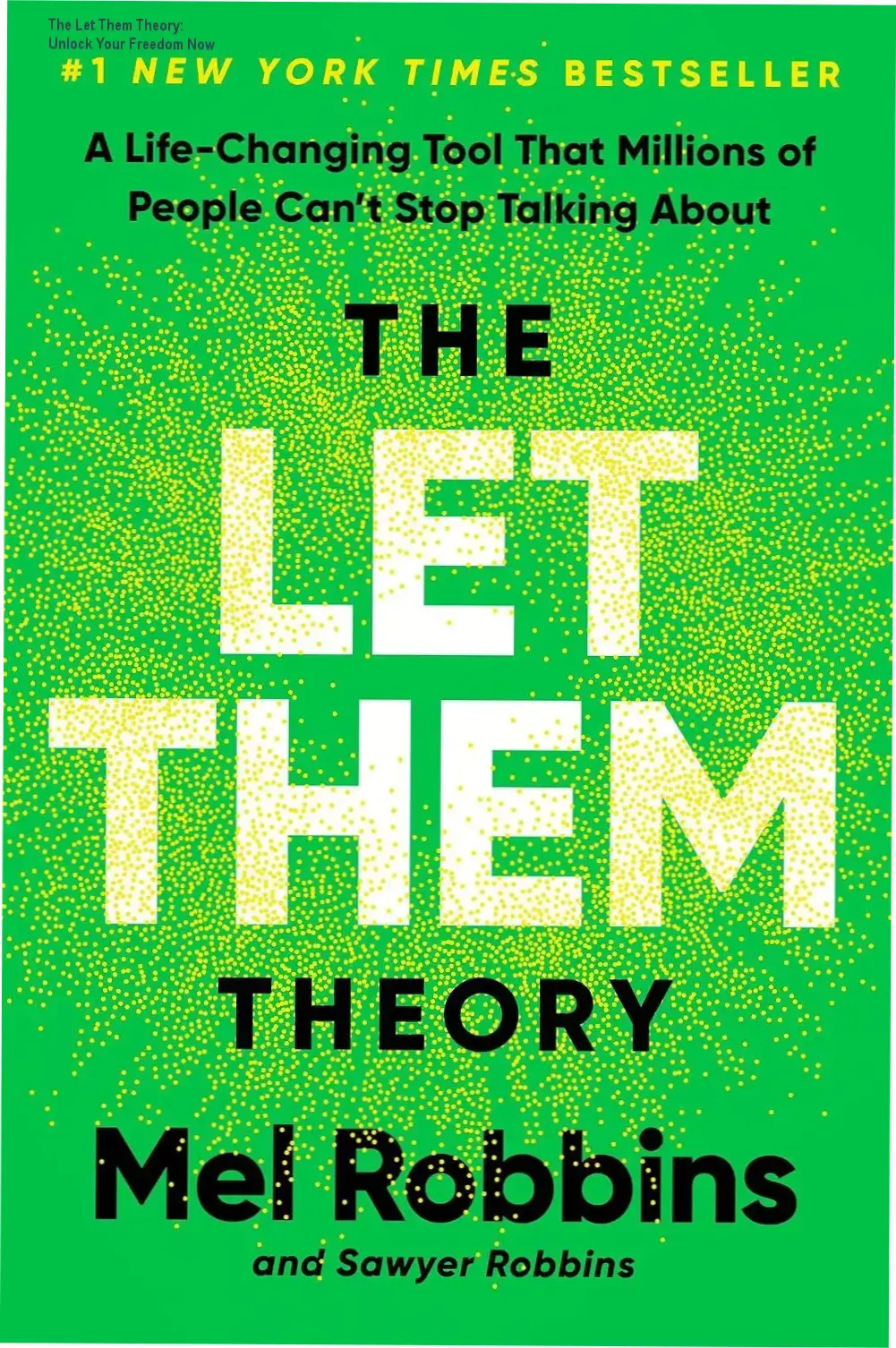
The Let Them Theory: Unlock Your Freedom Now
Imagine this: You’re sitting at your desk, staring at your phone, feeling the weight of a text from a friend that reads, “You’re always so busy. When will you ever have time for me?” Your stomach tightens. You’ve spent hours replaying the conversation, wondering if you’re neglecting your relationships or if you’re just not enough. This is the daily struggle many face: the exhausting need to control others’ opinions, the fear of judgment, and the constant battle to “fix” situations we can’t. In a world where social media amplifies comparisons and relationships demand endless emotional labor, the pressure to manage everything and everyone can leave us feeling drained, anxious, and disconnected from our own needs. *The Let Them Theory* by Mel Robbins addresses this universal pain point, offering a radical yet simple solution: stop trying to control what you can’t and focus on what truly matters. As a New York Times bestseller and a #1 Audible hit, the book has become a cultural touchstone for those seeking to reclaim their power in a chaotic world.
Ready to dive into “The Let Them Theory”?
Explore available editions, check current live pricing, or download a free sample directly on Amazon.
Preview Free Sample & Check Price on Amazon
*You will be redirected to Amazon. As an Amazon Associate, we may earn from qualifying purchases.
The book’s core premise is deceptively simple: “Let them.” But its impact is profound. Robbins, known for her no-nonsense approach to personal development, argues that the root of many life struggles lies in the power we grant others to dictate our emotions, decisions, and self-worth. This isn’t just about relationships—it’s about reclaiming agency in every area of life, from career choices to self-care. The theory challenges the common misconception that we must “fix” others or manage their reactions, a mindset that often leads to burnout and resentment. By shifting focus to what we *can* control—our responses, boundaries, and priorities—Robbins offers a framework for living with intention rather than reaction. The book’s structure is designed for accessibility, with each chapter addressing a specific “Let Them” application. For example, in the chapter on “Let Them” in relationships, Robbins dissects how we often internalize others’ judgments, leading to self-doubt and people-pleasing. She uses relatable anecdotes, like the story of a reader who stopped apologizing for their time, and ties these examples to psychological principles such as cognitive behavioral therapy and neuroscience. The pacing is brisk, with concise takeaways and actionable steps, making it ideal for readers seeking immediate, practical advice. One of the book’s strengths is its integration of real-world feedback. On Reddit, users praise its “no-fluff” approach, with one commenter noting, “It’s like a wake-up call for people who’ve been stuck in cycles of trying to please everyone.” Goodreads reviews highlight its impact on reducing anxiety, with one reviewer writing, “I finally understand why I feel so overwhelmed—it’s not about others, it’s about my own expectations.” However, some critics argue the theory oversimplifies complex emotional dynamics, suggesting it may not address deeper trauma or systemic issues. The book’s themes resonate across demographics, from young professionals navigating workplace stress to parents juggling multiple roles. A standout section discusses “Let Them” in career growth, where Robbins advises letting go of the need for external validation to pursue passion projects. This aligns with her broader philosophy: success isn’t about others’ approval but about aligning actions with personal values. The inclusion of expert insights—such as a neuroscientist explaining how stress affects decision-making—adds credibility, while the “Let Them” checklist at the end of each chapter provides a tangible tool for readers. Despite its popularity, the book isn’t without flaws. Some readers find the repetitive emphasis on “letting go” feels preachy, and the lack of nuanced examples for complex situations (e.g., toxic relationships) leaves gaps. Additionally, while the writing is engaging, the book’s brevity—336 pages—may leave some craving deeper exploration of its concepts. Still, its strength lies in its clarity and immediacy, making it a valuable resource for those ready to break free from the cycle of control. For those seeking a mindset shift, *The Let Them Theory* is a compelling read. It’s not a magic fix but a practical guide to reclaiming autonomy, one “Let Them” at a time. Whether you’re battling self-doubt, overcommitment, or the fear of judgment, Robbins’ framework offers a path forward. As one reader aptly summarized, “It’s not about ignoring others’ feelings—it’s about prioritizing your own.” The book’s impact is measurable: a 4.6/5 star rating on Amazon, with over 10 million copies sold, and a growing community of readers who swear by its life-changing potential. If you’re ready to stop chasing approval and start living on your terms, this book is worth your time. **TARGET READER, VALUE FOR MONEY & EDITORIAL CONCLUSION** The Let Them Theory is a no-nonsense guide for anyone drowning in external expectations or stuck in cycles of trying to control the uncontrollable. Its ideal reader is someone seeking practical mindset shifts—think professionals battling burnout, parents overwhelmed by societal pressures, or individuals rebuilding confidence after setbacks. If you’re looking for a quick-fix manual or a rehash of generic self-help tropes, skip this. Robbins’ work thrives on relatable anecdotes and actionable steps, not vague inspiration. The book’s value lies in its brevity and clarity. At 336 pages, it’s a compact read that avoids fluff, making it perfect for busy audiences. However, those expecting deep psychological analysis might find it surface-level. While Robbins draws from neuroscience and expert interviews, the focus remains on daily application rather than academic rigor. Purchasing missteps often stem from expecting a “happiness hack” rather than a mindset overhaul. This book rewards consistent reflection, not passive consumption. A common FAQ: Does it address toxic relationships? Yes, but with a twist. The Let Them Theory prioritizes emotional sovereignty—teaching readers to release others’ influence without severing ties. For example, it reframes criticism as feedback you can choose to heed or ignore, a nuance many overlook. Another question: Is it religiously aligned? No, though it nods to ancient wisdom, its secular approach suits diverse audiences. Contextually, the book shines as a companion to Mel Robbins’ podcast, expanding on her viral “Let Them” concept. Its real-world utility—like breaking comparison habits or setting boundaries—aligns with modern stressors like social media fatigue. Yet, its simplicity may feel reductive to readers craving nuance. In sum, this book is a lighthouse for those navigating overwhelm. Its strength is in its accessibility, though it demands active engagement. If you’re ready to reclaim agency, the insights here are worth the investment. **FINAL EDITORIAL SUMMARY CARD WITH CTA BUTTON & CONTEXTUAL LINKS**
Final Editorial Verdict
“The Let Them Theory” delivers on its core promise for its intended audience, offering compelling insights without fluff. As highlighted in our detailed edition breakdown, its practical depth and readability are its greatest strengths.
We also recommend checking the official Kindle sample and reader ratings before making your final purchase decision.
*You will be redirected to Amazon. As an Amazon Associate, we earn from qualifying purchases.