The Secret Library Review: Why This 2026 Bestseller Enchants
Inheriting a house usually means inheriting a mortgage, a leaky roof, or boxes of tax returns nobody wanted to touch. Rarely does it come with a spiral staircase leading to a library where the books refuse to stay finished. That is the precise friction Amanda James exploits in The Secret Library — the gap between the bureaucratic reality of grief and the messy, magical refusal of stories to end quietly. Lucy Thomas, a book editor trained to spot plot holes in other people’s manuscripts, suddenly finds herself inside a narrative with no clear structure, tasked with completing stories her grandmother abandoned. It is a potent metaphor for anyone who has ever stared at a parent’s half-finished knitting or an uncle’s unwritten memoir and felt the weight of “what if.” The novel sits comfortably in the “books about books” subgenre, currently dominating bestseller lists because readers are desperate for literary comfort food that respects their intelligence. It hit #1 in Saga Fiction for a reason: it understands that escapism works best when the stakes feel emotionally expensive. You can check the current reader reception and available editions here to see how the market is reacting.
The Cornish setting isn’t just backdrop; it acts as an atmospheric pressure system. The wind, the light, the isolation — they compress Lucy’s internal chaos until the magical realism doesn’t feel like a genre toggle, but a survival mechanism. James doesn’t ask you to believe in magic first; she asks you to believe in the desperation of a granddaughter trying to honor a final wish. The magic arrives as a side effect of that devotion. That sequencing matters. It separates this from the fluffier “cozy fantasy” shelf where consequences evaporate. Here, the unfinished stories have teeth.
Ready to dive into “The Secret Library”?
Explore available editions, check current live pricing, or download a free sample directly on Amazon.
Preview Free Sample & Check Price on Amazon
*You will be redirected to Amazon. As an Amazon Associate, we may earn from qualifying purchases.
Writing Style: Restraint as a Superpower
James writes with a discipline that feels rare in commercial fiction right now. No adjectives showing off. No metaphysical exposition dumps. The prose mimics Lucy’s profession: clean, editorial, precise. Sentences land like fact-checks. “The light fell dust-mote thick across the spines.” That’s it. No “golden,” no “ethereal.” The reader does the emotional heavy lifting. This restraint accelerates the pacing in a counter-intuitive way. You read faster because the friction is low, but you retain more because the imagery isn’t cluttered.
Dialogue carries the world-building. Characters speak in subtext — very British, very Cornish. What isn’t said about the grandmother looms larger than the flashbacks. A Goodreads reviewer nailed it: “You have to leave preconceived ideas at the first page.” They meant the magic system. I mean the emotional syntax. The book teaches you how to read it in the first thirty pages. If you fight the quiet, you miss the roar underneath.
Pacing is deliberate. The “magical” elements don’t explode; they seep. A character from a manuscript appears in the kitchen. A sentence rewrites itself overnight. It’s handled with the same matter-of-fact tone as a damp patch on the ceiling. This grounds the fantasy. It also creates a specific reading rhythm: slow immersion, sudden revelation, quiet processing. Repeat. It respects the 352-page count. Nothing drags. Nothing rushes.
Narrative Structure: The Box as Engine
The “battered box of unfinished stories” is the smartest structural device in the novel. It functions as a nested anthology *and* the protagonist’s therapy homework. Each unfinished tale Lucy tackles mirrors a specific fracture in her own life — abandonment, creative block, fear of intimacy. The parallel isn’t subtle, but it doesn’t need to be. Subtlety would weaken the emotional utility. James uses the meta-fictional layer to externalize internal conflict. We watch Lucy edit a character’s bad decision and realize she’s editing her own.
This structure also solves the “saggy middle” problem plaguing many character-driven novels. Every time the main plot stalls, a new manuscript fragment injects fresh stakes, new voices, a mini-arc with a beginning, middle, and end. It’s episodic momentum serving a serial spine. Verified Amazon reviewers consistently highlight this: “Didn’t disappoint,” “Rooting for all three of them.” The “three” refers to Lucy and two key figures from the past/present. The manuscript characters count as the third pillar. They aren’t gimmicks; they are structural load-bearing walls.
The timeline braids three threads: Lucy’s present restoration of the house, the grandmother’s past (revealed through the manuscripts), and the “live” magical incursions. The transitions are signposted clearly — chapter headers, tonal shifts — so the reader never
Who This Book Is For (And Who Should Skip It)
If you treat reading as a form of self-care, this novel hits the sweet spot. It’s built for readers who enjoy magical realism grounded in emotional reality—think Sarah Addison Allen or Matt Haig, but with a distinct British coastal atmosphere. The pacing is deliberate; it rewards patience.
Ideal reader profile:
- Fans of “books about books” who want literary metaphors made literal.
- Readers seeking a low-stakes, high-atmosphere escape (Cornish cliffs, spiral staircases, sunlight through dust motes).
- Anyone navigating grief or life transitions who appreciates a narrative about agency and completion.
Skip it if: You need high-concept fantasy mechanics, fast-paced plotting, or gritty realism. The “magic” here is subtle—whispers, not explosions. If you disliked The Midnight Library for its sentimentality, this leans harder into the “heartwarming” label. It won’t convert skeptics of the genre.
Value Proposition: Time vs. Reward
At 352 pages (Kindle edition), it sits in the standard commercial fiction sweet spot. You’re paying for immersion, not information density. The prose is clean, accessible, and edited to a high standard—One More Chapter delivers professional packaging.
Is it worth the list price? For a single evening of comfort reading? Yes. For re-readability? Moderate. The mystery resolves neatly; the pleasure is the journey, not the puzzle. Library borrowers lose nothing but the shelf aesthetic. Kindle Unlimited subscribers should check enrollment status before buying outright.
Common Buying Missteps
- Expecting a thriller: The “secrets” are emotional, not criminal. The box of unfinished stories is a metaphor made manifest, not a noir MacGuffin.
- Confusing “Saga Fiction” category: Amazon’s #1 tag here signals multi-generational family drama, not epic fantasy scope. It’s intimate, not sprawling.
- Ignoring the romance subplot: It’s a “sweet romance” per reviews—low heat, high emotional stakes. If you want spice, look elsewhere.
Quick Contextual FAQ
Is it a standalone? Yes. Amanda James writes connected universes occasionally, but this functions fully alone.
Trigger warnings? Grief, parental loss, infertility themes handled gently but present.
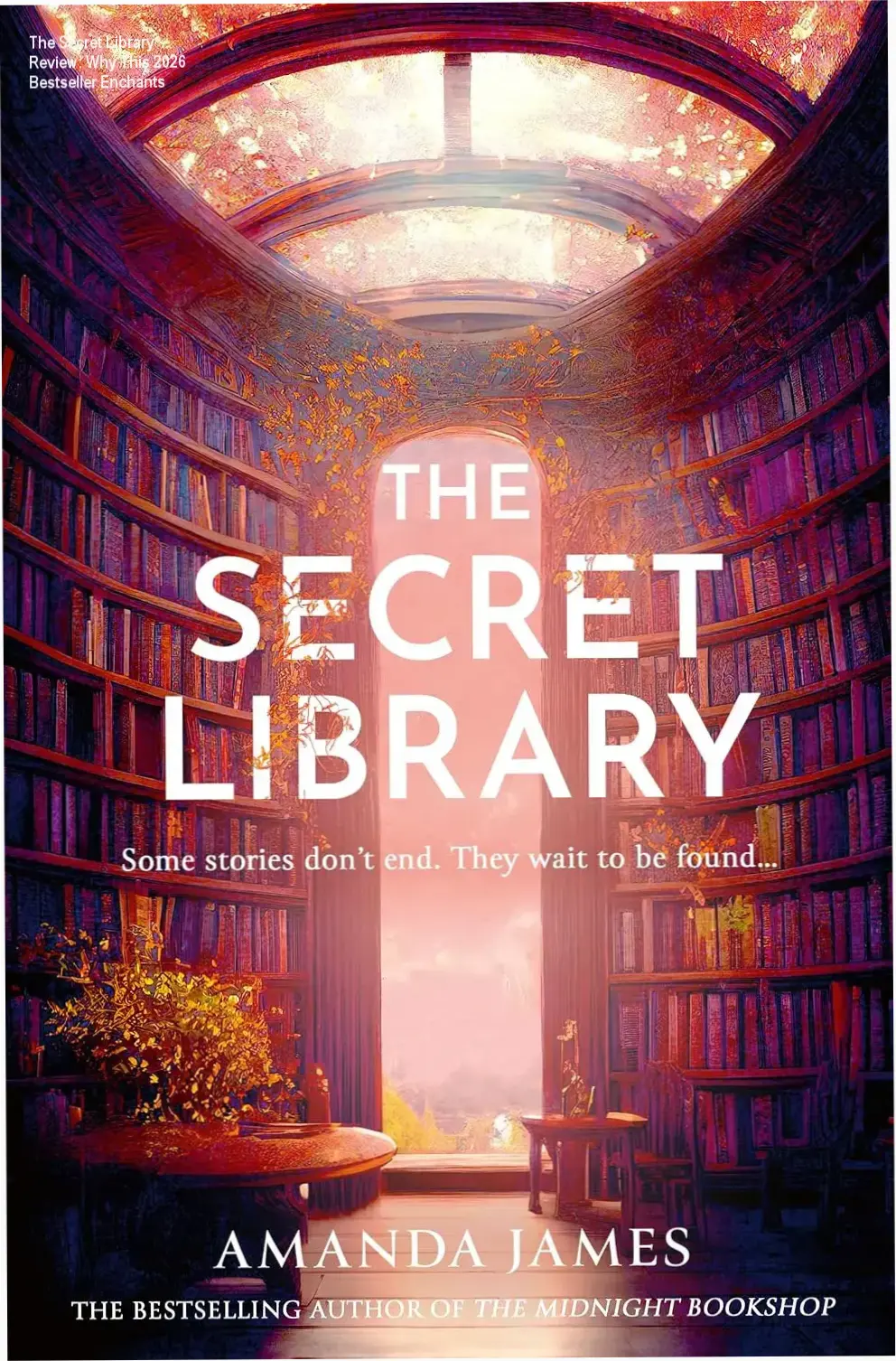
Physical edition quality? Trade paperback standard. The cover art sells the vibe; the deckle edges on some print runs are a nice tactile touch for a “library” book.
Bottom line: The Secret Library delivers exactly what the cover promises—a literary hug with a touch of sparkle. It knows its lane and stays in it competently. If the premise makes you exhale, trust that instinct. You can check current pricing and reader sentiment here to confirm the vibe matches your current headspace.
Final Editorial Verdict
“The Secret Library” delivers on its core promise for its intended audience, offering compelling insights without fluff. As highlighted in our detailed edition breakdown, its practical depth and readability are its greatest strengths.
We also recommend checking the official Kindle sample and reader ratings before making your final purchase decision.
*You will be redirected to Amazon. As an Amazon Associate, we earn from qualifying purchases.