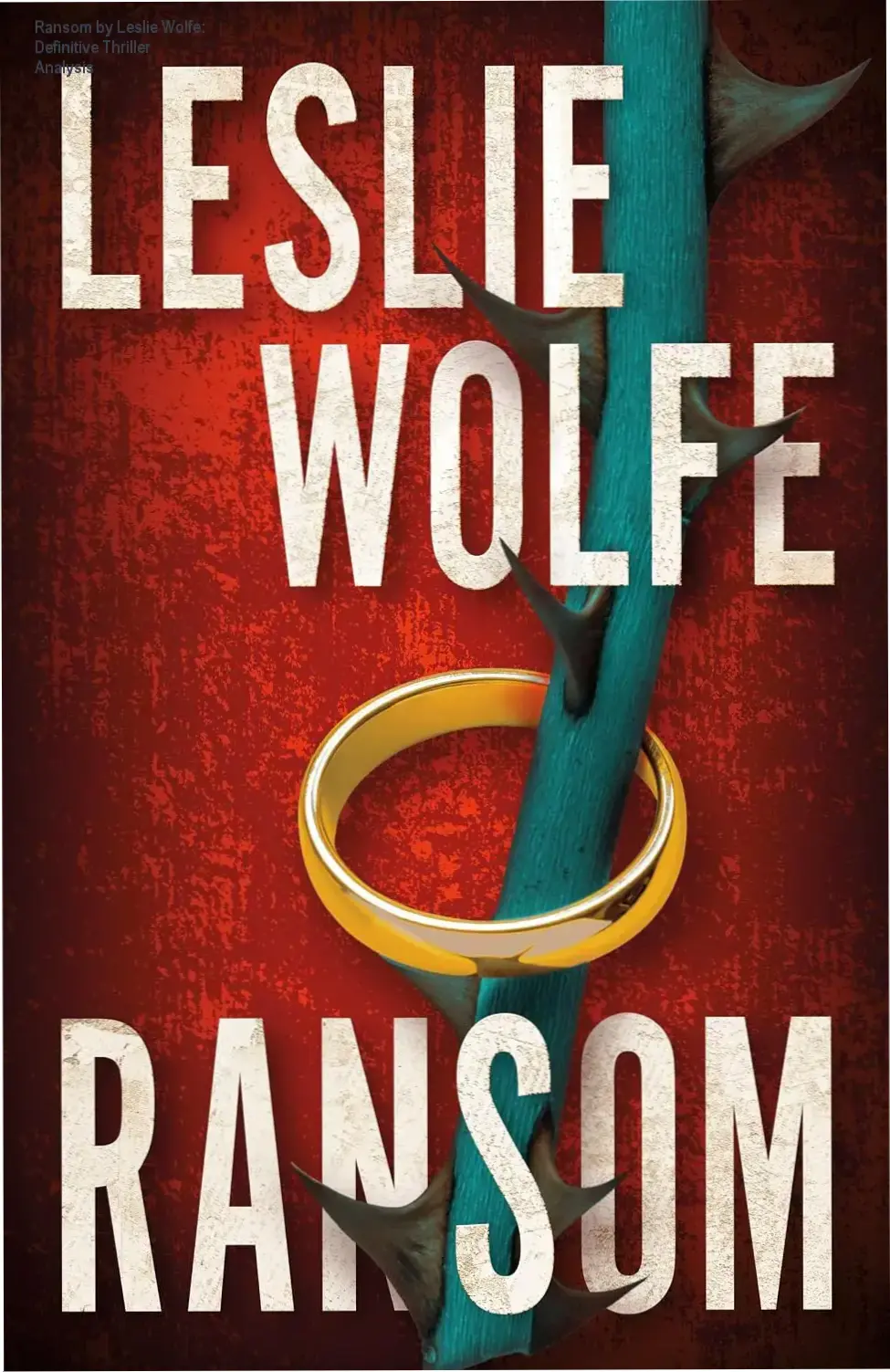
Ransom by Leslie Wolfe: Definitive Thriller Analysis
We are obsessed with the fall of the powerful. There is a primal, almost voyeuristic satisfaction in watching a curated, high-society image shatter in real-time. We see the glamorous philanthropist, the perfect fiancée, the “royalty” of a city like Las Vegas, and we instinctively wait for the crack in the porcelain.
This psychological hunger is exactly where Leslie Wolfe plants her flag in “Ransom.” It isn’t just a story about a murder accusation; it is a dissection of the distance between who we are and who we pretend to be. For readers tired of predictable whodunnits, the draw here is the promise of a master manipulator meeting their match. You can check the current reader reception on Amazon to see if the twists actually land or if the hype is just polished marketing.
The real-world challenge the book explores is the fragility of reputation. In an era of social media and instant cancellation, the “trial by tabloid” is a reality we recognize. Wolfe uses the legal stakes—death row—to amplify the tension, turning a character study into a race against time. The expectation is a high-stakes game of cat and mouse, but the actual value lies in how the author handles the disintegration of a lie.
Ready to dive into “Ransom”?
Explore available editions, check current live pricing, or download a free sample directly on Amazon.
Preview Free Sample & Check Price on Amazon
*You will be redirected to Amazon. As an Amazon Associate, we may earn from qualifying purchases.
The Mechanics of Manipulation: Writing Style and Pacing
Leslie Wolfe doesn’t waste time. The narrative is lean, designed to keep the reader in a state of perpetual uncertainty. The pacing mimics the feeling of a tightening noose; as Olivia Taylor’s secrets are exposed, the chapters feel shorter and the tension higher.
The prose is direct. It avoids the overly flowery descriptions that often plague “glamorous” settings, opting instead for a clinical sharpness. This creates a cold atmosphere that suits a psychological thriller. You aren’t meant to feel cozy; you are meant to feel exposed.
However, a skeptical reader might find the “twists” a bit too choreographed. There is a fine line between an ingenious plot and a series of convenient coincidences. Wolfe walks this line carefully, but the momentum is what carries the book through its 343 pages.
Anatomy of a Socialite: Character Depth and the Unreliable Narrator
Olivia Taylor is the engine of this novel. She is not a protagonist you are meant to “like” in the traditional sense. She is a socialite, a liar, and potentially a killer. This makes her an incredibly effective vehicle for the story.
The brilliance of the characterization lies in the layers. First, we see the public mask. Then, the private fear. Finally, the dark core. The reader is forced to constantly recalibrate their opinion of her.
Many readers on forums like Goodreads have noted that Olivia’s “match” in the story provides the necessary friction. Without a strong antagonist to challenge her manipulations, the story would simply be a monologue of vanity. The clash between two master manipulators is where the real entertainment lives.
| Element | Execution | Impact on Reader |
|---|---|---|
| Narrative Voice | Skeptical and Sharp | High distrust of all characters |
| Plot Twists | Frequent and Aggressive | Keeps engagement high, though occasionally jarring |
| Setting | High-Society / Legal Stakes | Adds a layer of “luxury dread” |
| Character Arc | Deconstructive | Satisfying “fall from grace” trajectory |
Core Themes: Obsession, Passion, and the Price of Love
At its heart, “Ransom” is about the deadly intersection of love and obsession. The book argues that all-consuming passion is not romantic—it is a pathology. When love becomes a tool for control, murder becomes a logical next step.
The theme of “The Ransom” is both literal and metaphorical. While the plot involves high stakes, the real ransom is the price Olivia pays for her secrets. Every lie she told to climb the social ladder becomes a debt that must be paid in blood or reputation.
This is a chilling exploration of betrayal. The
Who This Book Is For (And Who Should Skip It)
If you crave psychological thrillers driven by character deception rather than police procedure, this hits the sweet spot. Readers who enjoyed the unreliable narration of The Girl on the Train or the toxic relationship dynamics in Behind Closed Doors will feel right at home. Wolfe excels at writing women who are simultaneously victims and architects of their own chaos.
Skip it if you need a likable protagonist to anchor the story. Olivia Taylor is deliberately opaque, often frustrating, and rarely sympathetic in a conventional sense. The narrative demands patience with her self-destruction. Also, avoid this if you dislike “socialite” settings; the Las Vegas elite backdrop is integral, not window dressing.
Value for Money: Hardcover vs. Kindle vs. Audio
At 343 pages, the pacing is tight enough to justify a single-sitting read. The Kindle edition renders the text messages and media excerpts cleanly—crucial for a plot heavy on public perception versus private reality. The audiobook narrator captures Olivia’s chameleon-like voice shifts effectively, adding a layer of ambiguity that text alone struggles to convey.
Hardcover feels like overkill for a plot-twist thriller you likely won’t re-read immediately. Wait for a paperback or library copy if budget is tight. The Kindle price frequently drops below $5 during promo windows, making it an impulse-buy sweet spot.
Common Buying Missteps
- Expecting a courtroom drama: The murder charge is the inciting incident, not the structural focus. Legal proceedings are background noise.
- Assuming a standard “whodunit”: The identity of the victim and the killer are secondary to why Olivia constructs her reality.
- Buying for the romance: The “seductive socialite” tagline markets a love story; the content delivers a study in coercive control.
Quick Contextual FAQ
Is this part of a series? No. Standalone. No prior knowledge required.
How graphic is the violence? Psychological rather than visceral. The horror is emotional manipulation and gaslighting, not gore.
Does it have a satisfying ending? Yes, but “satisfying” here means narratively inevitable, not happy. The final twist recontextualizes the entire first half.
Trigger warnings? Domestic abuse, gaslighting, parental abandonment, and suicide ideation are central themes.
Editorial Bottom Line
Ransom is a masterclass in the “domestic noir” subgenre. It sacrifices procedural realism for psychological intensity, and that trade-off pays off. Wolfe trusts the reader to piece together the timeline without hand-holding. The middle section drags slightly during the media frenzy montage, but the payoff justifies the slog. It’s a smart, cold, efficient thriller that respects the reader’s intelligence. For the current Kindle price, it’s a high-value pickup for genre fans. You can check current reader reviews and live discounts here.
Final Editorial Verdict
“Ransom” delivers on its core promise for its intended audience, offering compelling insights without fluff. As highlighted in our detailed edition breakdown, its practical depth and readability are its greatest strengths.
We also recommend checking the official Kindle sample and reader ratings before making your final purchase decision.
*You will be redirected to Amazon. As an Amazon Associate, we earn from qualifying purchases.