Lead Me Home: Definitive Analysis of Paranormal Romantic Suspense
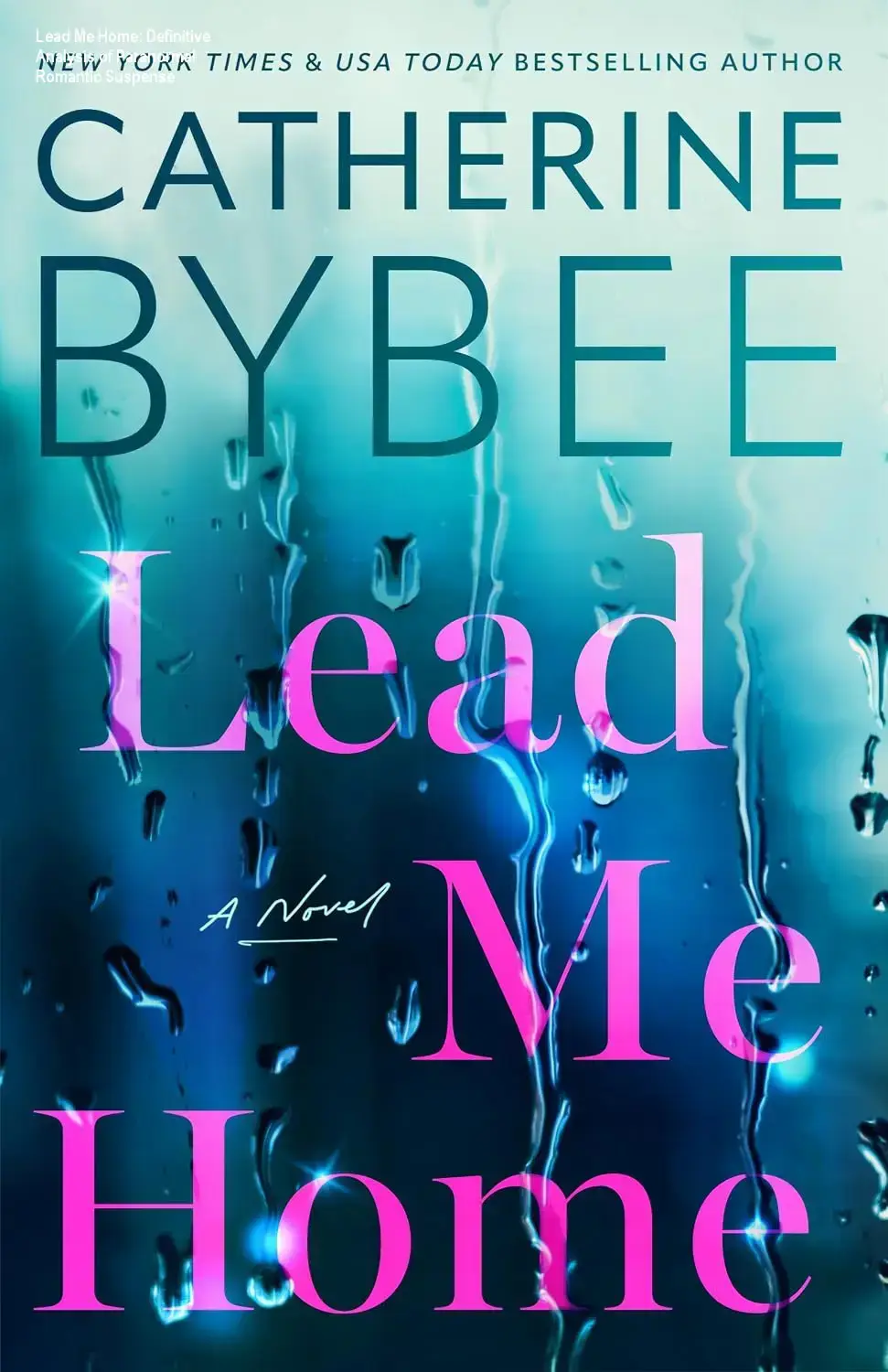
Trust is a liability when your childhood was a masterclass in manipulation, and Luna Canning has the spreadsheets to prove it. As a forensic accountant, she structures her life around the only language that doesn’t lie: numbers. But ledgers can’t account for the chaos of a stolen car, a Victorian house that creaks with more than just settling timber, or a former FBI agent turned PI who refuses to stay in his professional lane. Catherine Bybee drops readers into this tension immediately in Lead Me Home, the opener for the Queen Anne Hill series, blending the procedural precision of a financial thriller with the atmospheric dread of a ghost story and the slow burn of a trauma-informed romance. It’s a genre hybrid that shouldn’t work on paper—paranormal cozy mystery meets high-stakes romantic suspense—but Bybee’s track record as a New York Times bestseller suggests she knows exactly how to balance the books. If you’re curious whether the hype holds up, you can check current reader reception and pricing here.
The premise hooks you because it grounds the supernatural in the painfully mundane. Luna isn’t chasing ghosts for sport; she’s trying to audit her own life after a lifetime of gaslighting from a mother who makes the term “toxic” feel insufficient. The “ghost” element—hinted at by the “Ghost Paranormal Romance” bestseller tag—functions less as a jump-scare mechanic and more as a metaphor for the past refusing to stay buried. Readers expecting a standard “woman in jeopardy” trope will find something sharper: a protagonist whose competence is her shield and her prison. The Victorian setting on Queen Anne Hill isn’t just backdrop; it’s a character, a physical manifestation of generational weight. Bybee manages to make the forensic accounting scenes genuinely tense, which is a minor miracle, using financial fraud as a parallel for emotional fraud. The central question isn’t just “will they catch the bad guy,” but “can Luna afford the vulnerability required to survive the truth?”
Ready to dive into “Lead Me Home: A Novel (Queen Anne Hill)”?
Explore available editions, check current live pricing, or download a free sample directly on Amazon.
Preview Free Sample & Check Price on Amazon
*You will be redirected to Amazon. As an Amazon Associate, we may earn from qualifying purchases.
The Architecture of Control: Writing Style and Pacing
Bybee writes with a distinct “competence porn” clarity. The prose is clean, unadorned, and ruthlessly paced—mirroring Luna’s internal state. There is zero fat in the first act. We get the theft, the PI introduction, the house mechanics, and the mother’s arrival in a tight sequence that respects the reader’s intelligence. She doesn’t over-explain the forensic accounting; she lets the jargon breathe, trusting context to carry the weight. This creates a reading velocity that feels fast without feeling rushed.
The pacing shifts gears deliberately. The middle section slows to a simmer, focusing on the domestic horror of the mother’s visit. This is where the “paranormal” label earns its keep—not through spectral CGI, but through psychological haunting. The strange occurrences in the house (lights, sounds, displaced objects) are written with enough ambiguity to keep the rationalist reader (and Luna) guessing. Is it the house? The mother? Stress? Or something else? Bybee refuses to tip her hand early. This ambiguity sustains tension better than any cheap jump scare could.
Dialogue is a standout. Nate Warren speaks like a man who spent two decades interviewing suspects: economical, observant, slightly guarded. Luna speaks in deflections and data points. When they finally talk to each other instead of at each other, the shift in cadence is palpable. It’s a masterclass in showing character evolution through sentence structure alone. Goodreads reviewers frequently cite the “banter” as a highlight, but it’s not quippy banter—it’s intellectual sparring. That distinction matters for this demographic.
One structural quirk: the POV shifts are tight third-person, mostly Luna and Nate, but occasionally the antagonist or the mother. This broadens the stakes but occasionally diffuses the claustrophobia of Luna’s perspective. It’s a trade-off. You gain plot omniscience; you lose a bit of the unreliable narrator tension. For a series opener, it’s the safer commercial choice, establishing the chessboard for Book 2.
Trauma as a Balance Sheet: Core Themes and Narrative Structure
The central metaphor—life as a ledger—is not subtle, but it is effective. Luna categorizes people as assets or liabilities. Her grandmother’s house is a “fixed asset.” Her mother is a “toxic liability with infinite downside.” Nate starts as an “unknown variable.” The narrative arc is literally Luna learning that human connection cannot be reconciled like a bank statement. This resonates deeply with readers who use hyper-competence as a trauma response. Amazon reviews are full of comments like “Finally a heroine who acts like a professional adult” and “She doesn’t make stupid choices for plot convenience.”
The mother, Eleanor, is the antagonist in a way that feels terrifyingly real. She isn’t a cartoon villain; she’s a narcissist weaponizing guilt, legality, and social norms. She brings a “dangerous man” (her new husband/partner) who represents physical threat, but Eleanor represents the existential threat: the
Who This Book Is For (And Who Should Skip It)
If you read romance for the emotional wreckage—for characters who have to claw their way out of psychological trenches before they can reach each other—this is your lane. Luna isn’t “broken” in the cute, quirky way; she is armored. Bybee respects that armor. The payoff feels earned because the resistance is real.
Readers who enjoy Kendra Elliot or Karen Rose will recognize the DNA here: procedural competence mixed with domestic terror. The forensic accounting angle isn’t window dressing; it dictates how Luna processes the world. It’s a refreshing competency porn for anyone tired of heroines who stumble into danger because they forgot to lock a door.
Skip it if: You need high-concept fantasy elements to drive the plot. The “ghost” aspect in the blurb is atmospheric texture, not a paranormal mechanic. If you want a ghost solving crimes, this isn’t it. Also, skip if you dislike the “meddling toxic parent” trope executed at maximum volume. Luna’s mother is a weaponized nightmare; it’s well-written, but triggering for some.
Value Proposition: Time vs. Payoff
At 350 pages, the pacing is efficient. No saggy middle. The mystery thread (the stolen car/fraud case) braids tight with the romance arc—neither feels like a subplot. You get two complete novels for the cognitive price of one.
Kindle pricing usually sits in the $4.99–$7.99 range for Montlake titles. For a series starter with this level of craft? It’s a steal. The re-read value is high because the clueing is fair; you catch the foreshadowing on the second pass.
Common Buying Missteps
- Expecting a cozy mystery: The violence is implied but visceral. The stakes are bodily harm, not just reputation.
- Expecting a standalone HEA with zero strings: This launches a series. The couple gets their happy-for-now, but the family war is ongoing.
- Buying the audiobook blind: Check the narrator sample. First-person present tense (or close third) lives or dies by voice acting.
Quick Contextual FAQ
Is the “haunted house” real? Ambiguous. Bybee plays the “unreliable narrator vs. actual phenomena” line expertly. It serves the theme of gaslighting vs. intuition.
Do I need to read the second book immediately? Book 2 (Lead Me On) focuses on a secondary character. You can breathe between them, but the family arc continues.
How steamy is it? Moderate. Door-open, emotional focus. It services the trust arc, not just titillation.
Editorial Bottom Line
Lead Me Home succeeds because it treats trauma as a structural engineering problem, not a personality quirk. Luna calculates load-bearing walls; Nate tests the foundation. It’s smart, tense, and respects the reader’s intelligence. If you want a romance where the couple saves each other by doing the work—therapy, boundaries, forensics—grab it. You can check current Kindle pricing and reader reviews here.
Final Editorial Verdict
“Lead Me Home: A Novel (Queen Anne Hill)” delivers on its core promise for its intended audience, offering compelling insights without fluff. As highlighted in our detailed edition breakdown, its practical depth and readability are its greatest strengths.
We also recommend checking the official Kindle sample and reader ratings before making your final purchase decision.
*You will be redirected to Amazon. As an Amazon Associate, we earn from qualifying purchases.