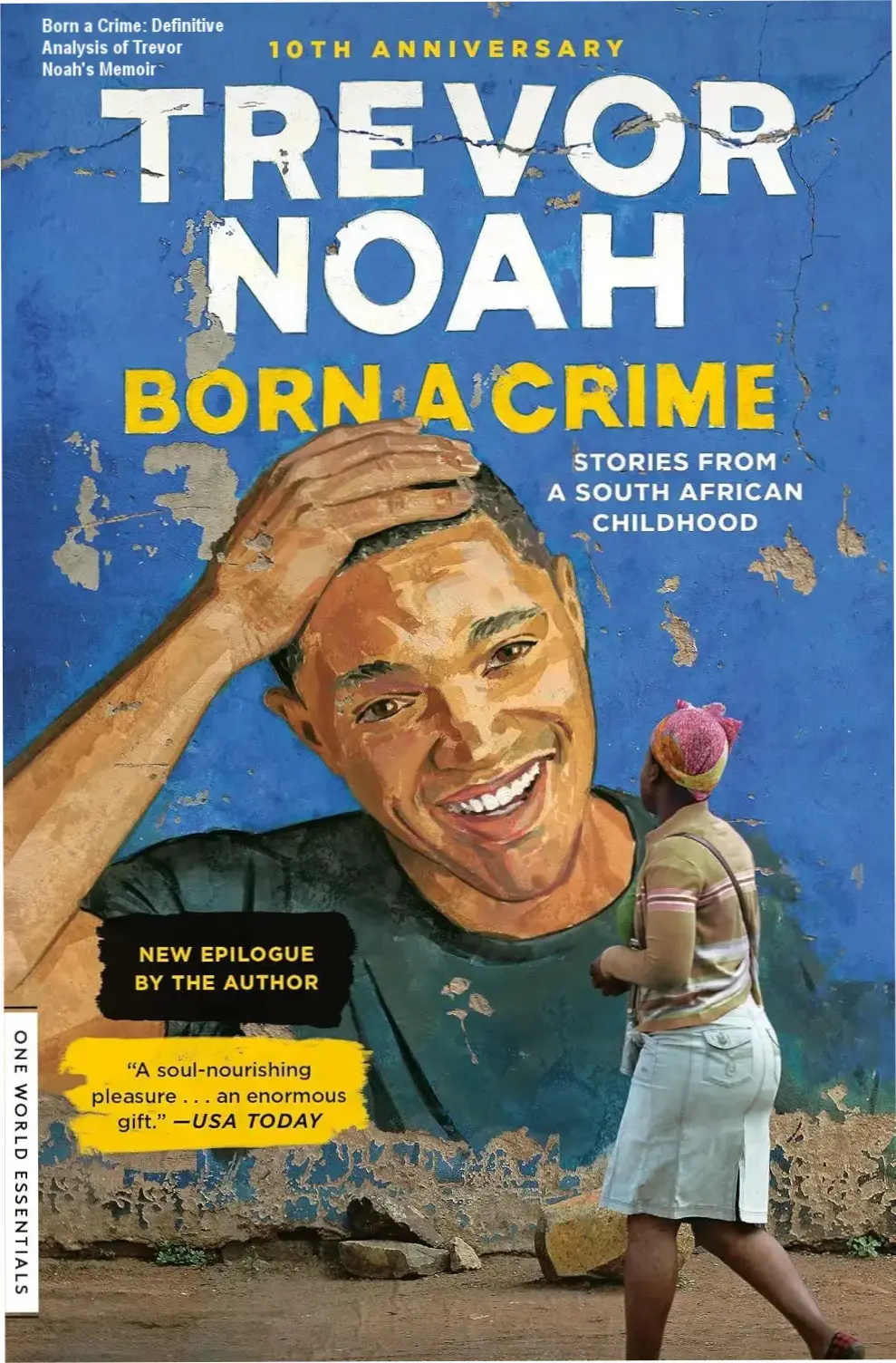
Born a Crime: Definitive Analysis of Trevor Noah’s Memoir
Most people approach celebrity memoirs with a healthy dose of skepticism. We expect a polished, ghost-written narrative designed to protect a brand rather than reveal a human. When Trevor Noah released “Born a Crime,” the expectation was a collection of punchlines from a late-night host, perhaps seasoned with some light social commentary.
But this isn’t a standard celebrity vanity project. It is a brutal, hilarious, and surgically precise dissection of identity under the crushing weight of systemic racism. To understand the weight of this narrative, you can check the overwhelming reader reception on Amazon, where it stands as a masterclass in storytelling that transcends the “comedy” genre.
Ready to dive into “Born a Crime”?
Explore available editions, check current live pricing, or download a free sample directly on Amazon.
Preview Free Sample & Check Price on Amazon
*You will be redirected to Amazon. As an Amazon Associate, we may earn from qualifying purchases.
The Architecture of Comedy and Trauma
Noah’s writing style isn’t just “funny”; it’s strategic. He uses the timing of a stand-up comedian to deliver information that would otherwise be unbearable. He describes the horrors of Apartheid not through a lens of self-pity, but through the lens of absurdity.
The pacing is relentless. He weaves together vignettes that feel like short stories, yet they build toward a cohesive understanding of a broken society. It’s a rare feat where the humor doesn’t undermine the tragedy—it amplifies it.
By highlighting the “absurdity” of the laws—such as the specific racial classifications that could change based on the shape of a nose—Noah makes the systemic violence tangible for a global audience. He doesn’t lecture you; he shows you the madness.
| Technical Aspect | Analyst’s Verdict |
|---|---|
| Narrative Pace | High velocity. Vignette-style chapters prevent fatigue. |
| Tone Balance | Precise. Shifts from slapstick to searing tragedy in seconds. |
| Accessibility | High. No academic jargon; reads like a conversation. |
The Unconventional Hero: The Mother Figure
If Trevor is the narrator, his mother, Patricia, is the soul of the book. This is not a typical “loving parent” trope. Patricia is depicted as a rebellious, fervently religious, and strategically minded woman who viewed her son as a project in liberation.
The relationship is the emotional anchor. While the world told Trevor he was a mistake or a crime, his mother taught him how to think, how to question, and how to survive. Their bond is a battle against poverty and violence.
Many readers on Goodreads highlight this dynamic as the most impactful part of the book. It transforms the story from a political memoir into a deeply personal study of unconditional, yet tough, love.
“My mother started my life by breaking a law. She didn’t just give me life; she gave me a way to live in a world that didn’t want me.”
Systemic Absurdity and the “Language Hack”
One of the most brilliant insights in the book is Noah’s analysis of language as a tool for survival. He realized early on that if he could speak a person’s language, he could bridge the racial divide and “become” someone else in their eyes.
This is a practical takeaway for any reader: the ability to adapt your communication to your environment is a superpower. Noah didn’t just learn languages; he learned the sociology of power.
He explains how language acts as a proxy for race. By speaking Xhosa, Zulu, or Afrikaans, he could manipulate the perceptions of those around him, effectively navigating a world where his physical appearance made him an outcast.
Expectation vs. Reality: More Than a Memoir
The biggest misconception is that this is a “celebrity story.” In reality, it’s a sociological study of South Africa’s transition from tyranny to a fragile democracy.
You expect stories about *The Daily Show*. Instead, you get stories about eating caterpillars, dodging kidnappers, and the terrifying reality of domestic abuse. The “celebrity” aspect is almost irrelevant; it’s the backdrop, not the plot.
The reality is a searing look at how poverty creates a cycle of violence that is nearly impossible to break without an external catalyst—in this case, a mother’s unwavering will and a son’s wit.
The Skeptic’s Corner: Pros and Cons
No product is perfect. While the book is overwhelmingly praised, a critical eye reveals a few friction points. The episodic nature
Who This Book Is Actually For
Born a Crime isn’t a standard celebrity memoir. If you are looking for a polished “how I became famous” trajectory, you’ll be disappointed. Instead, this is a visceral study of survival, identity, and the absurdity of systemic racism.
The ideal reader: Someone who appreciates dark humor as a coping mechanism. If you enjoy narratives where the author analyzes their own trauma with a detached, intellectual wit, this is your book. It is perfect for those interested in the sociology of Apartheid without wanting to slog through a dry textbook.
Who should skip this: Readers who prefer linear, strictly chronological biographies. While the book follows Trevor’s growth, it operates more like a collection of interconnected essays. Also, if you are sensitive to descriptions of domestic violence or extreme poverty, some segments may feel jarring despite the humor.
Value Analysis: Is It Worth Your Time?
At 336 pages, the “information density” is remarkably high. Noah manages to explain the complex legalities of Apartheid—such as the specific laws regarding racial mixing—while keeping the pace of a stand-up routine.
Common Purchasing Misstep: Many buyers treat this as a “light” comedy book because of Trevor Noah’s public persona. It is not. While it is hilarious, the core is a searing critique of a broken system and a tribute to a mother’s fierce resilience. Expect an emotional workout, not just a few laughs.
Quick Contextual FAQ
- Do I need prior knowledge of South African history? No. Noah weaves the political context naturally into the storytelling.
- Is the tone consistent? It fluctuates. It shifts from absurdly funny to heartbreakingly honest in a single paragraph.
- What is the primary takeaway? The transformative power of language and the unconventional love of a parent who refuses to let their child be a victim.
Editorial Conclusion
The brilliance of this work lies in its balance. Noah avoids the trap of self-pity, choosing instead to highlight the absurdity of the laws that made his very existence a crime. The relationship between Trevor and his mother is the true anchor of the book, transforming a political memoir into a deeply personal story of liberation.
It is a rare piece of non-fiction that manages to be both intellectually stimulating and emotionally raw. For those still undecided, we suggest browsing the verified reader reviews on Amazon to see how other readers reacted to the book’s tonal shifts.
Final Editorial Verdict
“Born a Crime: Stories from a South African Childhood” delivers on its core promise for its intended audience, offering compelling insights without fluff. As highlighted in our detailed edition breakdown, its practical depth and readability are its greatest strengths.
We also recommend checking the official Kindle sample and reader ratings before making your final purchase decision.
*You will be redirected to Amazon. As an Amazon Associate, we earn from qualifying purchases.