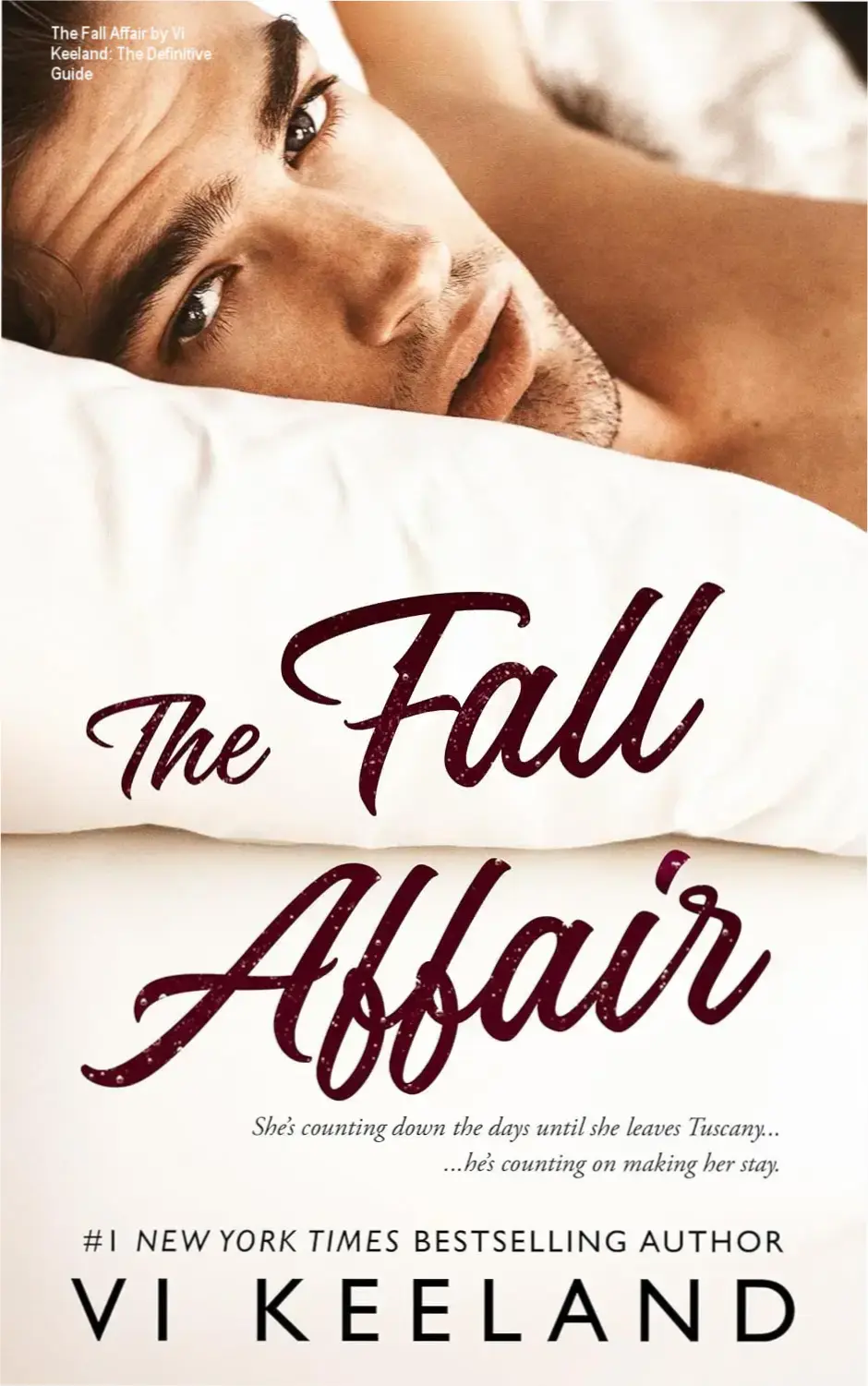
We have all had that midnight epiphany: the sudden, desperate urge to quit a soul-crushing corporate job, sell everything, and buy a crumbling villa in the Italian countryside. It is the ultimate modern fantasy of “unplugging” from a world that measures worth by job titles and LinkedIn connections. But in reality, moving to Tuscany usually involves more bureaucracy and less romance than the movies suggest.
This is where Vi Keeland’s The Fall Affair steps in. It doesn’t just offer a romantic escape; it targets the specific anxiety of the high-achiever who has realized the ladder they were climbing was leaning against the wrong wall. For those wondering if this story delivers on the “slow living” promise or just follows the usual romance tropes, you can check the current reader reception and availability on Amazon to see why it hit the #1 spot in the Billionaires & Millionaires category.
Ready to dive into “The Fall Affair”?
Explore available editions, check current live pricing, or download a free sample directly on Amazon.
*You will be redirected to Amazon. As an Amazon Associate, we may earn from qualifying purchases.
The “Escapism” Blueprint: Expectation vs. Reality
Let’s be honest: the “American in Italy” trope is as old as time. From Under the Tuscan Sun to every generic rom-com on Netflix, the formula is the same: a broken heart, a sudden inheritance, and a rugged local who teaches the protagonist how to actually live.
The Fall Affair doesn’t try to reinvent this wheel, and that is actually its strength. Keeland understands that readers aren’t looking for a revolutionary narrative structure; they are looking for a specific emotional payoff. The “ticking clock” element—the requirement to live in the shop for three months—adds a necessary layer of tension to an otherwise cozy setting.
The conflict isn’t just between the protagonist and her neighbor, Matteo, but between two conflicting versions of success. On one side, you have the New York corporate grind (the “hustle”). On the other, you have the ancestral, rooted pace of Tuscan winemaking. It is a clash of ideologies wrapped in a sexy romance.
Character Dynamics: The Corporate Shark and the Rugged Winemaker
The chemistry here relies heavily on the “Opposites Attract” dynamic. The protagonist enters Tuscany with her armor on—credentials, a level of arrogance born from corporate survival, and a deep-seated need for control. Matteo Lucchese is the perfect foil. He is the embodiment of everything she has been taught to ignore: patience, manual labor, and a refusal to be impressed by a resume.
The banter is where the book shines. Keeland specializes in dialogue that feels fast and rhythmic. The friction between them doesn’t feel forced; it feels like two stubborn people trying to negotiate a peace treaty while secretly wanting to tear each other’s clothes off.
“He’s rugged and stubborn, stuck living in a time that has long passed us by, and the word rush isn’t part of his vocabulary.”
This quote highlights the core tension. The protagonist is used to “rushing” toward a goal. Matteo represents the “staying.” The romantic arc is essentially a process of decompression.
Character Archetype
Core Motivation
Internal Conflict
The Protagonist
Regain control/status
Who This Book Is Actually For
The Fall Affair isn’t a literary exploration of Italian culture; it is a precision-engineered romance. It targets a very specific psychological profile: the reader who feels suffocated by the corporate grind and fantasizes about a hard reset in the Mediterranean.
You will likely enjoy this if:
You thrive on the “forced proximity” trope (the “must stay for three months” clause).
You prefer character chemistry and atmospheric tension over complex, high-stakes plotting.
You are a fan of Vi Keeland’s signature blend of wit, sexual tension, and emotional vulnerability.
You enjoy the “city girl vs. rugged local” dynamic.
Who should skip this:
If you are looking for a gritty, realistic portrayal of estate law or a deep dive into the viticulture of Tuscany, look elsewhere. This is a romantic escape. Readers who find the “corporate ladder” archetype cliché or those who demand unpredictable plot twists will likely find the narrative trajectory too linear.
Value for Money & Realistic Expectations
At 364 pages, the pacing is consistent with contemporary romance standards. You aren’t paying for a dense manual on slow living, but for a curated emotional experience. The “value” here lies in the escapism.
Common Purchasing Missteps:
A frequent mistake is treating this as a travelogue. While the Tuscan setting is vivid, it serves as a backdrop for the romantic tension, not as a destination guide. Don’t buy this expecting a “How-To” on inheriting Italian estates; buy it for the friction between the protagonist and Matteo.
Editorial Verdict
Vi Keeland delivers a polished, highly readable standalone that understands its audience perfectly. It doesn’t try to reinvent the wheel; it just makes the wheel spin more smoothly. The conflict is low-stress, the tension is high, and the resolution is satisfyingly predictable.
It is a reliable “palette cleanser” book. If you need to disconnect from your own stress and slide into a world where the biggest problem is an infuriatingly handsome winemaker, this is a safe bet. You can verify the current reader sentiment and check live discounts on Amazon to see if it fits your current budget.
Final Editorial Verdict
“The Fall Affair” delivers on its core promise for its intended audience, offering compelling insights without fluff. As highlighted in our detailed edition breakdown, its practical depth and readability are its greatest strengths.
Enfrentar o casamento de um ex-namorado é, para muitos, o ápice do desconforto social. A pressão para parecer “superado” e a necessidade de manter a dignidade diante de convidados costumam levar a decisões impulsivas e mentiras convenientes. Essa dinâmica humana, carregada de ansiedade e ego, é o motor de Eu, o Noivo e o Meu…
Acasos do Amor é um romance contemporâneo de alta voltagem que explora a tensão do proibido através dos tropos de irmãos postiços e a obsessão possessiva de um atleta de elite. A obra resolve a demanda do leitor por escapismo intenso, entregando a fantasia do “bad boy” redimível e o conflito visceral entre o desejo…
A evolução técnica de um goleiro de futsal não depende de horas de treinos desordenados, mas sim da precisão de cada movimento repetido com consciência. Para quem está começando, o maior erro é tentar replicar movimentos de jogadores de campo ou seguir rotinas genéricas que não consideram a biomecânica específica da posição. O método desenvolvido…
A obsessão moderna por True Crime transformou tragédias reais em entretenimento de consumo rápido. O problema é que, nesse processo, a linha entre a busca pela verdade e o tribunal da internet torna-se perigosamente tênue. Muitos leitores buscam thrillers psicológicos esperando apenas um enigma a ser resolvido, mas ignoram como a estigmatização social pode destruir…
A gestão financeira para quem está no vermelho não permite erros de cálculo ou perda de tempo com teorias acadêmicas. O foco deve ser a estancagem imediata de saídas de caixa e a recuperação de valores retidos por bancos. Este guia definitivo para começar do zero foca no que realmente importa: o fluxo de caixa…
Most sports books follow a predictable, boring trajectory: a legendary athlete describes their grueling training, a mid-life crisis, and a triumphant return to glory. It is a formula that has become as stale as a three-day-old gym towel. Readers are tired of the sanitized, ghost-written narratives that feel more like corporate brochures than honest stories….