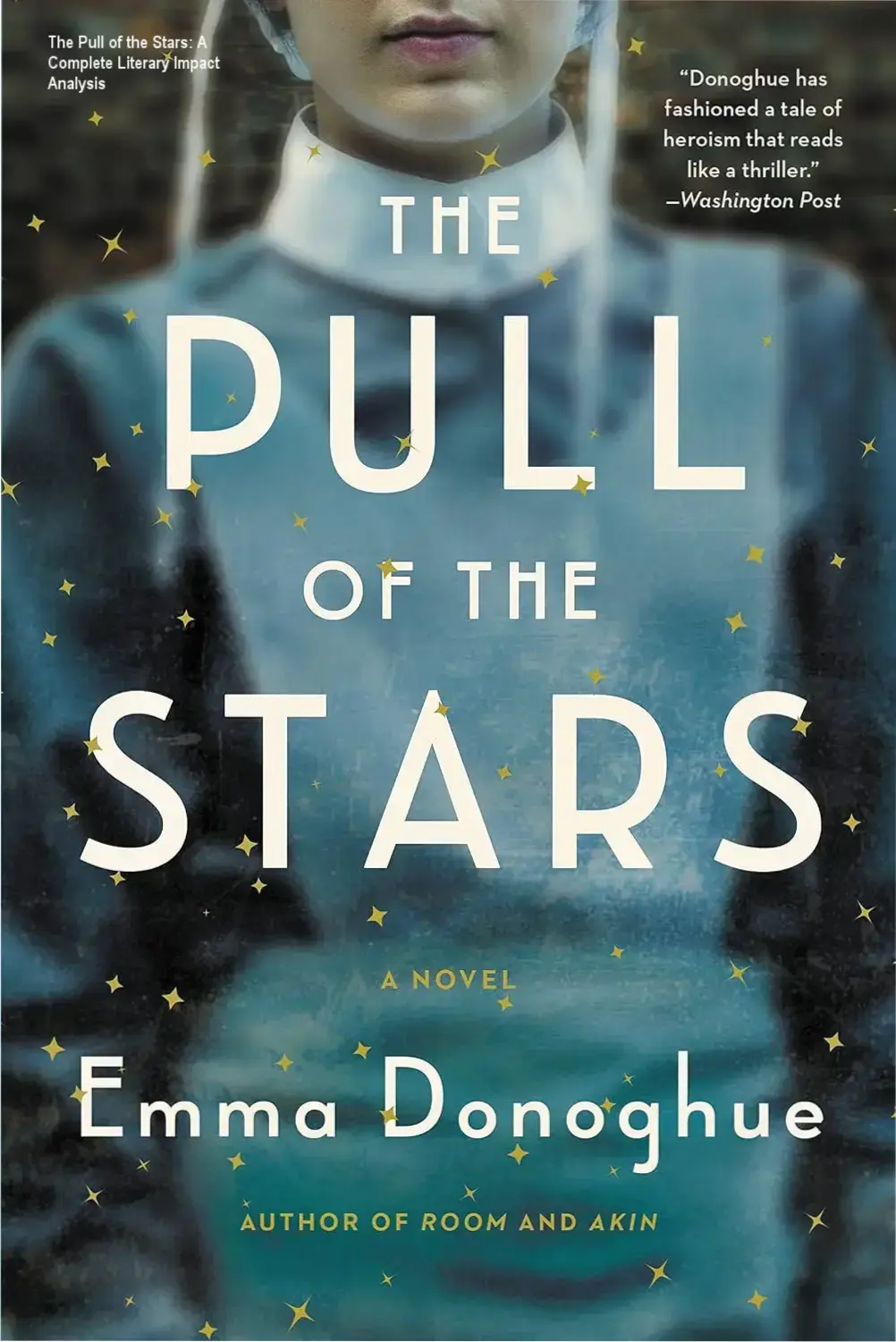
The Pull of the Stars: A Complete Literary Impact Analysis
We have all felt the suffocating weight of a global crisis where the world shrinks to the size of a single room. It is a visceral, haunting feeling—the intersection of fear, duty, and the desperate hope that tomorrow will be different. Most readers pick up historical fiction to escape the present, but Emma Donoghue does the opposite. She uses 1918 Dublin to hold a mirror to our own fragility.
If you are looking for a light, comforting read, stop here. This is a clinical, intense exploration of survival. However, for those who crave narratives that find light in the absolute dark, checking the current reception of The Pull of the Stars reveals a story that transcends its grim setting. It isn’t just about a pandemic; it is about the invisible threads that bind strangers when every other system fails.
Ready to dive into “The Pull of the Stars”?
Explore available editions, check current live pricing, or download a free sample directly on Amazon.
Preview Free Sample & Check Price on Amazon
*You will be redirected to Amazon. As an Amazon Associate, we may earn from qualifying purchases.
The Architecture of Claustrophobia
Donoghue doesn’t waste time with sprawling cityscapes or tedious world-building. The entire novel is a pressure cooker, confined to a single maternity ward in Dublin. You can almost smell the carbolic acid, the sweat, and the underlying scent of decay.
This constraint is a masterstroke of narrative design. By stripping away the outside world, the author forces the reader into the same frantic, exhausted headspace as Nurse Julia Power. There is no escape, no “going home” to reset the emotional clock.
The pacing mimics a medical emergency: steady, then racing, then stopping abruptly. It is a 305-page sprint that feels like a few breathless days. For the reader, the lack of spatial movement increases the psychological tension, making every small victory feel monumental.
| Key Element | Technical Execution | Reader Impact |
|---|---|---|
| Setting | Single-location (Maternity Ward) | High intensity; claustrophobic |
| Timeline | Three condensed days | Urgent, ticking-clock sensation |
| Tone | ClinicalWho This Book Is Actually ForThe Pull of the Stars isn’t a sweeping historical epic. It is a claustrophobic, high-tension “chamber piece.” If you enjoy narratives that trap characters in a pressure cooker to reveal their true nature, this is your territory. The ideal reader: Someone who appreciates visceral atmospheric writing and doesn’t mind a story that feels like a slow-burn medical drama. It appeals strongly to those interested in female solidarity, the intersection of politics and healthcare, and the grit of survival during a global crisis. Who should probably SKIP this: If you are looking for a light, escapist read or a romanticized version of the early 20th century, move along. The descriptions of the 1918 flu are stark and often unpleasant. Similarly, readers who require a fast-paced, plot-driven narrative with multiple settings will find the single-location focus too restrictive. Value Analysis & Realistic ExpectationsAt 305 pages, the value here lies in the density of the emotion rather than the breadth of the plot. You aren’t paying for a history lesson on the Irish War of Independence—though it’s there in the background—you are paying for a study of human endurance. Common purchasing misstep: Expecting a “grand tour” of Dublin. The story takes place almost entirely within a maternity ward over three days. The “value” is psychological, not geographical.
Editorial Verdict: Is it worth it?The book succeeds because it doesn’t try to be more than what it is: a snapshot of desperation and grace. While some might find the limited scope frustrating, that limitation is precisely what creates the tension. It is a lean, powerful piece of fiction that avoids the fluff common in modern historical novels. If you’ve read Room, you’ll recognize the author’s obsession with confined spaces and the resilience of the human spirit. For those undecided, the best way to gauge if the claustrophobic tone works for you is to check the latest reader reviews and sample chapters on Amazon. Final Editorial Verdict“The Pull of the Stars” delivers on its core promise for its intended audience, offering compelling insights without fluff. As highlighted in our detailed edition breakdown, its practical depth and readability are its greatest strengths. We also recommend checking the official Kindle sample and reader ratings before making your final purchase decision. *You will be redirected to Amazon. As an Amazon Associate, we earn from qualifying purchases. Posts Similares
|