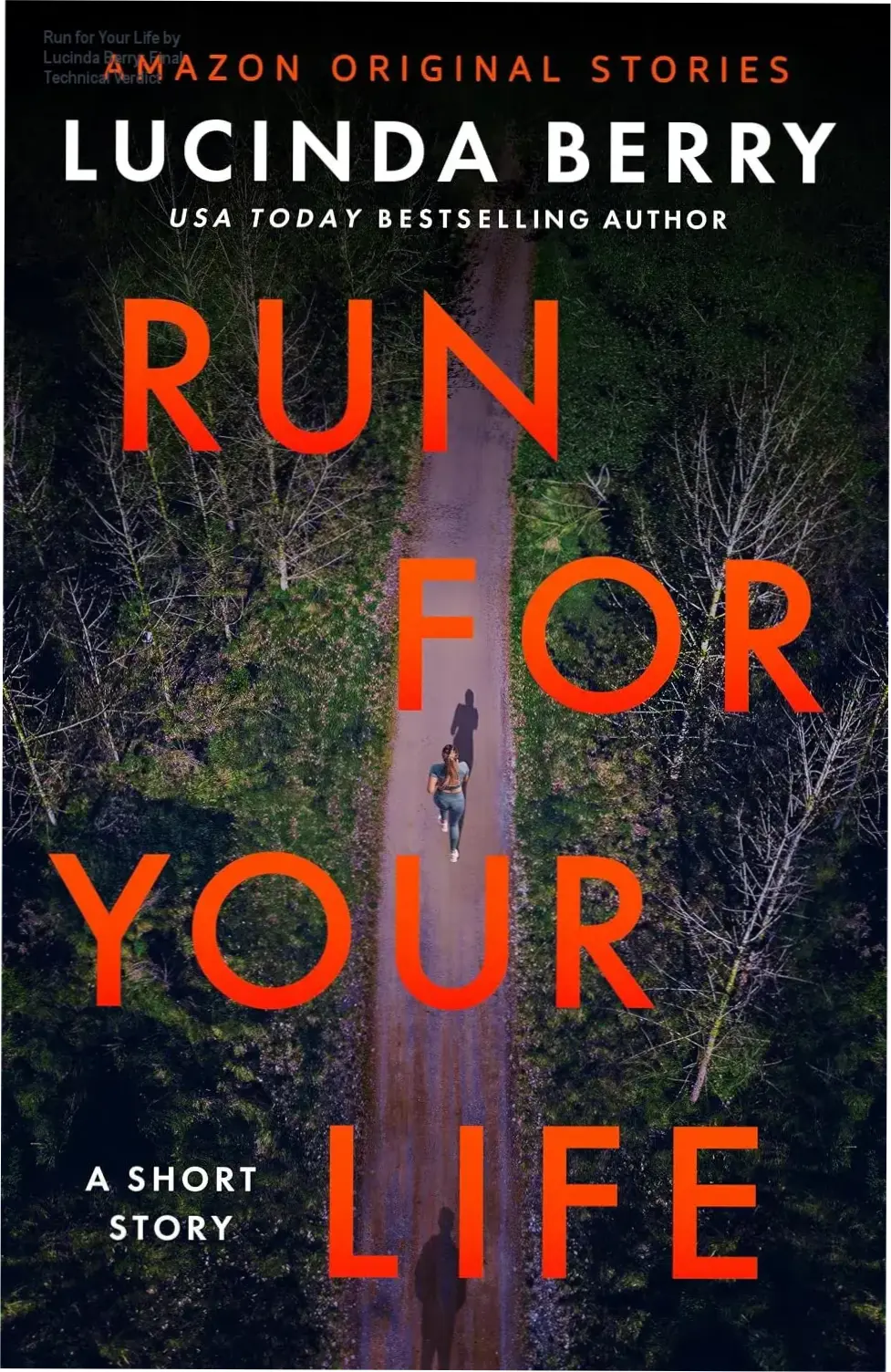
Run for Your Life by Lucinda Berry: Final Technical Verdict
We all cling to the illusion of the “safe routine.” The morning coffee, the predictable commute, the daily jog. We treat these habits as armor, believing that as long as we follow the script, the world remains predictable. But the most terrifying psychological thrillers don’t create monsters in the woods; they find them hiding in your muscle memory.
Lucinda Berry understands this fragility. In “Run for Your Life,” she strips away the comfort of the ordinary and replaces it with a claustrophobic nightmare. If you are looking for a quick, high-tension descent into madness, you can check the current reader reception and availability on Amazon to see if this short-form thriller fits your appetite for suspense.
Ready to dive into “Run for Your Life”?
Explore available editions, check current live pricing, or download a free sample directly on Amazon.
Preview Free Sample & Check Price on Amazon
*You will be redirected to Amazon. As an Amazon Associate, we may earn from qualifying purchases.
The Sprint of Suspense: Writing Style and Pacing
This isn’t a marathon; it’s a 72-page sprint. Berry utilizes the “Amazon Original Stories” format to its full potential. There is no room for tedious world-building or unnecessary subplots.
The prose is lean. It mirrors the protagonist’s state of mind: panicked, fragmented, and urgent. Every sentence is designed to push the reader toward the next page.
The pacing is intentionally breathless. By starting the story with Riley already bound and bleeding, Berry bypasses the slow burn. She drops you directly into the crisis, forcing an immediate emotional investment.
However, this speed is a double-edged sword. While it creates an intense atmosphere, some readers on Goodreads have noted that the rapid progression can occasionally feel like a summary of a longer novel rather than a fully breathed short story.
The Architecture of the Trap: Narrative Structure
The core of the story lies in the power dynamic. Riley Fletcher isn’t just a captive; she is a dependent. This is where the psychological horror outweighs the physical violence.
Dawson Miller isn’t your typical “slasher” villain. He is a ghost from the past, a former coworker who has meticulously planned this reunion. The horror comes from his “unsettling care.”
The narrative structure relies on a cycle of hope and despair. Just as Riley finds a potential opening for escape, her physical injuries—and Dawson’s calculated kindness—pull her back into submission.
This “Stockholm-lite” tension keeps the reader guessing. Is Dawson looking for redemption, revenge, or something far more twisted? The ambiguity of his motives is the engine that drives the plot forward.
| Technical Aspect | Analysis | Verdict |
|---|---|---|
| Plot Velocity | Extremely high; immediate conflict. | Excellent for short attention spans. |
| Character Depth | Focused on survival instincts. | Functional, though limited by length. |
| Atmosphere | Claustrophobic and sterile. | Highly effective. |
| Ending | Fast-paced resolution. | Divisive among readers. |
Expectation vs. Reality: The “Short Story” Gamble
Many readers enter this book expecting a full-length psychological thriller. When they hit the 72-page mark, there is often a sense of “Is that it?”
This is a common friction point in the ratings. The 3.5 to 3.7 star average reflects a divide between those who love the efficiency of the format and those who crave more character development.
In reality, “Run for Your Life” works best as a “palette cleanser.” It is the literary equivalent of a short horror film—designed to deliver a sharp shock and a quick exit.
If you expect a deep dive into the psyche of the characters, you will be disappointed. If you want a visceral experience that you can finish in one sitting, it delivers exactly what it promises.
The Psychology of Dependency: Real-World Value
Beyond the thrills, the book touches on a terrifying reality: how easily our autonomy can be stripped away. The story explores the intersection of physical vulnerability and mental manipulation.
Riley’s struggle isn’t just against locks and keys, but against her own body’s need for help. The “care” Dawson provides is a weapon. It creates a cognitive dissonance that is genuinely unsettling.
“The most dangerous kind of captor is the one who makes you believe you need them to survive.”
Run for Your Life isn’t a novel. It’s a psychological sprint. If you have exactly two hours and a craving for high-tension claustrophobia, this fits your profile.
The ideal reader is someone who enjoys the “captive” trope—where the horror stems from dependency and the psychological power struggle between the victim and the predator.
It appeals to fans of Lucinda Berry’s previous work who appreciate her ability to turn domestic safety into a nightmare. If you like stories that feel like a panic attack on paper, you’ll find value here.
Who Should Skip It
Avoid this book if:
- You are looking for a complex, multi-layered plot with extensive world-building.
- You dislike stories where the protagonist is physically incapacitated for a significant portion of the narrative.
- You feel “cheated” by short page counts (72 pages) and prefer 300+ page slow-burns.
The “Value for Money” Reality Check
There is a common purchasing mistake here: treating this as a full-length thriller. At 72 pages, you aren’t paying for volume; you’re paying for efficiency.
The value lies in the pacing. Berry strips away the fluff. There is no wasted dialogue. Every sentence serves to tighten the noose around Riley Fletcher.
From a technical standpoint, it’s a “snackable” piece of fiction. Whether it’s “worth it” depends on whether you value a quick, visceral emotional hit over a long-term literary investment.
Quick Context FAQ
Is it a standalone? Yes. It is designed as a self-contained short story.
Is it graphic? It’s a psychological thriller. While there is violence and blood, the real horror is the mental manipulation and the feeling of helplessness.
How long does it take to read? Most readers finish it in one sitting, typically under 90 minutes.
Editorial Verdict
Lucinda Berry delivers a lean, mean exercise in tension. While it lacks the depth of a full novel, it succeeds as a cautionary tale about the fragility of our routines. It doesn’t reinvent the thriller genre, but it executes the “trapped” narrative with surgical precision.
If you’re undecided, the best move is to check the current reader ratings and live pricing on Amazon to see if the short format aligns with your current reading mood.
Final Editorial Verdict
“Run for Your Life: A Short Story” delivers on its core promise for its intended audience, offering compelling insights without fluff. As highlighted in our detailed edition breakdown, its practical depth and readability are its greatest strengths.
We also recommend checking the official Kindle sample and reader ratings before making your final purchase decision.
*You will be redirected to Amazon. As an Amazon Associate, we earn from qualifying purchases.