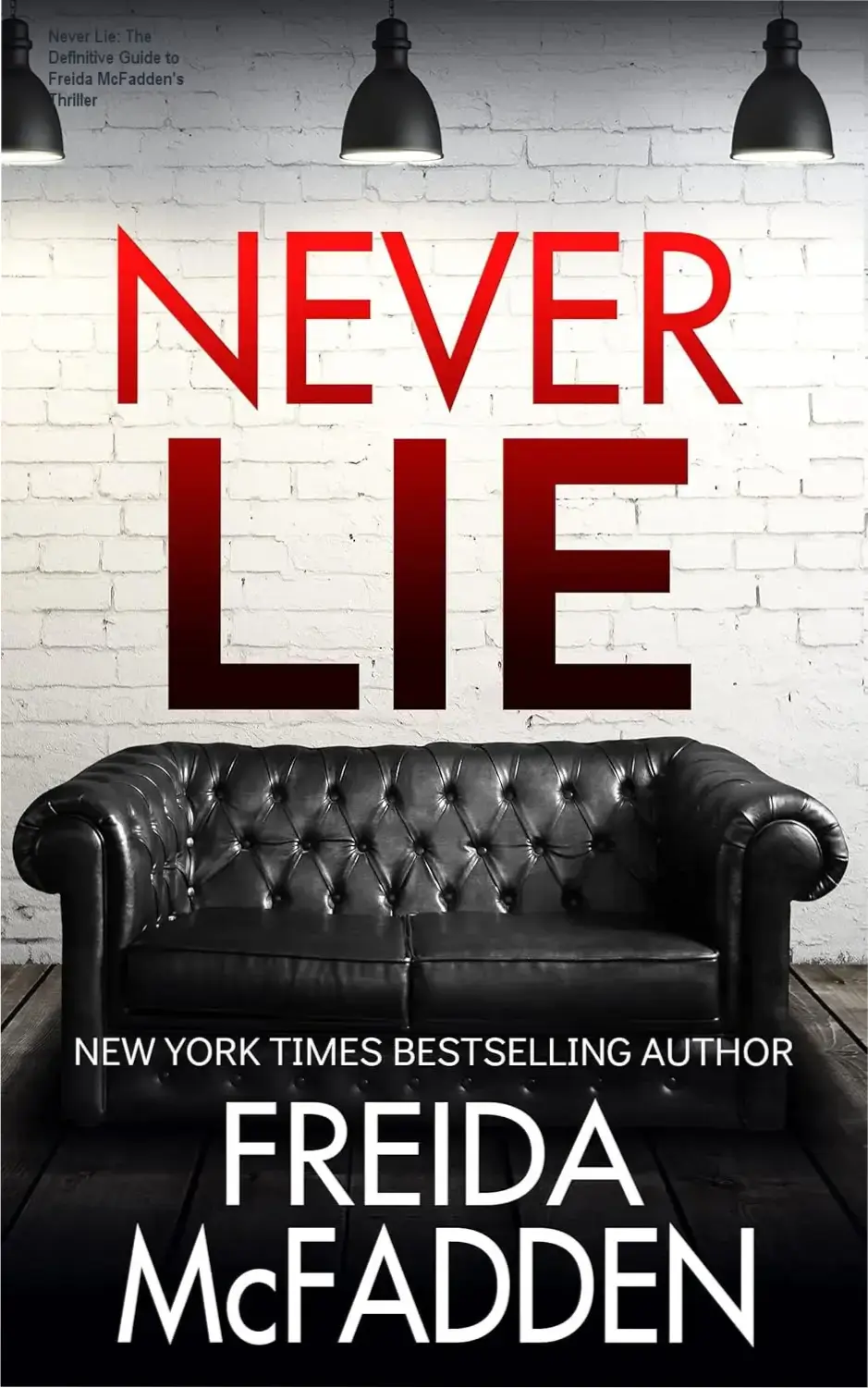
Never Lie: The Definitive Guide to Freida McFadden’s Thriller
We all like to believe we truly know the person sleeping next to us. The “honeymoon phase” is a psychological shield that blinds us to red flags, turning potential warnings into quirky personality traits. This fragile trust is exactly what Freida McFadden weaponizes in her psychological thrillers.
When searching for a dream home, most people look at the square footage and the neighborhood. Few consider the psychic residue left by previous owners or the secrets hidden in the walls. If you are looking for a high-tension escape that questions the nature of truth, you can check the current reader reception for Never Lie to see if it fits your mood.
Ready to dive into “Never Lie”?
Explore available editions, check current live pricing, or download a free sample directly on Amazon.
Preview Free Sample & Check Price on Amazon
*You will be redirected to Amazon. As an Amazon Associate, we may earn from qualifying purchases.
The Architecture of Anxiety: Pacing and Style
Freida McFadden doesn’t write literature; she writes dopamine loops. Her style is stripped of unnecessary fluff, focusing on a relentless forward momentum that makes the 338 pages feel like a sprint rather than a marathon.
The prose is intentionally simple. This isn’t a flaw; it’s a conversion tactic for the reader. By removing complex linguistic barriers, she ensures the plot remains the sole focus, creating an addictive “just one more chapter” effect.
However, a skeptical reader will notice the reliance on cliffhangers. Every chapter ends on a note of suspense. While effective, it can feel formulaic if you’ve read other psychological thrillers in the “domestic noir” subgenre.
But for the target audience—people who want a fast, visceral experience—this pacing is a masterclass in engagement. It mimics the urgency of the blizzard trapping the characters, mirroring the external chaos with internal narrative tension.
| Technical Element | Execution | Impact on Reader |
|---|---|---|
| Chapter Length | Short/Micro | High perceived reading speed |
| Prose Style | Direct/Conversational | Low cognitive load, high immersion |
| Plot Velocity | Accelerating | Creates an “unputdownable” sensation |
The Narrative Engine: The Cassette Tapes
The brilliance of Never Lie lies in its structural duality. We have the “present day” timeline with Tricia and Ethan, and the “recorded” timeline of Dr. Adrienne Hale’s patients.
The audio transcripts serve as a narrative bridge. They allow the author to introduce new characters and conflicting perspectives without needing to leave the isolated setting of the manor.
This “story within a story” creates a layer of distrust. As Tricia listens to the tapes, the reader is forced to question the reliability of the narrator. Who is lying? The psychiatrist? The patients? Or the woman listening to the tapes?
It’s a clever way to build a puzzle. Each tape is a piece of evidence. The reader isn’t just consuming a story; they are conducting a forensic audit of Dr. Hale’s life, making the eventual revelation feel earned rather than random.
“The most dangerous lies are the ones we tell ourselves to make our lives feel manageable.”
Expectation vs. Reality: The “Twist” Culture
In the current thriller market, the “twist” is the product. Readers don’t buy these books for the character development; they buy them for the moment the rug is pulled out from under
Who Should Actually Read This?
Never Lie is engineered for a specific type of reader: the “binge-watcher.” If you enjoy the adrenaline of a locked-room mystery and the frustration of an unreliable narrator, this is your territory.
It appeals strongly to those who prioritize pacing over prose. This isn’t a literary exercise in metaphors; it’s a high-velocity puzzle. If you liked The Silent Patient or the domestic tension of Gone Girl, the DNA here will feel familiar.
Who Should Skip It
Avoid this book if you have a low tolerance for “shock-value” plot twists that occasionally defy logic. If you prefer slow-burn atmospheric horror or deep, clinical explorations of psychology, you will likely find the narrative too “popcorn” for your taste.
Common purchasing mistake: Expecting a sophisticated medical treatise on psychiatry. Despite the medical thriller tag, the “psychiatry” serves as a plot device, not a technical study. Don’t buy this expecting a textbook; buy it expecting a rollercoaster.
The “Value for Money” Analysis
From a pragmatic standpoint, the value is high. At 338 pages, the time investment is minimal compared to the dopamine payoff. It’s a “one-sitting” read.
- Readability: Extremely high. The prose is invisible, which is exactly what a thriller needs to maintain momentum.
- Engagement: The cassette-tape framing device creates a natural “just one more” loop that keeps you reading late into the night.
- Return on Time: High. You get a complete, satisfying arc without the filler often found in 500-page epics.
Editorial Conclusion
Freida McFadden doesn’t reinvent the wheel, but she spins it faster than most. The book succeeds because it understands the psychology of the reader—feeding you just enough information to make you feel smart, then pulling the rug out from under you.
While some skeptics might find the ending overly convenient, the sheer entertainment value outweighs the narrative gaps. It is an efficient, lean, and ruthless piece of commercial fiction. For those undecided, the best way to gauge if the writing style fits your rhythm is to check the live reader ratings and sample chapters on Amazon.
Final Editorial Verdict
“Never Lie” delivers on its core promise for its intended audience, offering compelling insights without fluff. As highlighted in our detailed edition breakdown, its practical depth and readability are its greatest strengths.
We also recommend checking the official Kindle sample and reader ratings before making your final purchase decision.
*You will be redirected to Amazon. As an Amazon Associate, we earn from qualifying purchases.