Most of us treat travel as an escape—a way to mute the noise of a failing marriage or a shattered career for a few weeks. We imagine that changing our coordinates on a map will magically reset our internal compass. But the reality is usually different: you just take your baggage to a prettier location.
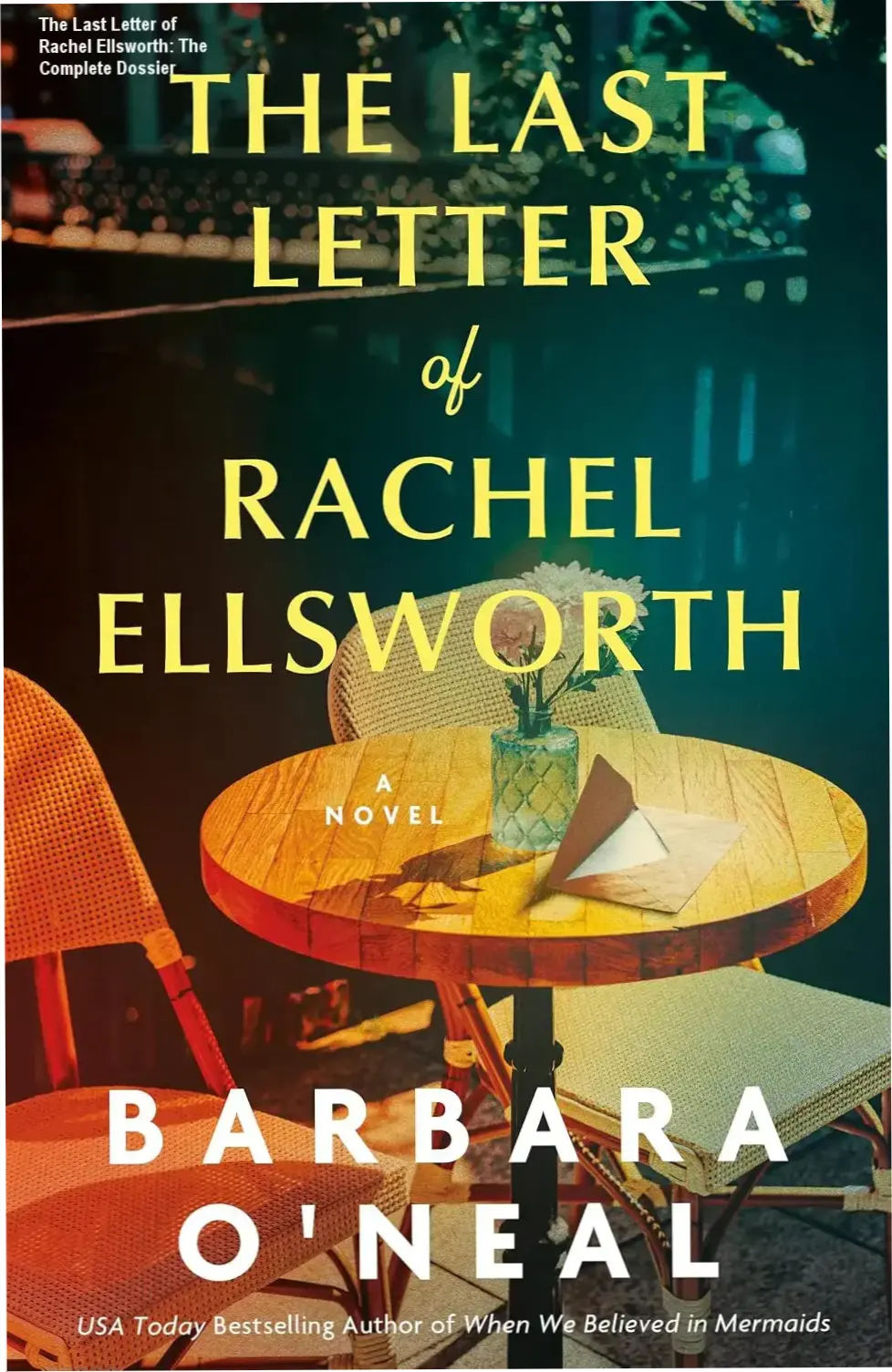
This is the precise tension that drives “The Last Letter of Rachel Ellsworth.” It isn’t just a travelogue; it’s a study on whether we can actually outrun our ghosts or if we must invite them along for the ride. For readers seeking a blend of culinary exploration and emotional reconstruction, you can check the current reader reception and availability on Amazon to see if this narrative fits your current mood.
Barbara O’Neal enters a crowded market of “healing journeys,” but she does so with a specific hook: the intersection of grief, gastronomy, and the Parsi culture. The book doesn’t just ask if we can heal, but whether the remnants of someone else’s unfinished life can provide the blueprint for our own restart.
Ready to dive into “The Last Letter of Rachel Ellsworth”?
Explore available editions, check current live pricing, or download a free sample directly on Amazon.
*You will be redirected to Amazon. As an Amazon Associate, we may earn from qualifying purchases.
The “Cozy” Label vs. Emotional Weight
The book is categorized as a “Cozy Culinary Mystery,” but let’s be skeptical for a moment. “Cozy” usually implies low stakes and a predictable happy ending. However, O’Neal deals with heavy artillery: abrupt divorce, career-ending injuries, and the void left by a parent’s death.
The “cozy” element here isn’t about the lack of pain, but the environment in which that pain is processed. The Parsi cafés of London, Paris, Morocco, and India act as a sensory anchor. The smells of cardamom and saffron don’t erase the trauma, but they make the process of facing it palatable.
Readers on Goodreads frequently mention that the book feels like a “warm hug,” yet they highlight the genuine sadness of Mariah’s loss. This balance is where the book succeeds. It doesn’t sanitize grief; it just provides a beautiful backdrop for it.
Narrative Engine: The Epistolary Mystery
The plot is propelled by Rachel’s letters. This is a classic literary device—the epistolary narrative—used here as a scavenger hunt for the soul. Each letter is a clue, not just to a physical location, but to a piece of Rachel’s hidden history.
This structure prevents the story from becoming a generic travel diary. Because the characters are following a pre-written path, there is a constant tension between Rachel’s past intentions and the protagonists’ present discoveries.
From a technical standpoint, the pacing is steady. It avoids the “mid-book slump” common in long novels by switching locations and introducing new cultural layers just as the emotional tension peaks.
Core Component
Who Should Actually Read This?
The Last Letter of Rachel Ellsworth isn’t for everyone. It occupies a specific niche: the intersection of culinary exploration and emotional recovery.
This book is a perfect match for readers who prioritize atmospheric storytelling over plot velocity. If you enjoy “healing journeys,” female-led narratives, and the sensory detail of international travel—specifically the aromatic corridors of Parsi cafés—you will find significant value here.
It appeals to those who view reading as a form of emotional decompression. The slow-burn discovery of Rachel’s letters provides a rhythmic pace that rewards patience rather than urgency.
Who Should Skip It?
Avoid this book if you are looking for a high-stakes, fast-paced mystery. While it is categorized under “Cozy Culinary Mysteries,” the “mystery” is more about internal closure than a crime scene investigation.
The Plot-Driven Reader: If you need constant cliffhangers and rapid twists, the contemplative pace will feel sluggish.
The Skeptic of Sentimentality: If “healing journeys” and “overcoming trauma” feel too cliché for your taste, the emotional beats here may feel predictable.
The Technical Foodie: Don’t expect a cookbook. While the culinary descriptions are vivid, they serve the plot, not as a gastronomic manual.
Value Analysis & Realistic Expectations
At 386 pages, the value lies in the immersive experience. You aren’t paying for a quick answer to a puzzle, but for a guided tour through London, Paris, Morocco, and India.
The common purchasing mistake here is expecting a “mystery” in the traditional sense. This is a character study disguised as a quest. The “clues” in the letters are emotional milestones, not forensic evidence.
From a technical standpoint, Barbara O’Neal delivers a polished, professional narrative. The prose is fluid, and the structural transition between the letters and the present-day journey is seamless.
Editorial Verdict
The novel succeeds because it doesn’t try to be a thriller. It embraces the “cozy” element of its genre, focusing on the chemistry between Veronica and Mariah. It’s a story about the courage required to start over when your previous identity—whether as a spouse or an Olympic athlete—has vanished.
It is a solid investment for those seeking a sophisticated, emotionally resonant read that blends culture and grief. Before diving into the 386 pages of emotional exploration, it is worth checking the latest reader ratings and current pricing to ensure it fits your current reading mood.
Final Editorial Verdict
“The Last Letter of Rachel Ellsworth: A Novel” delivers on its core promise for its intended audience, offering compelling insights without fluff. As highlighted in our detailed edition breakdown, its practical depth and readability are its greatest strengths.
We have spent decades arguing whether “they” are out there, trapped in a loop of grainy footage and government denials. But the conversation has shifted. The real tension now lies in the uncomfortable intersection where cutting-edge artificial intelligence meets ancient, unexplained encounters. Most readers enter this topic expecting a conspiracy manifesto. Instead, D. W. Pasulka…
Adapting a literary juggernaut like Fourth Wing into a graphic novel is a high-stakes gamble. For many, the magic of the Empyrean series lies in the internal tension—the constant fear of a brittle body failing in a world that demands absolute strength. When you shift from prose to panels, you risk losing that psychological depth…
Family dynamics are rarely as tidy as a Hallmark movie script, yet we constantly crave stories that pretend they are. The real friction happens in the gap between the curated holiday photo and the simmering resentment over who got the better bedroom twenty years ago. Meghan Quinn understands this tension instinctively, and she exploits it…
In the hyper-saturated market of paranormal romance, readers often struggle to find stories that balance intense escapism with genuine emotional safety. The “shifter romance” genre frequently promises high stakes but often fails to deliver the cozy, low-stress resolution that modern readers crave. Finding a book that provides both high-heat tension and a guaranteed “Happily Ever…
We like to believe that reputation is a fortress, something built over decades of prestige and strategic networking. But in the world of the ultra-wealthy, a reputation is more like a house of cards in a windstorm. One scandal, one leaked email, or one catastrophic lapse in judgment, and the elite are suddenly whispering about…
Trauma recovery in romance often feels like a checklist—nightmares, flinching, a magical healing kiss—but Into the Fading Twilight refuses that lazy script. Catherine Cowles builds a protagonist, Nova Monroe, whose 413 days in captivity manifest as a desperate addiction to adrenaline rather than simple fear. She cliff-dives and mountain-bikes not for fun, but to burn…