The Rainbow Fish Board Book: The Definitive Expert Review
Teaching a two-year-old the concept of sharing is less like education and more like a high-stakes hostage negotiation. Most parents enter the fray hoping for a miracle tool—something that transforms a screaming “Mine!” into a peaceful “Yours!” without a total emotional meltdown.
That is where The Rainbow Fish enters the frame. It is not just a children’s story; it is a global benchmark for early childhood social-emotional learning, blending high-contrast sensory visuals with a stark lesson on the cost of popularity and the value of generosity.
Ready to dive into “The Rainbow Fish”?
Explore available editions, check current live pricing, or download a free sample directly on Amazon.
Preview Free Sample & Check Price on Amazon
*You will be redirected to Amazon. As an Amazon Associate, we may earn from qualifying purchases.
The Sensory Hook: Foil Stamping and Visual Retention
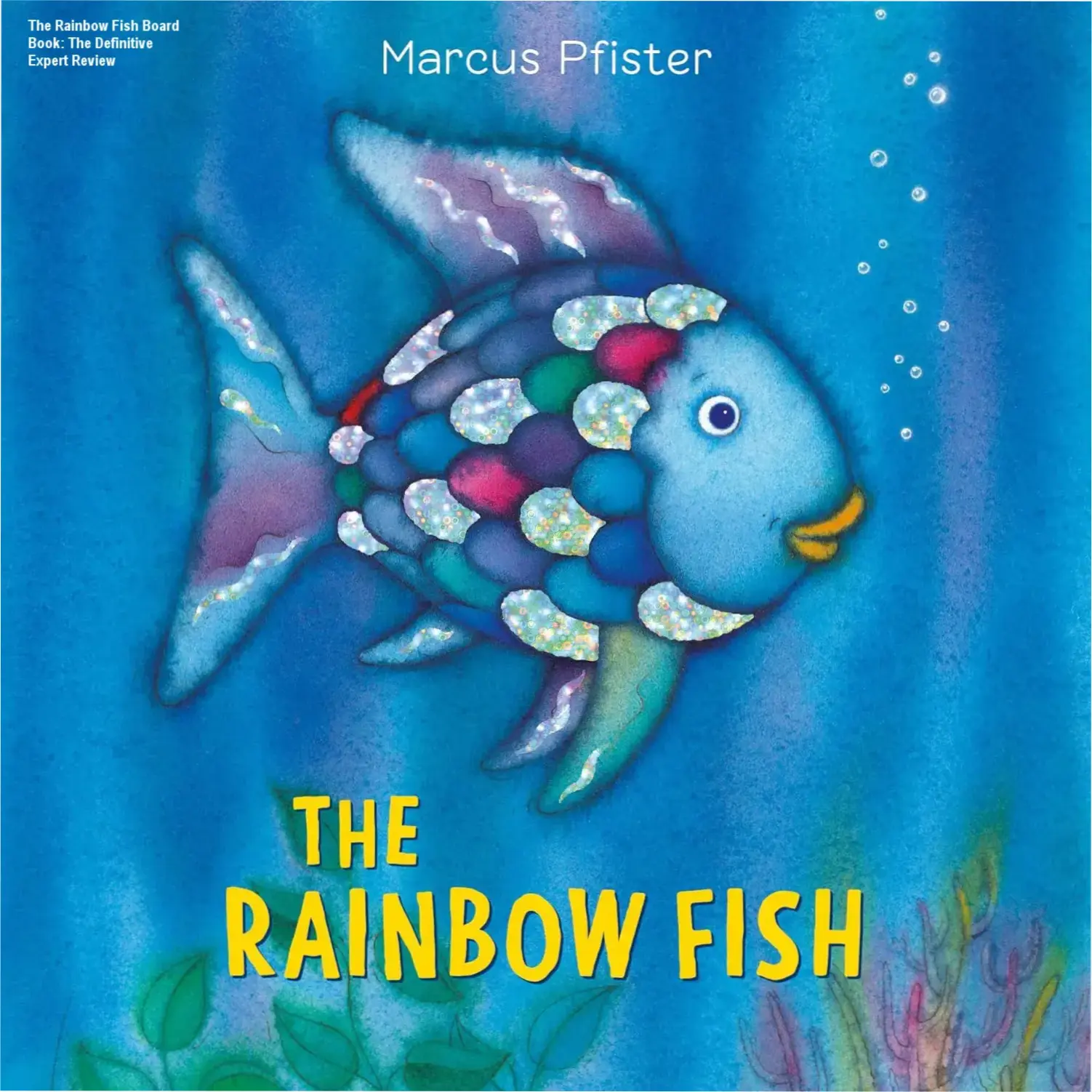
From a product design perspective, the board book edition of The Rainbow Fish is a masterclass in sensory engagement. For a child under three, text is secondary; visual stimuli are the primary driver of attention.
The use of holographic foil stamping isn’t just a “pretty” addition. It creates a tactile and visual focal point that anchors the child’s gaze. In a market saturated with flat digital screens, these glittering scales provide a physical contrast that keeps toddlers engaged longer than standard ink-on-paper books.
The board book format is a pragmatic choice. It survives the inevitable chewing, dropping, and page-tearing that defines the “Baby to 3 years” demographic. It is a durable tool designed for high-frequency use in chaotic environments.
| Technical Feature | Impact on Reader | Analyst Verdict |
|---|---|---|
| Holographic Foil | High Visual Stimulation | Essential for attention retention |
| Board Book Material | Extreme Durability | Perfect for the target age group |
| 14-Page Length | Rapid Pacing | Fits the limited attention span of toddlers |
The Moral Paradox: Sharing vs. Identity
Here is where we move from product design to narrative analysis. The core argument of the book is simple: the Rainbow Fish is beautiful but lonely. He finds happiness only when he gives away his prized scales.
As an analyst, I find the moral logic slightly contentious. A skeptical reading suggests that the Rainbow Fish is essentially “paying” for friendship. He is accepted by the community only after he strips himself of the very thing that makes him unique.
However, for a preschooler, this nuance is lost. The “takeaway” is immediate and binary: hoarding leads to isolation; sharing leads to inclusion. It is a functional social script that helps children navigate the transition from the egocentrism of infancy to the cooperation of early childhood.
“The universal message at the heart of this simple story… gives this book its enduring value.”
Pacing and Cognitive Load
The book is incredibly lean. At only 14 pages, it avoids the common mistake of over-explaining the plot. It follows a tight narrative arc: Pride → Isolation → Advice → Sacrifice &rarr
Target Reader & Practical Compatibility
The Rainbow Fish board book isn’t for everyone. It is precision-engineered for the 0 to 3-year-old demographic. If you are looking for a narrative with complex character arcs, this isn’t it. This is a sensory experience designed to bridge the gap between visual stimulation and basic social ethics.
Who this is for:
- Parents of toddlers: Those needing a durable, “chew-proof” format that survives rough handling.
- Early educators: Teachers looking for a visual prompt to start conversations about generosity.
- Visual learners: Children who are more attracted to textures and light (the foil stamping is the real star here).
Who should skip this:
If your child is already 5 or 6, the 14-page board book will feel like a pamphlet. You’ll want the full hardcover edition. Additionally, some parents find the moral—giving away pieces of oneself to be liked—conceptually flawed. If you prefer lessons based on boundaries rather than sacrifice, this story might clash with your parenting philosophy.
Value for Money: Analysis
From a purely technical standpoint, you aren’t paying for “content” (the word count is minimal). You are paying for production quality. The holographic foil and glitter are expensive to print, and in a board book format, they provide a tactile engagement that digital screens cannot replicate.
Common purchasing misstep: Expecting a deep story. This is a “concept book.” Its value lies in the 30 seconds a child spends staring at a shiny scale, not in a literary plot. For the price of a board book, the durability makes it a high-value investment for the “destructive” phase of early childhood.
Editorial Verdict
It is a visual triumph with a polarizing message. While the plot is lean, the execution is flawless for its target age. It serves as an effective tool for introducing the concept of sharing, provided the parent guides the conversation.
To see how the foil stamping holds up over time or to check the latest pricing, you can examine the verified buyer reviews on Amazon.
Final Editorial Verdict
“The Rainbow Fish” delivers on its core promise for its intended audience, offering compelling insights without fluff. As highlighted in our detailed edition breakdown, its practical depth and readability are its greatest strengths.
We also recommend checking the official Kindle sample and reader ratings before making your final purchase decision.
*You will be redirected to Amazon. As an Amazon Associate, we earn from qualifying purchases.