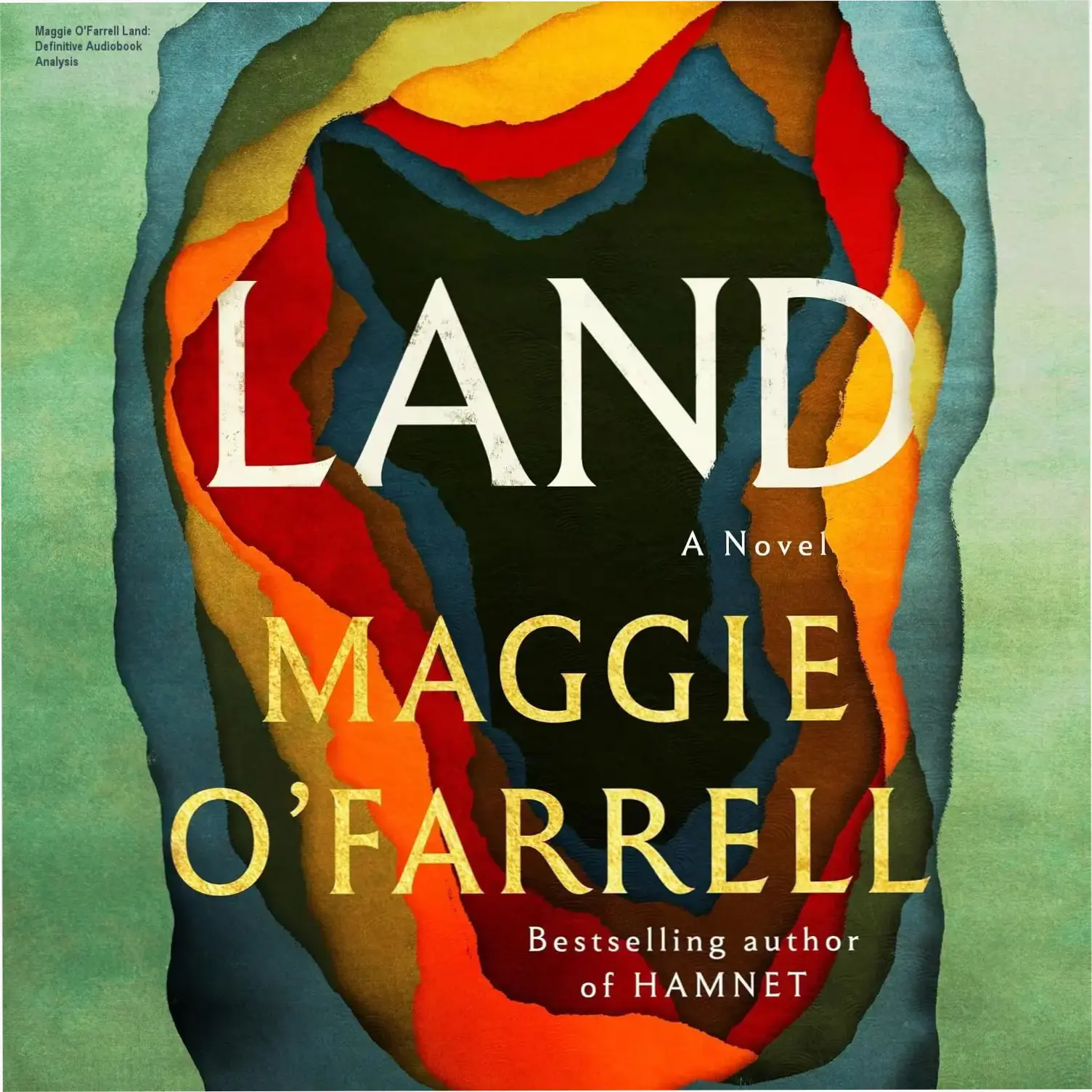
Maggie O’Farrell Land: Definitive Audiobook Analysis
Historical fiction often struggles with the weight of its own research, burying human stories under sediment layers of period-accurate detail. Maggie O’Farrell has built a career defying that gravity. After the intimate domestic tragedy of Hamnet and the courtly pressure cooker of The Marriage Portrait, she turns her gaze to the Irish west coast in 1865, a landscape still breathing the dust of the Great Hunger. The premise—a surveyor mapping a land that refuses to be pinned down—feels like a metaphor for the genre itself. You expect a saga of colonization and resistance; you get a ghost story where the specters are geological as much as political. The central tension isn’t just British soldiers versus Irish tenants, but a father’s silence cracking under a secret the land itself seems to hold. If you have avoided “big” historical novels because they feel like homework, this might be the entry point that changes your mind. You can check the current edition details and reader reception here.
O’Farrell’s prose operates on a frequency that bypasses the intellect and vibrates directly in the chest. She doesn’t describe the wind on the peninsula; she makes you feel the grit in your teeth. The Ordnance Survey project provides a rigid, colonial grid, but the narrative constantly bleeds over the edges—ancient woodlands, persistent folklore, a dog that understands more than the humans. It is a novel about what maps erase: the names, the dead, the “thrumming, gorgeous presence” of the non-human world. The audiobook narration by Dane Whyte O’Hara adds a specific texture, grounding the lyrical prose in a distinct Irish cadence that print alone cannot convey.
Ready to dive into “Land: A Novel”?
Explore available editions, check current live pricing, or download a free sample directly on Amazon.
Preview Free Sample & Check Price on Amazon
*You will be redirected to Amazon. As an Amazon Associate, we may earn from qualifying purchases.
Writing Style: Precision as a Form of Haunting
O’Farrell writes sentences that function like the surveyor’s theodolite—precise, calibrated, measuring the distance between what is said and what is felt. There is zero fat here. Every clause earns its keep. She employs a close third-person perspective that clings to Tomás and Liam, shifting the psychic distance with surgical control. One moment you are inside Tomás’s fracturing mind, the next you are pulled back to watch the “mosses, waters, winds, and skies” operate on their own indifferent timeline.
This stylistic restraint is the engine of the novel’s dread. She refuses the melodramatic reveal. When the “unsettling encounter in a copse” happens, it is rendered with a terrifying mundanity. The horror blooms in the aftermath, in the silence between father and son. Readers on Goodreads frequently highlight this “quiet intensity.” One verified reviewer noted,
“It’s not a plot-driven page-turner in the traditional sense. It’s a book you live inside. The atmosphere *is* the plot.”
That atmosphere is built on sensory overload—the smell of peat smoke, the suck of bog, the cold shock of Atlantic water—delivered in prose that feels ancient yet startlingly modern.
The pacing is deliberate. The first third establishes the geography and the routine of the survey. It demands patience. If you require constant incident, the opening act may feel slow. But O’Farrell is laying seismic charges. The payoff in the final section—a convergence of timelines and geographies—lands with the force of a landslide because the foundation was laid so carefully. It rewards the reader who trusts the mapmaker.
Narrative Structure: The Map and the Territory
The structure mimics the Ordnance Survey itself: a grid imposed on chaos. The novel moves between 1865 and earlier threads, slowly revealing the “buried treasure” and the “overlapping lives” promised in the blurb. This non-linear approach isn’t a gimmick; it mirrors the geological theme. The past isn’t past; it’s the bedrock the present stands on.
Tomás is the anchor. A man tasked with naming every townland, stream, and ruin, he is uniquely positioned to understand that names are acts of possession—or erasure. His internal conflict drives the spine of the book. Liam, the son, provides the counterpoint: youth, fear, and a desperate need for his father’s return to wholeness. Their dynamic avoids the cliché of the “stoic father/soft son.” Both are broken by the same history, just at different angles.
A significant structural gamble is the introduction of seemingly disconnected narrative threads—a woman in a different time, a dog’s perspective. On Reddit’s r/historicalfiction, discussions often center on whether these threads resolve satisfactorily. The consensus leans positive:
“The perspective shifts felt jarring at first, like hitting a pothole. But by the end, you realize O’Farrell has been triangulating the whole time. The ‘dog chapter’ is actually the emotional key.”
It requires a reader willing to surrender to the author’s logic, trusting that the survey lines will eventually meet.