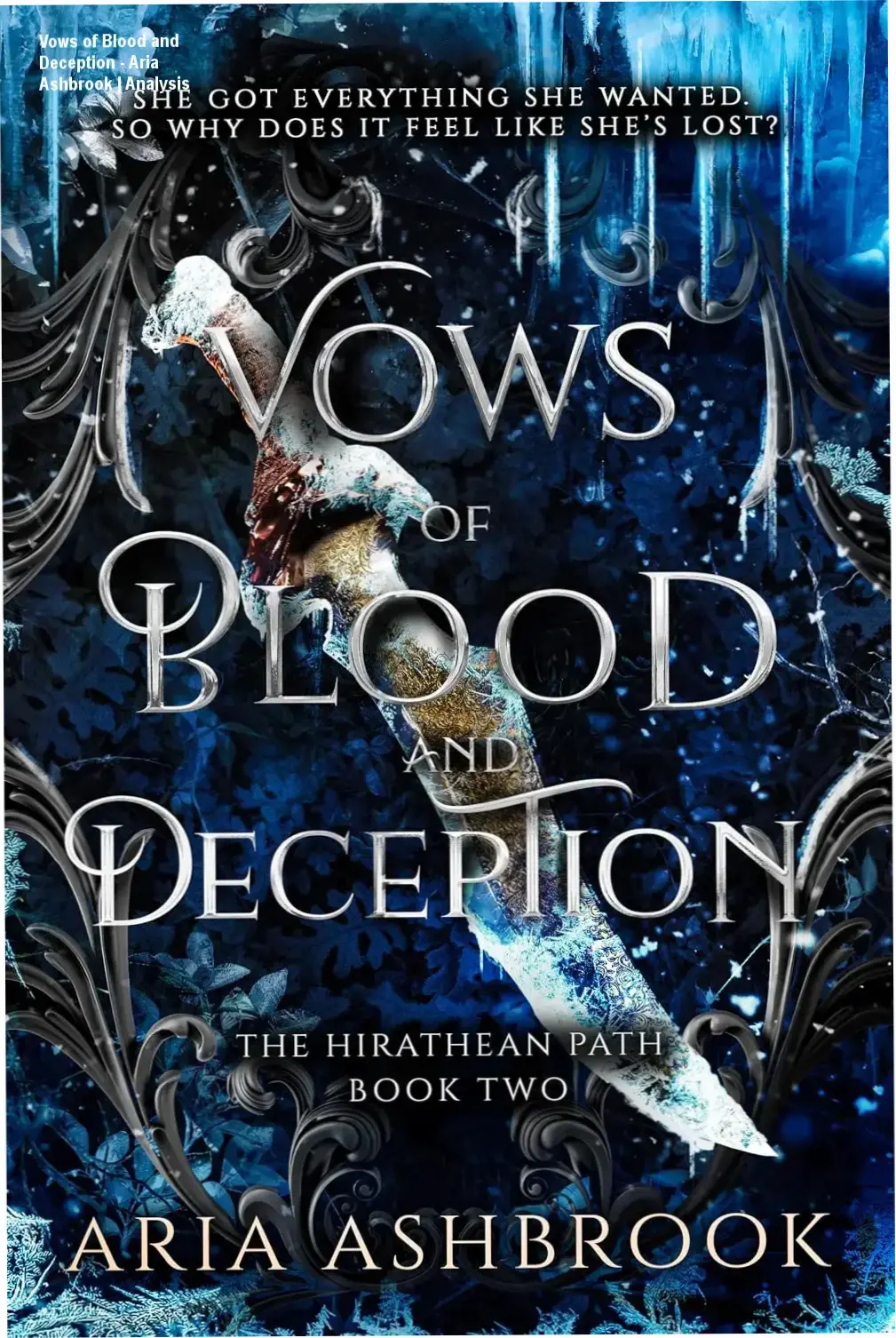
Vows of Blood and Deception – Aria Ashbrook | Analysis
The romantasy boom has created a specific kind of reader fatigue: the “bridge book” syndrome. You devour a stellar debut, then watch the sequel collapse under exposition bloat or manufactured miscommunication. Vows of Blood and Deception arrives with massive BookTok hype and the terrifying “Book 2 of 3” label.
The central question isn’t just plot progression. It’s whether Aria Ashbrook can deepen the political stakes without sacrificing the razor-sharp tension that made book one addictive. Second acts in trilogies often drown in world-building setup for the finale.
- Sequel slump is a genuine genre epidemic.
- Readers fear stalled romance arcs.
- Political intrigue often replaces character agency.
Ashbrook sidesteps this by making the politics deeply personal. Rose doesn’t just navigate court; she bleeds for it. The “enemies to lovers” dynamic evolves into something rawer: “betrayed partners forced into proximity.” That shift raises the emotional ceiling significantly.
- Personal stakes trump geopolitical maneuvering.
- Broken trust creates higher tension than simple dislike.
- Magic system consequences drive character decisions.
Early reader sentiment on Goodreads and Reddit confirms the pivot works. The consensus highlights a “darker, tighter” narrative. Comparisons to Fourth Wing and Sarah J. Maas are frequent, but reviewers note Ashbrook’s banter hits a distinct, funnier frequency. The dire wolf bond remains a standout fantasy element.
- Community consensus: “Better than book one.”
- Banter quality cited as a key differentiator.
- Pacing described as relentless.
Ready to dive into “Vows of Blood and Deception”?
Explore available editions, check current live pricing, or download a free sample directly on Amazon.
Preview Free Sample & Check Price on Amazon
*You will be redirected to Amazon. As an Amazon Associate, we may earn from qualifying purchases.
Writing Style, Pacing & Narrative Voice
Ashbrook writes with a kinetic energy that respects the reader’s time. Sentences are punchy. Dialogue crackles. There is zero fat in the prose, a rarity in 544-page romantasy tomes. The “slow burn” label is accurate but misleading; the tension is active, not stagnant.
- Prose density: Low. High readability.
- Dialogue-to-narrative ratio favors banter.
- Chapter hooks are ruthless.
The dual POV (Rose and Kyor) balances perfectly. Kyor’s perspective prevents the “arrogant prince” trope from calcifying into unlikeability. We see the calculation behind the crown. It humanizes him without excusing his book one choices. That nuance is the series’ secret weapon.
- Dual POV essential for moral complexity.
- Kyor’s internal monologue adds political context.
- Rose’s voice remains the emotional anchor.
Pacing accelerates in the second half. The departure from Wrohelm shifts the genre gears from political thriller to high-stakes adventure. The transition feels earned, not abrupt. The “dire wolf” mythology expands organically here, serving plot and theme simultaneously.
- Setting change refreshes the stakes.
- Adventure arc complements court intrigue.
- Magic system rules harden satisfyingly.
Core Tropes Execution & Subversion
The marketing leans hard on tropes: “Enemies to Lovers,” “Touch Her and Die,” “Found Family.” Ashbrook delivers them but refuses to let them do the heavy lifting alone. The “Broken Trust” element is the engine, not a backdrop. Rose’s anger is justified, sustained, and messy.
- Trust repair > Instant forgiveness.
- “Touch Her and Die” shown via action, not just dialogue.
- Found family provides levity without undermining darkness.
Reddit threads (r/Romantasy, r/FantasyRomance) praise the “banter-to-tears” ratio. The sibling dynamic with Rose’s sister adds a layer of familial betrayal that resonates deeper than the romantic angst. It grounds the high fantasy in relatable grief.
- Sibling conflict anchors emotional core.
- Romantic tension layered over familial rupture.
- Humor acts as pressure valve, not distraction.
The “Gods and Goddesses” element escalates. Divine interference feels dangerous rather than convenient. The magic system’s cost—physical and mental deterioration—raises the stakes for the finale. It prevents deus ex machina resolutions.
- Divine entities as antagonists/complications.
- Magic cost creates hard limits.
- Power progression feels earned, not gifted.
| Trope / Element | Execution Quality | Verdict |
|---|---|---|
| Target Reader Profile & Compatibility This sequel targets readers who devoured Book 1 and crave immediate continuation. It suits fans of Sarah J. Maas and Rebecca Yarros seeking high-stakes political fantasy. The narrative assumes deep familiarity with prior world-building and character dynamics.
Value Proposition AnalysisAt 544 pages, the Kindle edition offers substantial reading hours for the price point. The production quality matches major publisher standards with clean formatting. However, value drops significantly if you haven’t read the first installment.
Potential Limitations & Friction PointsThe pacing prioritizes internal conflict and relationship dynamics over external action sequences. Some readers report the middle section drags under heavy political maneuvering. The “broken trust” trope triggers frustration for those wanting quick reconciliation.
Who Should Skip This TitleAvoid if you require a complete story arc within a single cover. Skip if heavy romance angst and miscommunication tropes ruin your enjoyment. Hard fantasy purists prioritizing battle strategy over relationship drama may find the court scenes tedious.
Quick FAQDo I need to read Book 1? Absolutely. Context is non-negotiable for emotional payoff. Is the ending a cliffhanger? Yes. It sets up the finale with major revelations. How does it compare to Fourth Wing? Less action-driven; more political romance and character study. Is the Kindle version well formatted? Yes. Footnotes, maps, and chapter headers render correctly. Check current pricing and verified reader reviews here. Final Editorial Verdict“Vows of Blood and Deception: A Dark Enemies To Lovers Fantasy Romance Novel (The Hirathean Path Book 2)” delivers on its core promise for its intended audience, offering compelling insights without fluff. As highlighted in our detailed edition breakdown, its practical depth and readability are its greatest strengths. We also recommend checking the official Kindle sample and reader ratings before making your final purchase decision. *You will be redirected to Amazon. As an Amazon Associate, we earn from qualifying purchases. Posts Similares
|