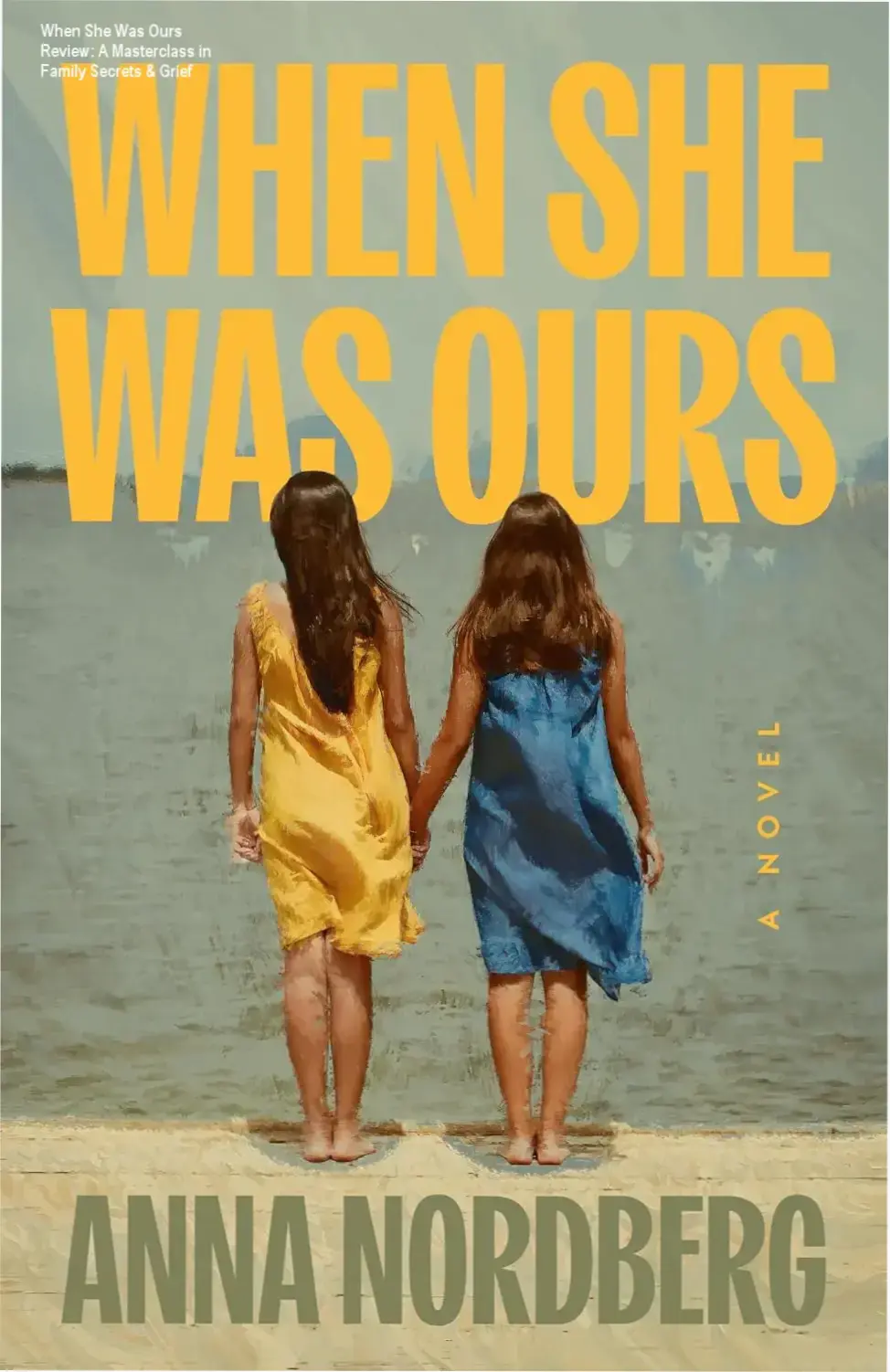
When She Was Ours Review: A Masterclass in Family Secrets & Grief
Grief doesn’t arrive on a schedule. It ambushes you in the grocery aisle, or years later when a stranger mentions a name you thought you’d buried. Anna Nordberg’s When She Was Ours understands this ambush intimately. The novel opens in 1995 with Thea Erickson, a renowned surgeon facing a terminal diagnosis on her elder daughter Phoebe’s wedding night—a setup that could easily veer into melodrama, but Nordberg uses it as a pressure cooker for something far messier: the lies we tell to protect the people we love. You can check the current reader reception here to see how deeply this premise resonates.
The real tension isn’t the cancer. It’s the “terrible accident” that same night and the secret promise Thea extracts from an old family friend. That promise becomes a ghost haunting Astra, the younger daughter, years later. Nordberg isn’t just writing a domestic drama; she is dissecting the architecture of family mythology. We like to believe we know our parents fully before they become patients or memories. This book argues we rarely do. It sits comfortably in the Lake Union Publishing catalog—think The Nightingale emotional weight meets This Is Us structural complexity—but with a sharper clinical edge thanks to Thea’s surgical background. The 308-page length suggests a tight narrative, no fluff, which is rare for multi-generational sagas.
Readers expecting a straightforward cancer memoir will be blindsided. This is a mystery wrapped in a eulogy. The publication date of August 2026 positions it as a major late-summer release, likely targeting book clubs hungry for discussion fodder on forgiveness versus enablement. The core question isn’t how Thea dies, but how her choices survive her.
Ready to dive into “When She Was Ours”?
Explore available editions
Ideal Reader Profile
This novel lands squarely for readers who treat family sagas as character studies rather than plot engines. If you appreciate the quiet devastation of Ann Patchett’s Commonwealth or the generational echo of Brit Bennett’s The Vanishing Half, the pacing here will feel familiar. It rewards patience. The narrative unfolds across decades, demanding a reader comfortable with non-linear reveals and the slow burn of suppressed grief.
Book clubs will find rich material in the ethical ambiguity of Thea’s final arrangement. The central moral question—whether a lie told to protect can ever be justified—sustains discussion long after the last page. It is literary fiction wearing accessible clothing.
Who Should Skip It
- Readers chasing high-concept twists or thriller pacing. The “accident” is a catalyst, not a mystery.
- Those allergic to unlikable protagonists. Astra is prickly, passive, and often frustrating by design.
- Anyone needing neat resolution. The ending prioritizes emotional honesty over narrative closure.
Common Purchasing Missteps
The cover and “Best Seller” tag in Parenthood Fiction suggest a lighter women’s fiction experience. It isn’t. The marketing leans domestic; the prose leans literary. Expect heavier themes: terminal illness, disability representation, and the specific cruelty of parental favoritism. If you bought this for a beach read, you picked the wrong week.
Another misstep: expecting dual POV balance. Thea’s voice dominates the first half via flashback; Astra carries the present. The shift can feel jarring if you bonded with the mother’s perspective.
Contextual FAQ
Is the disability representation handled well? Astra’s injury and subsequent chronic pain are portrayed with visceral specificity, avoiding inspiration porn tropes. Nordberg (who has a chronic illness herself) writes the body’s betrayal with authority.
Does the “secret meeting” pay off? Mechanically, yes. Emotionally, it lands as a tragedy of good intentions. The promise extracted is the novel’s structural spine.
Audiobook vs. Print? The dual timeline benefits from visual paragraph breaks. Audio narration is competent but flattens the textual markers distinguishing past from present.
Value Verdict
At 308 pages, the density justifies the hardcover price for literary fiction buyers. Kindle pricing is aggressive for a Lake Union title. The re-read value sits in the first half—knowing the ending reframes Thea’s scenes from melancholic to heartbreaking. You can check current pricing and reader sentiment here.
Final Editorial Verdict
“When She Was Ours: A Novel” delivers on its core promise for its intended audience, offering compelling insights without fluff. As highlighted in our detailed edition breakdown, its practical depth and readability are its greatest strengths.
We also recommend checking the official Kindle sample and reader ratings before making your final purchase decision.
*You will be redirected to Amazon. As an Amazon Associate, we earn from qualifying purchases.
Posts Similares
The Goal by Elle Kennedy: Full Technical Review and Summary
Life rarely follows a linear trajectory, especially when personal ambitions collide with unexpected life-altering events. We often spend years building rigid structures for our future—law school, high-stakes careers, and meticulous financial planning—only to find that a single night can dismantle every single one of those carefully constructed walls. In the contemporary romance landscape, readers are…
Meet Me in Paris by Kristin Harmel: The Definitive Review
We often treat travel as a way to escape our lives, but the most profound journeys are usually the ones where we are forced to confront exactly what we’ve been running from. Whether it is the crushing weight of a terminal diagnosis or the haunting silence of a love lost eighty years ago, the “vacation”…
West with Giraffes: Expert Analysis of Lynda Rutledge’s Bestseller
Historical fiction often struggles to balance meticulous research with a pulse-pounding narrative, frequently drowning the reader in period detail while the plot gasps for air. Lynda Rutledge sidesteps this trap entirely by anchoring a massive, improbable event—the cross-country transport of two giraffes in 1938—through the intimate, weathered voice of a 105-year-old man looking back. It…
Visual Whys Encyclopedia: 100 Answers for Curious Minds (Ages 6-13)
The “Why?” phase hits most households like a relentless tide. One minute you are folding laundry, the next you are fielding questions about why the sky is blue, why dogs sniff tails, or why toes wrinkle in the bath. Parents and teachers know the frustration: the internet is a rabbit hole of ads and inconsistent…
House of Earth and Blood: The Definitive Analysis
Most readers enter the world of Urban Fantasy seeking a specific escape: a reality where the mundane grit of city life clashes with the impossible. We want the neon lights and the smartphones, but we also want the wings, the demons, and the cosmic stakes. The challenge for any author is balancing this without letting…
Threshing Day Rebecca Yarros: The Empyrean Collector’s Guide
The fantasy romance market has a retention problem. Readers devour a main series in days, then face a years-long vacuum before the next novel arrives, often filling the gap with fan fiction or repetitive rereads that dilute the magic. Rebecca Yarros’s The Empyrean universe sits precisely at this pressure point, commanding a ferocious fandom desperate…