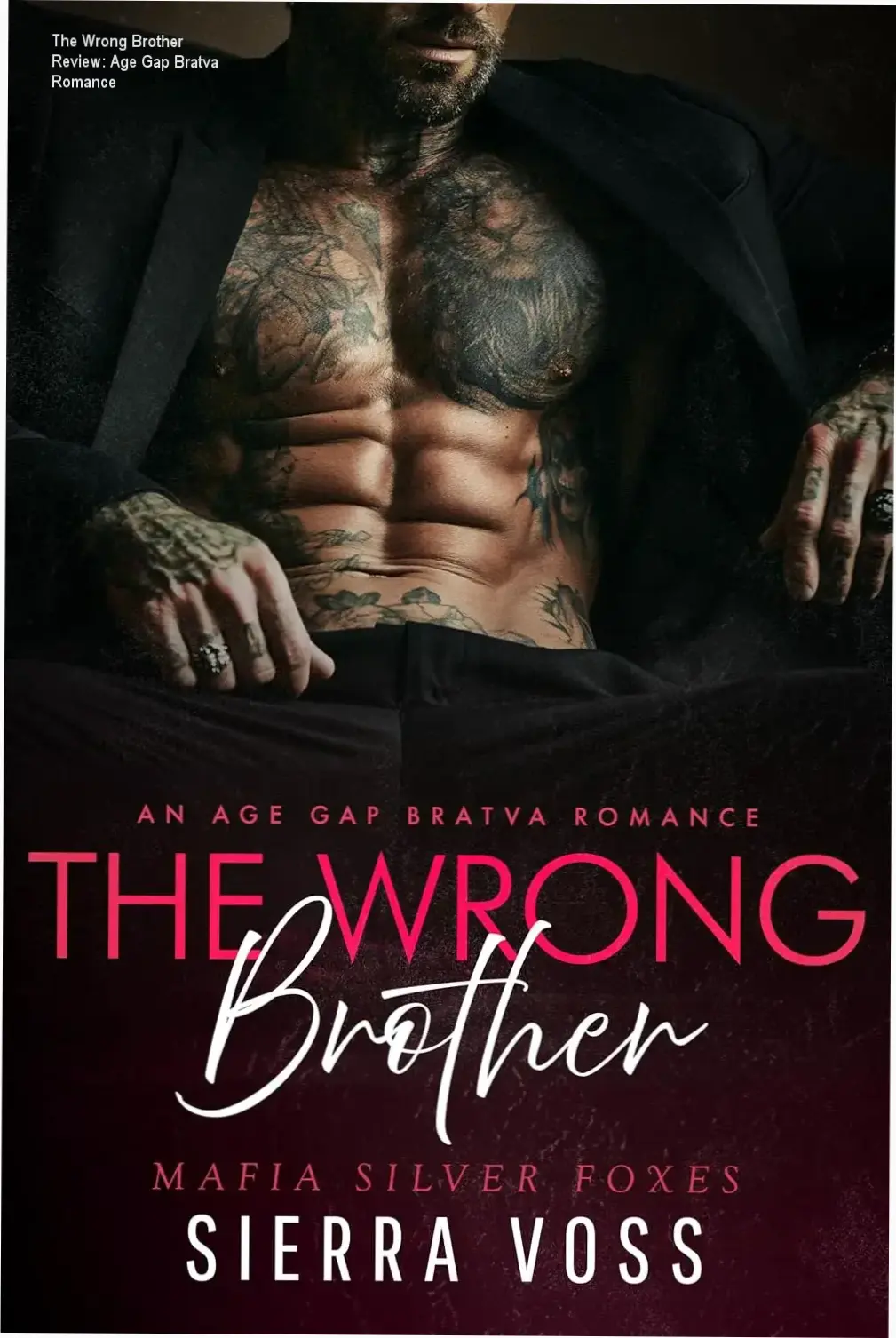
The Wrong Brother Review: Age Gap Bratva Romance
The “mafia romance” shelf is crowded. Most titles blur together after a while—possessive alphas, innocent virgins, and a body count that rarely carries emotional weight. Readers craving genuine tension often hit a wall of repetitive tropes: the instant obsession that replaces character development, or the “dark” content that feels performative rather than psychological. Sierra Voss attempts to cut through that noise with The Wrong Brother, positioning a revenge hook and a significant age gap inside the Bratva hierarchy. The promise is a weaponized romance: a woman used to destroy a brother, only to become the obsession of the other. You can check the current reader reception and availability here to see if the heat matches the hype.
The premise leans hard into the “silver fox” fantasy—Ruslan is older, established, and ruthless. But the marketing copy signals a “secret baby” twist (twins, no less) arriving late in a 465-page standalone. That structural choice is a gamble. It either raises the stakes to a fever pitch or derails the pacing with melodrama. For a genre saturated with “no cheating, no cliffhangers” guarantees, the real question isn’t if they get an HEA, but whether the journey earns the “ultra-hot” label or just checks boxes.
Ready to dive into “The Wrong Brother: An Age Gap Bratva Romance (Mafia Silver Foxes)”?
Explore available editions, check current live pricing, or download a free sample directly on Amazon.
Preview Free Sample & Check Price on Amazon
*You will be redirected to Amazon. As an Amazon Associate, we may earn from qualifying purchases.
Writing Style, Pacing, and the “Silver Fox” Voice
Voss writes with a clipped, sensory rhythm. Short sentences. Sharp dialogue. It fits the Bratva aesthetic—cold efficiency masking volcanic heat. The pacing is front-loaded. The meet-cute (or meet-hot) in the dress shop establishes the power dynamic immediately. He buys the dress; he owns the night. Readers on Goodreads frequently highlight the “dessert scene” as a benchmark for the book’s spice level. It is explicit, degrading in a consensual power-exchange way, and unapologetic.
However, the middle act drags slightly. The “fake dating at the wedding” trope requires manufactured proximity. Voss handles the public performance well—Ruslan’s possessiveness plays better in a ballroom than a bedroom. But the internal monologue gets repetitive. Emma cycles through the same insecurity: he uses me, he doesn’t see me, I am a weapon. By page 250, the reader gets it. The skepticism is warranted. The “age gap” dynamic (15+ years) is told more than shown through cultural friction; it mostly manifests as him calling her “little one” or “baby girl.”
The twins reveal acts as a hard pivot. The tone shifts from erotic thriller to protective fury. Some reviewers loved the “monster unleashed” shift. Others felt it rushed the emotional resolution. The epilogue wraps the domestic fantasy neatly. Maybe too neatly for a Bratva boss.
Core Narrative Structure: Revenge, Leverage, and the Pivot
The plot architecture is standard three-act romance with a revenge skeleton. Act One: The Setup. Ex cheats. Emma meets Ruslan. Sex as weapon. Act Two: The Wedding. Public stakes. Fake engagement. Real feelings bloom amidst Bratva politics. Act Three: The Pregnancy. The leverage flips. Ruslan becomes the protector.
The “weapon to weakness” arc is the selling point. Does it land? Mostly. The transition relies heavily on Ruslan’s POV chapters revealing he knew *more* than he let on earlier. That retcon helps. It reframes his initial cruelty as testing or recognition. But it requires the reader to accept a level of omniscient manipulation that borders on stalker romance. If that’s your hard limit, the “twist” won’t save it.
Reader discussions on Reddit (r/RomanceBooks) often compare this to the “Ruthless People” vibe but with higher heat and lower plot complexity. The Bratva setting is window dressing—money, guards, vague threats. The actual mechanics of the organization never threaten the romance. It’s background texture, not a plot engine.
Character Dynamics: Emma’s Curves and Ruslan’s Control
Emma is written as “curvy” and insecure, a direct response to the “stick-thin” ideal the opening scene mocks. Voss centers the male gaze on her body positively. Ruslan worships her softness. For readers tired of size-zero heroines, this is a win. The text explicitly validates her body type during sex scenes. It avoids the “you’re beautiful *despite* your weight” trap.
Ruslan is the archetype: silent, deadly, wealthy, obsessed. He has no hobbies, no friends, no life outside the Bratva and Emma. This is a feature, not a bug, for the target audience. He is a fantasy object. His “monster” moment—threatening to erase anyone who touches his family—is the emotional climax for a specific demographic. The 4.3-star average suggests he hits the mark for the majority.
The ex-husband (the “Wrong Brother”)
Who Should Actually Read This?
This isn’t a book for the casual reader looking for a light, “sweet” romance. The Wrong Brother is designed for a very specific appetite: the reader who craves high-tension power dynamics, the “possessive protector” archetype, and the emotional satisfaction of a well-executed revenge plot.
If your ideal reading experience involves a dominant, older male lead (the “Silver Fox”) who is ruthless to the world but obsessed with the heroine, this hits every mark. It appeals to those who enjoy the intersection of danger and luxury—where the stakes are life-and-death, but the settings are high-end gowns and Russian delicacies.
Who Should Skip It
- The Slow-Burn Purists: If you require 300 pages of longing before a first kiss, you’ll find the pacing here too aggressive.
- Realism Seekers: This is a stylized Bratva fantasy. If you expect a gritty, realistic depiction of organized crime without the romanticized “billionaire” gloss, you will be disappointed.
- Sensitivity to “Alpha” Tropes: The “monster inside” and extreme possessiveness are core features, not bugs. If that dynamic feels suffocating rather than romantic, move on.
Value Analysis: Is It Worth the Credit?
At 465 pages, this is a substantial standalone. Many mafia novellas feel rushed or leave plot holes; Voss provides enough narrative runway to make the transition from a “revenge fling” to a “family protector” feel earned rather than forced.
The real value lies in the execution of the Age Gap and Secret Pregnancy tropes. These are staples of the genre, but the “twins” twist adds a layer of urgency that elevates the final act from a standard romance to a high-stakes protective thriller.
Quick Verdict FAQ
Is it a standalone? Yes. While part of the Mafia Silver Foxes series, it functions perfectly on its own with a guaranteed HEA (Happily Ever After).
How “dark” is it? It deals with abusive ex-partners and mafia violence, but the primary focus remains the romantic tension and the healing process of the heroine.
Is the heat level high? Extremely. Expect explicit content and a focus on the physical chemistry between Ruslan and Emma.
Ultimately, the book succeeds because it doesn’t try to be something it isn’t. It is a scorching, trope-heavy romance that delivers exactly what the cover promises. To see how other readers rated the chemistry and the plot twists, you can check the verified user reviews on Amazon.
Final Editorial Verdict
“The Wrong Brother: An Age Gap Bratva Romance” delivers on its core promise for its intended audience, offering compelling insights without fluff. As highlighted in our detailed edition breakdown, its practical depth and readability are its greatest strengths.
We also recommend checking the official Kindle sample and reader ratings before making your final purchase decision.
*You will be redirected to Amazon. As an Amazon Associate, we earn from qualifying purchases.