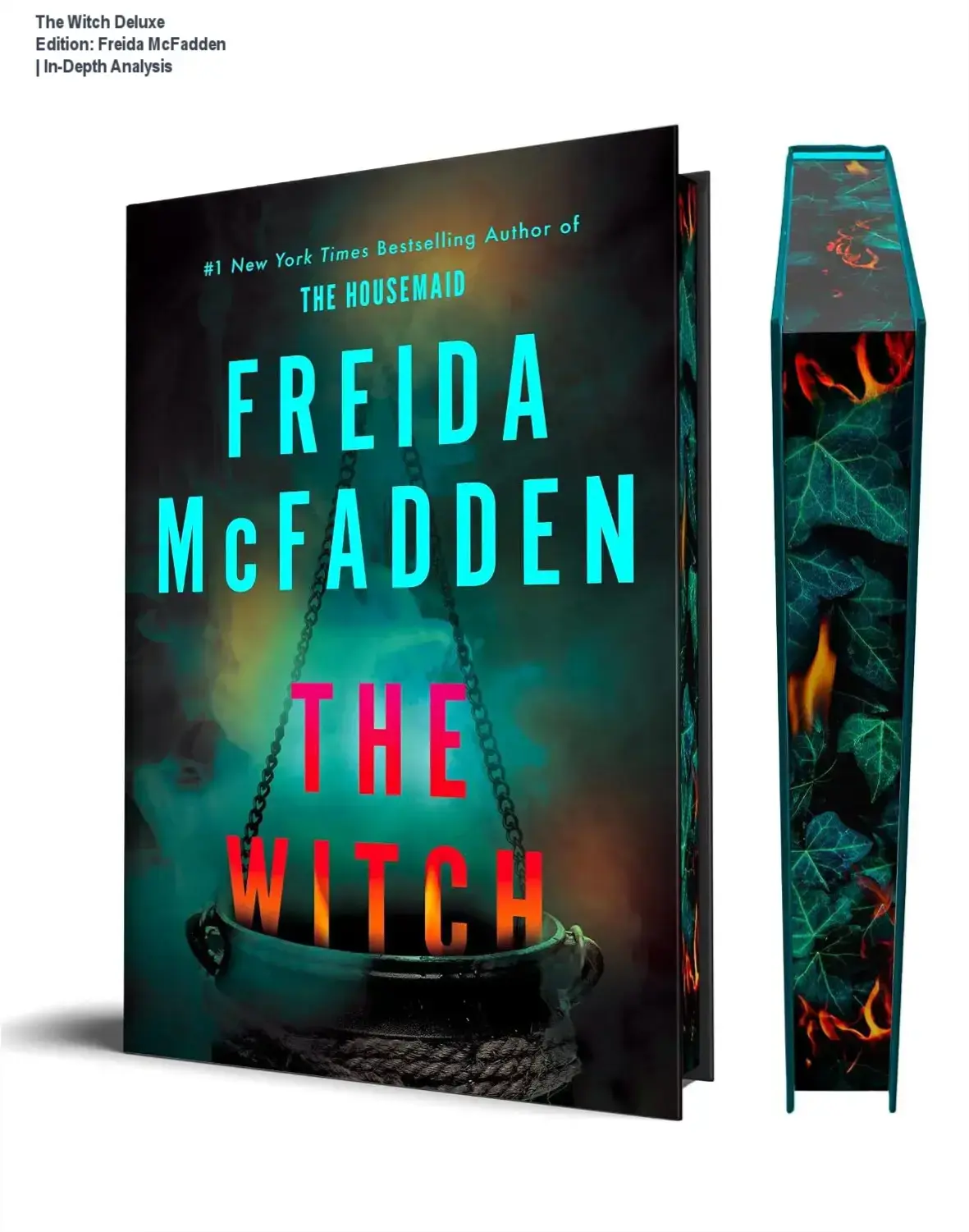
The Witch Deluxe Edition: Freida McFadden | In-Depth Analysis
We have all felt that sudden, desperate urge to vanish. When the job disappears and the rent is overdue, the idea of retreating to a family estate in the middle of nowhere sounds less like a tragedy and more like a sanctuary. It is a common human delusion: believing that a change of geography can erase a collapse of identity.
For readers of psychological thrillers, the expectation is usually a slow burn that leads to a shattering revelation. Freida McFadden has built an empire on this formula, and with The Witch (Deluxe Edition), she pivots toward the gothic. You can check the current availability and reader reception to see how her transition into historical horror is landing with the masses.
Ready to dive into “The Witch (Deluxe Edition)”?
Explore available editions, check current live pricing, or download a free sample directly on Amazon.
Preview Free Sample & Check Price on Amazon
*You will be redirected to Amazon. As an Amazon Associate, we may earn from qualifying purchases.
The McFadden Blueprint: Pacing and Prose
Freida McFadden does not write for the literary elite. She writes for the “one-more-chapter” addict. Her prose is stripped down, devoid of unnecessary ornamentation, and designed for maximum velocity.
In The Witch, this style serves the tension well. The narrative doesn’t linger on the scenery of rural Massachusetts; it focuses on the anxiety of the protagonist, Julia Barlow. The sentences are short. The hooks are frequent.
Skeptics might call it “airport novel” writing, but from a CRO perspective, it is a high-conversion reading experience. There is zero friction between the plot point and the reader’s brain.
The pacing follows a rhythmic escalation. We start with the mundane misery of unemployment and quickly slide into the surreal. The grandfather clock stopping at 3:41 a.m. isn’t just a spooky detail; it’s a ticking timer for the reader’s patience, which McFadden pays off with precision.
Atmospheric Tension vs. Gothic Tropes
The “haunted family estate” is perhaps the oldest trope in the book. Pemberton is a textbook example: sprawling, decaying, and filled with secrets. However, the strength of this novel lies in how it blends psychological trauma with supernatural suggestion.
Is the house actually haunted, or is Julia unraveling? This is the central tension. McFadden plays with the reader’s expectations by leaning into the 1692 witchcraft history, making us look for ghosts while the real danger is likely human.
The use of sound—the disembodied voice outside the bedroom door—adds a layer of sensory dread that elevates the story beyond a simple mystery. It transforms the setting from a backdrop into an active antagonist.
“Some secrets don’t die—they wait.” This line encapsulates the core philosophy of the book. It suggests that trauma is hereditary and that the past is never truly buried; it is merely dormant.
The “Twist” Economy: Expectation vs. Reality
If you have read The Housemaid, you know McFadden’s brand: the mid-point pivot. Readers on Reddit and Goodreads often discuss her “twist economy,” where the story you think you are reading in the first half is completely different from the one you finish.
In The Witch, the historical element provides a new playground for these pivots. By linking the 17th-century executions to modern family lies, she creates a dual-layered mystery.
The risk here is predictability. Once a reader recognizes the “McFadden Pattern,” they start hunting for the twist rather than experiencing the story. However, the Deluxe Edition’s framing suggests a more polished, intentional narrative arc than her earlier, faster releases.
The reality is that the twists in this novel feel more organic because they are tied to ancestral trauma rather than just plot convenience.
| Who Should Read This (And Who Should Skip It) If you devoured The Housemaid or The Inmate for their razor-sharp domestic suspense and unreliable narrators, The Witch delivers that same addictive pacing but layers in a gothic atmosphere that feels fresh for McFadden. It’s ideal for readers who want a “one-sitting” thriller with a historical backbone—think Rebecca meets a modern true-crime podcast. The 352-page length hits a sweet spot: substantial enough to build dread, tight enough to avoid sag. However, pure procedural fans or readers allergic to supernatural undertones—even ambiguous ones—might find the spectral elements frustrating. This isn’t a police procedural; it’s a psychological haunting. If you need every creak explained by a loose floorboard and every voice attributed to a ventriloquist villain, the ambiguity here will annoy rather than intrigue. Also, the “Deluxe Edition” premium is strictly for collectors; the story is identical to the standard hardcover. Value Proposition & Common MisstepsAt the pre-order price point, the hardcover sits competitively against mainstream thriller releases. The physical quality—deckled edges, foil stamping, heavier stock—justifies the bump if you display books. Buying the Kindle or paperback later saves 30–40%, but you lose the tactile weight that matches Pemberton’s oppressive vibe. A frequent misstep: expecting a Salem witch trial deep-dive. The 1692 backstory is a catalyst, not a history lesson. The narrative stays firmly rooted in Julia’s 2020s perspective. Another trap: assuming the “Deluxe” tag implies bonus content (deleted scenes, author commentary). It doesn’t. It’s a packaging upgrade. If you’re budget-conscious, the standard edition or library hold is the smarter play. The plot doesn’t change. Quick Contextual FAQ
Editorial Bottom LineMcFadden proves she can stretch beyond the “nanny in a rich house” formula without losing her signature velocity. The Witch trades some of the claustrophobic domestic realism for broader, eerier swings—and mostly sticks the landing. The twists land harder because the setting does heavy lifting. It’s a strong October release for genre fans who want atmosphere with their adrenaline. You can verify current pre-order discounts and reader sentiment here. Final Editorial Verdict“The Witch (Deluxe Edition)” delivers on its core promise for its intended audience, offering compelling insights without fluff. As highlighted in our detailed edition breakdown, its practical depth and readability are its greatest strengths. We also recommend checking the official Kindle sample and reader ratings before making your final purchase decision. *You will be redirected to Amazon. As an Amazon Associate, we earn from qualifying purchases. Posts Similares
|
|---|