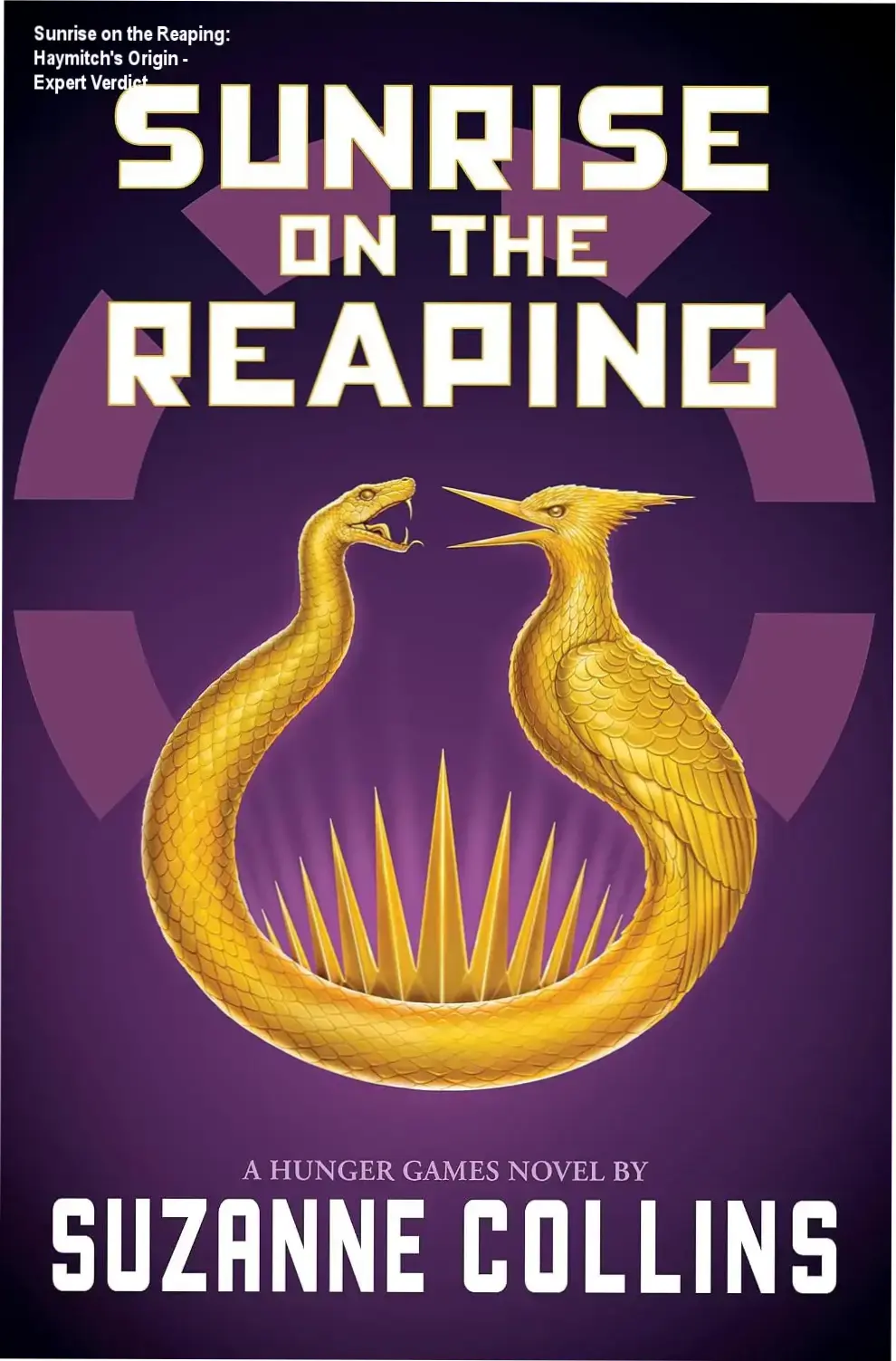
Sunrise on the Reaping: Haymitch’s Origin – Expert Verdict
The prequel trap is a known quantity in publishing. We’ve seen beloved universes stretched thin by origin stories nobody asked for, padding out lore at the expense of narrative tension. When a new Hunger Games novel drops seventeen years after Mockingjay, the skepticism isn’t just warranted—it’s a survival instinct. You wonder if Suzanne Collins has anything left to say about Panem, or if this is just a victory lap for a franchise that defined a generation. The stakes are different this time; we already know Haymitch Abernathy survives. We know he becomes the drunk mentor. The tension shouldn’t exist, yet the premise of the Second Quarter Quell—double the tributes, double the bodies—forces a confrontation with the machinery of the Capitol that the original trilogy only hinted at.
Collins doesn’t just fill in blanks; she recontextualizes the entire series through the lens of a boy who was never supposed to win. The political maneuvering inside the arena feels sharper, the propaganda more insidious, because we’re watching the blueprint for the rebellion being drawn in real-time. If you want to see how the odds were never in his favor, check the current edition and reader reception here. The book lands with the weight of a canon event, not a cash grab, largely because it refuses to soften the brutality that made the originals matter.
Ready to dive into “Sunrise on the Reaping”?
Explore available editions, check current live pricing, or download a free sample directly on Amazon.
Preview Free Sample & Check Price on Amazon
*You will be redirected to Amazon. As an Amazon Associate, we may earn from qualifying purchases.
Writing Style: Present Tense as a Weapon
Collins writes in the eternal present. It’s a stylistic signature that feels restrictive on paper but functions as a pressure cooker in practice. You don’t read Haymitch’s thoughts; you inhabit his panic. The sentences are short. Clipped. Subject-verb-object. No fat.
This isn’t literary flourish. It’s a simulation of adrenaline. When the gong sounds, the prose accelerates. Commas vanish. Fragments take over. Run. Hide. Breathe. It mimics the tunnel vision of a tribute. Critics on Goodreads frequently cite this as “simple” writing. They miss the point. The simplicity is the trap. It lowers your guard so the emotional gut-punches land without melodrama.
Dialogue carries the world-building. Capitol accents are rendered through rhythm, not phonetic spelling. District 12 slang feels lived-in. Plutarch Heavensbee speaks in riddles that retroactively explain his Catching Fire maneuvers. The pacing is ruthless. The first 100 pages cover the Reaping and the train ride—a stretch other authors would condense to twenty. Here, it establishes the stakes: the girl, the family, the normalcy being incinerated.
Reddit threads on r/HungerGames highlight a specific technique: the “camera eye.” Collins describes violence clinically. Blood is “hot,” “dark,” “slick.” She refuses the language of tragedy. That clinical detachment makes the horror stickier. You process the image before the emotion hits. It’s a masterclass in show-don’t-tell that trusts the reader’s imagination to do the heavy lifting.
The Quarter Quell Mechanics: Arithmetic of Slaughter
The 50th Hunger Games twist—48 tributes instead of 24—isn’t just a numbers game. It breaks the narrative architecture of the standard Games. Alliances become mathematically impossible to maintain. The “Career” pack dynamic fractures under the weight of too many variables.
Collins uses the arena layout—a deceptively beautiful meadow—to expose the Gamemakers’ sadism. The poison is in the pretty. The water, the flowers, the butterflies: all weaponized. This is where the book earns its “Science Fiction” shelf placement. The speculative biology of the mutts and toxins feels grounded in a twisted evolutionary logic.
Readers on Amazon noted the “video game logic” of the arena hazards. One verified purchaser wrote: “It reads like a lethal puzzle box. You spend chapters figuring out the rules of the poison just to watch a character forget them in a panic.” That frustration is intentional. It mirrors Haymitch’s realization: the game is rigged not by difficulty, but by design.
The Cornucopia bloodbath lasts pages longer than previous books. With double the bodies, the chaos is logarithmic. Collins doesn’t shy away from the “redshirt” problem—tributes dying before they get names. She gives them seconds. A district number. A distinguishing feature. A scream. It forces the reader to confront the industrial scale of the slaughter. This isn’t a duel; it’s a culling.
Haymitch Abernathy: The Architecture of a Drunk
We meet Haymitch at sixteen. He’s arrogant, sharp, and deeply loved. He has a girlfriend, Lenore Dove. He has a brother, Sid. He has a future. The tragedy isn’t the Games; it’s the systematic dismantling of every reason he had to stay sober.
The novel answers the question Catching Fire posed: How do you mentor kids you
Who This Book Is Actually For
Die-hard Hunger Games fans. If you memorized the arena layouts and debated District 12 geography on forums, this is non-negotiable. It contextualizes Haymitch’s cynicism perfectly.
Readers who prefer character studies over action. The Games don’t start immediately. The first third is District 12 atmosphere—poverty, the Seam, the specific weight of the Second Quarter Quell reaping. It’s slow-burn world-building.
YA readers aging into adult themes. The violence feels heavier here. The body count is higher (48 tributes). The political maneuvering is sharper. It bridges the gap between the original trilogy’s YA label and the grimdark tone of The Ballad of Songbirds and Snakes.
Who Should Probably Skip It
Action junkies needing immediate arena combat. The pacing is deliberate. Collins spends significant time on the mentor dynamic (Mags, Wiress, Beetee) and Capitol politics before the gong sounds.
Readers allergic to known outcomes. Haymitch survives. We know this. The tension isn’t *if* he lives, but *how* he breaks. If dramatic irony frustrates you, the 400 pages will drag.
Newcomers to the franchise. References to the 74th/75th Games, specific muttations, and Victor dynamics (Finnick, Johanna) land flat without prior knowledge. This is deep-cut lore, not an entry point.
Common Purchasing Missteps
Expecting a romance. Lenore Dove is the emotional anchor, but she is absent for the majority of the page count. This is a tragedy about systems, not a love story.
Buying the mass market paperback for collector value. The cover art is striking, but the paper stock on early print runs is thin. Hardcover or Kindle holds up better for re-reads.
Assuming it matches the movie tone. No film exists yet. Your mental casting is the only visual reference. Don’t wait for a trailer to visualize the arena.
Quick Contextual FAQ
Is it more violent than the original trilogy? Yes. Double the tributes means double the bloodbath. The “career” pack is larger, ruthless, and the arena design is explicitly engineered for spectacle over survival skill.
Does it retcon the original books? It deepens them. Haymitch’s drunken mentor persona in The Hunger Games becomes a trauma response, not a character quirk. The forcefield trick? Earned here, not invented later.
Audiobook or physical? The audiobook (narrated by a full cast including a standout Haymitch) elevates the Capitol accents and arena chaos. Physical wins for the map inserts and family tree appendix.
Editorial Bottom Line
Sunrise on the Reaping is the most technically ambitious Hunger Games novel. It juggles 48 tribute POVs via Haymitch’s limited perspective, uses the Quarter Quell twist (double tributes) to fracture alliances instantly, and writes the Capitol’s complicity in HD.
It drags in the mentor chapters. The gambling subplot with Plutarch feels padded. But the arena finale—the water toxin, the forcefield realization, the specific cruelty of the final kill—justifies the buildup. It reframes the entire series as Haymitch’s long con against Snow.
Value is high for series completionists. Casual readers wait for paperback price drops. Check current reader sentiment and live pricing here.
Final Editorial Verdict
“Sunrise on the Reaping (The Hunger Games)” delivers on its core promise for its intended audience, offering compelling insights without fluff. As highlighted in our detailed edition breakdown, its practical depth and readability are its greatest strengths.
We also recommend checking the official Kindle sample and reader ratings before making your final purchase decision.
*You will be redirected to Amazon. As an Amazon Associate, we earn from qualifying purchases.