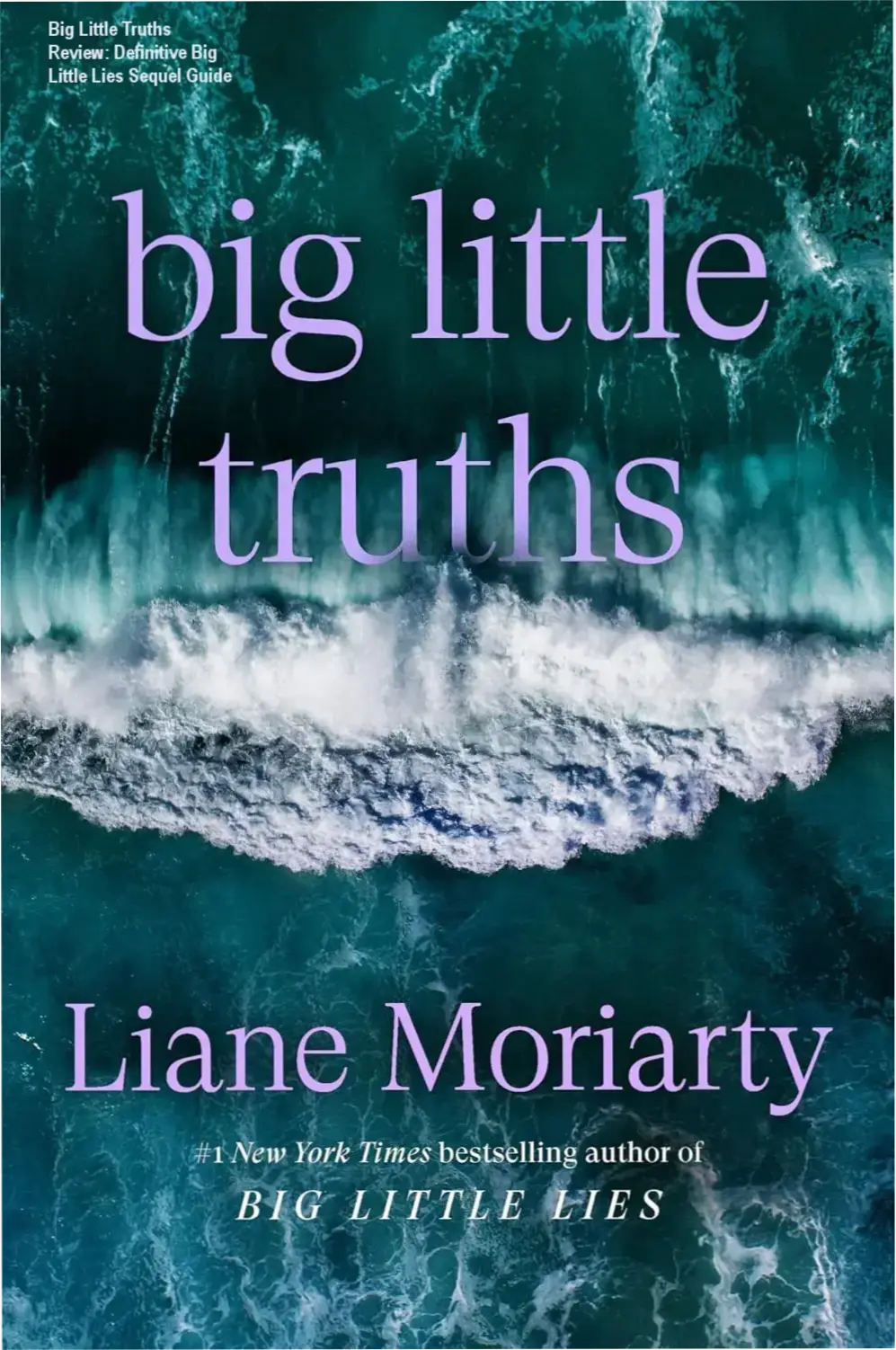
Big Little Truths Review: Definitive Big Little Lies Sequel Guide
Nine years is a long time to hold a secret. In the fictional timeline of Monterey, it’s an eternity — long enough for kindergarteners to become teenagers with driver’s licenses, vapor pens, and the kind of existential dread that makes a missed birthday party look like a rounding error. Liane Moriarty understands this compression of time better than almost anyone writing commercial fiction today. She doesn’t just pick up where the HBO cameras left off; she fast-forwards through the messy middle to land squarely in the terrifying clarity of adolescence. The central tension isn’t “who did it” anymore. It’s “what do they know?”
The premise is deceptively simple: the Monterey Five have moved on, sort of. But the architecture of a lie — even a “protective” one — requires constant maintenance. When a threatening package lands at the high school principal’s office, the fragile ecosystem these women built begins to fracture. It’s a brilliant structural pivot. The first book was about the violence men inflict on women. This sequel, available for pre-order here, appears far more interested in the violence women inflict on themselves through silence, and the collateral damage inflicted on the generation watching them. The stakes have shifted from survival to legacy.
Ready to dive into “Big Little Truths: A Novel: The Sequel to Big Little Lies”?
Explore available editions, check current live pricing, or download a free sample directly on Amazon.
Preview Free Sample & Check Price on Amazon
*You will be redirected to Amazon. As an Amazon Associate, we may earn from qualifying purchases.
The Architecture of a Delayed Sequel
Moriarty didn’t rush this. Nine years in the real world mirrors the gap in the narrative. That patience shows in the prose. The breathless, almost frantic energy of the first novel — driven by the Trivia Night countdown — has been replaced by a slower, heavier rhythm. It reads like a writer who has total command of her universe. She isn’t chasing the plot; she is excavating the consequences.
Early reader feedback on advanced copies highlights a specific satisfaction: the voices are intact. Madeline’s brittle humor, Celeste’s guarded fragility, Jane’s quiet resilience. They haven’t been flattened into caricatures for the sake of a cash-grab sequel. One Goodreads reviewer noted, “It feels like catching up with old friends who have actually aged, not just gotten older.” That distinction matters. The characters carry the weight of the intervening decade in their bodies and their silences.
The structural choice to age the children into high schoolers is the book’s smartest move. It forces the adults out of the “mommy wars” sandbox into something far more dangerous: the “parenting teens” minefield. The power dynamic has inverted. In Big Little Lies, the mothers protected the children. Now, the children are the ones asking the sharp, unanswerable questions. The threat isn’t external (Perry); it’s internal (the truth).
Writing Style: Wit as a Defense Mechanism
Moriarty’s signature voice — that blend of domestic satire and genuine menace — remains the engine. She uses humor not as relief, but as characterization. Madeline’s internal monologue is still a masterclass in defensive comedy. But the target has shifted. She isn’t judging the other mothers for organic snacks anymore. She is judging herself for the lies she told to keep the peace.
The pacing is deliberate. The “threatening package” inciting incident doesn’t detonate immediately. It sits there, ticking, while Moriarty spends chapters on the texture of daily life: Mary Louise’s dementia arc, Jane’s marital fracture, Renata’s vengeful victory lap. Some readers on Reddit’s r/books found the first third “slow.” They missed the point. The slowness is the tension. The mystery isn’t the package; it’s whether these relationships can withstand the scrutiny the package invites.
Technically, the multi-POV rotation is tighter than before. The transitions are sharper, often linked by a shared sensory detail — the smell of the ocean, the sound of a notification ping — rather than just a chapter break. It creates a sense of a hive mind fracturing under pressure.
| Element | Assessment |
|---|---|
| Prose Density | High. Rewards re-reading. Layered dialogue. |
| Pacing | Slow burn. Accelerates violently in final 20%. |
| Character Arcs | Earned. No reset buttons. Consequences stick. |
| Accessibility | Standalone viable, but 10x richer with Book 1 context. |
The Mary Louise Variable: Aging as Horror
If there is a standout performance in this ensemble, it’s Mary Louise Wright. Meryl Streep’s portrayal in Season 2 of the show looms large, but Moriarty reclaims the character on the page. Dementia isn’t played for pathos here; it’s played for horror. Mary Louise’s fading filter becomes a narrative weapon. She says the quiet parts out loud. She remembers the things the women buried.
This subplot elevates the novel from “beach read” to something sharper. It forces a conversation about institutional memory and the fragility of curated narratives. The women spent a decade constructing a version of events. Mary Louise, unintentionally, is the wrecking ball. Her “odd
Who Should Read This (And Who Should Skip)
This isn’t a standalone thriller. If you haven’t read Big Little Lies, the emotional resonance of Mary Louise’s decline or Bonnie’s lingering guilt will land flat. The prose assumes intimacy with the Monterey Five’s history.
Ideal reader: Fans of domestic suspense who prioritize character psychology over plot mechanics. You enjoy watching women navigate the messy intersection of motherhood, aging, and buried secrets. You appreciated the HBO series but want Moriarty’s sharper, funnier interiority.
Skip it if: You want a tight, high-stakes mystery. The “threatening package” hook resolves more as a catalyst for character study than a whodunit. The pacing is deliberate—slow-burn character work punctuated by sharp dialogue, not cliffhangers.
Value Proposition: Hardcover vs. Library Hold
At 464 pages, the physical hardcover feels substantial—quality paper, solid binding. It’s a “keep on the shelf” object for series completists. However, the re-read value hinges entirely on your attachment to these specific women. The plot twists don’t demand a second pass the way a puzzle-box thriller does.
Price check: The pre-order guarantee locks in the lowest price, but the eBook often drops faster post-launch. If you read fast and purge, the Kindle version (or a library loan) is the smarter financial play. You’re paying a premium for the artifact and immediate access.
Common Buying Missteps
- Expecting “The Housemaid” pacing. Freida McFadden’s blurb promises “gripping,” but Moriarty writes social satire with teeth, not breakneck plot twists. The tension is relational, not survivalist.
- Assuming the kids are protagonists. The teens drive the external conflict (drugs, sex, the principal), but the POV remains firmly with the mothers. Their interior lives are the engine.
- Ignoring the time jump. Ten years changes the tone. It’s less “playdate politics,” more “existential dread.” The humor is darker, the stakes quieter but deeper.
Quick Contextual FAQ
Do I need to re-read the first book? Not strictly. A wiki summary covers the plot beats, but you’ll miss the texture—the specific cadence of Madeline’s anxiety or Celeste’s calculated calm.
Is it “woke” or preachy? Moriarty satirizes performative wokeness (Renata’s arc is delicious on this) rather than endorsing it. The politics are character flaws, not authorial lectures.
Does it set up a Book 3? The ending closes the current emotional arcs firmly. It feels like a finale, not a bridge. Satisfying closure is guaranteed.
Editorial Bottom Line
Big Little Truths delivers exactly what a Moriarty sequel should: deeper trenches, sharper wit, and zero nostalgia-baiting. It respects the reader’s intelligence by aging the problems alongside the characters. The “thriller” elements are the weakest link; the family dynamics are the masterclass. If you loved the voices in book one, this is a worthy, weighty return ticket to Monterey. If you only liked the TV show’s gloss, temper expectations. Check current reader reviews and live pricing here to see if the hardcover premium fits your shelf strategy.
Final Editorial Verdict
“Big Little Truths: A Novel: The Sequel to Big Little Lies” delivers on its core promise for its intended audience, offering compelling insights without fluff. As highlighted in our detailed edition breakdown, its practical depth and readability are its greatest strengths.
We also recommend checking the official Kindle sample and reader ratings before making your final purchase decision.
*You will be redirected to Amazon. As an Amazon Associate, we earn from qualifying purchases.