
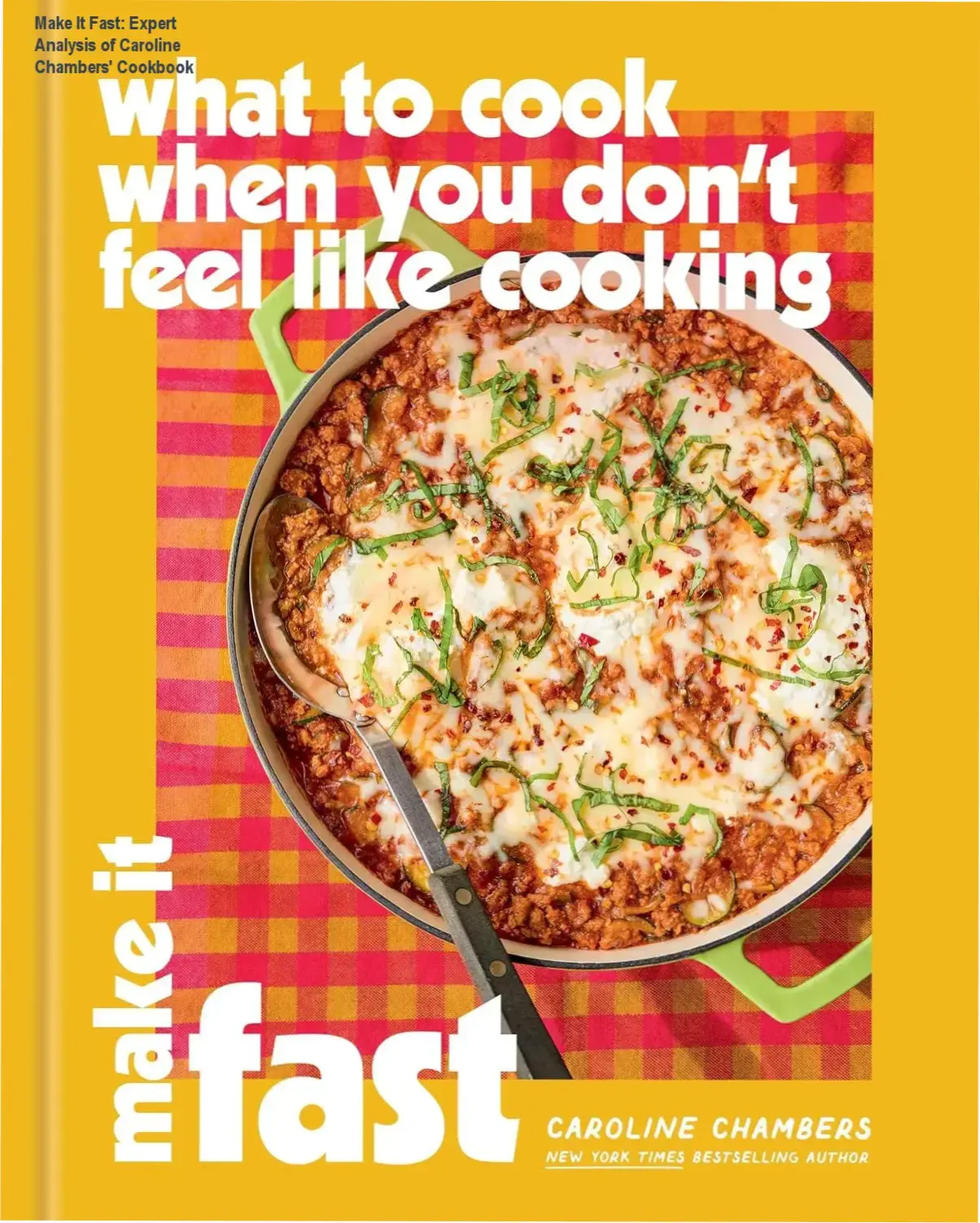
Make It Fast: Expert Analysis of Caroline Chambers’ Cookbook
We have all been there. It is 6:30 PM, you are mentally drained from a day of decision-making, and the thought of chopping a single carrot feels like an insurmountable chore. Most cookbooks treat cooking as a hobby or a passion, but for the exhausted professional or the overwhelmed parent, cooking is often just another item on a stressful to-do list.
The market is flooded with “quick” recipes that actually require forty minutes of prep and a sink full of dishes. This is where Caroline Chambers enters the fray. By treating the “lack of will to cook” as the primary problem to solve, she has shifted the narrative from culinary art to logistical efficiency. You can see how this approach has resonated with thousands of readers by checking the current reception and availability of this bestseller on Amazon.
Ready to dive into “What to Cook When You Don’t Feel Like Cooking: Make It Fast”?
Explore available editions, check current live pricing, or download a free sample directly on Amazon.
Preview Free Sample & Check Price on Amazon
*You will be redirected to Amazon. As an Amazon Associate, we may earn from qualifying purchases.
The Philosophy of “Anti-Cooking”
Caroline Chambers isn’t trying to make you a chef. She is trying to keep you from ordering takeout for the fourth time this week. Her core thesis is simple: the biggest barrier to eating well isn’t a lack of skill, but a lack of energy.
Most cookbooks focus on the result—the plated meal. Chambers focuses on the friction. She looks at the “invisible” labor: the chopping, the marinating, and the dreaded cleanup. By eliminating unnecessary steps, she turns cooking into a low-friction activity.
This is a strategic pivot in the cookbook genre. Instead of inspiring you with complex flavors, she empowers you with shortcuts. It is a pragmatic approach that treats the kitchen like a production line where the goal is maximum output for minimum effort.
The “Hands-On Time” Metric: A Game Changer
The most critical technical detail in this book is the distinction between “total time” and “hands-on time.” Many recipes claim to be “30-minute meals,” but they forget to mention the 20 minutes you spend dicing onions and garlic.
Chambers promises no more than 30 minutes of actual work. This includes the prep. If a dish takes an hour in the oven but only 10 minutes of your active attention, it fits her criteria. This is a high-value insight for anyone dealing with decision fatigue.
By focusing on active labor, she reduces the psychological weight of the task. It is much easier to commit to 15 minutes of work than to a two-hour ordeal, even if the food takes time to simmer.
| Feature | Who This Book Is Actually ForThis isn’t for the “foodie” who finds peace in a four-hour braise or the home chef who treats the kitchen as a sanctuary for artistic expression. It is designed for the exhausted professional, the overwhelmed parent, and the chronic “cereal-for-dinner” procrastinator. The ideal reader: Someone who loves eating well but genuinely dislikes the process of cooking. If your primary goal is to get a nutritious meal on the table without spending an hour scrubbing pots or chopping a mountain of vegetables, this is your playbook. Who should skip this: If you enjoy the ritual of cooking—the slow prep, the complex plating, the “chef” experience—you will find this approach too reductive. This book treats cooking as a task to be optimized, not a hobby to be savored. The Value for Money Reality CheckMost cookbooks end up as expensive paperweights because they require ingredients you don’t have and time you can’t spare. This volume avoids that trap by focusing on systems rather than just recipes. The real ROI lies in the “anchor recipes.” The ability to turn one base preparation into five different meals is where the actual value is. It’s a strategy for defeating decision fatigue, which is often a bigger hurdle than the cooking itself. However, be aware: you aren’t buying a comprehensive culinary guide. You are buying a survival manual for the modern, overscheduled life. If you’re looking for deep technical skill-building, look elsewhere. Editorial Verdict: Final ThoughtsCaroline Chambers understands the psychological barrier to cooking. She doesn’t offer the typical “meal prep Sunday” advice, which is often just another chore. Instead, she focuses on eliminating unnecessary friction. The mood-based index is the standout feature. Being able to search for recipes based on “I cannot be bothered to chop a single thing” shows a level of empathy and practical understanding rarely found in the genre. It is a lean, high-utility tool that prioritizes the user’s mental energy over culinary prestige. If you’re tired of “quick” recipes that actually take an hour of prep, you can verify the live discounts and user feedback on Amazon to see if it fits your lifestyle. Final Editorial Verdict“What to Cook When You Don’t Feel Like Cooking: Make It Fast” delivers on its core promise for its intended audience, offering compelling insights without fluff. As highlighted in our Relacionado Posts Similares
|
|---|