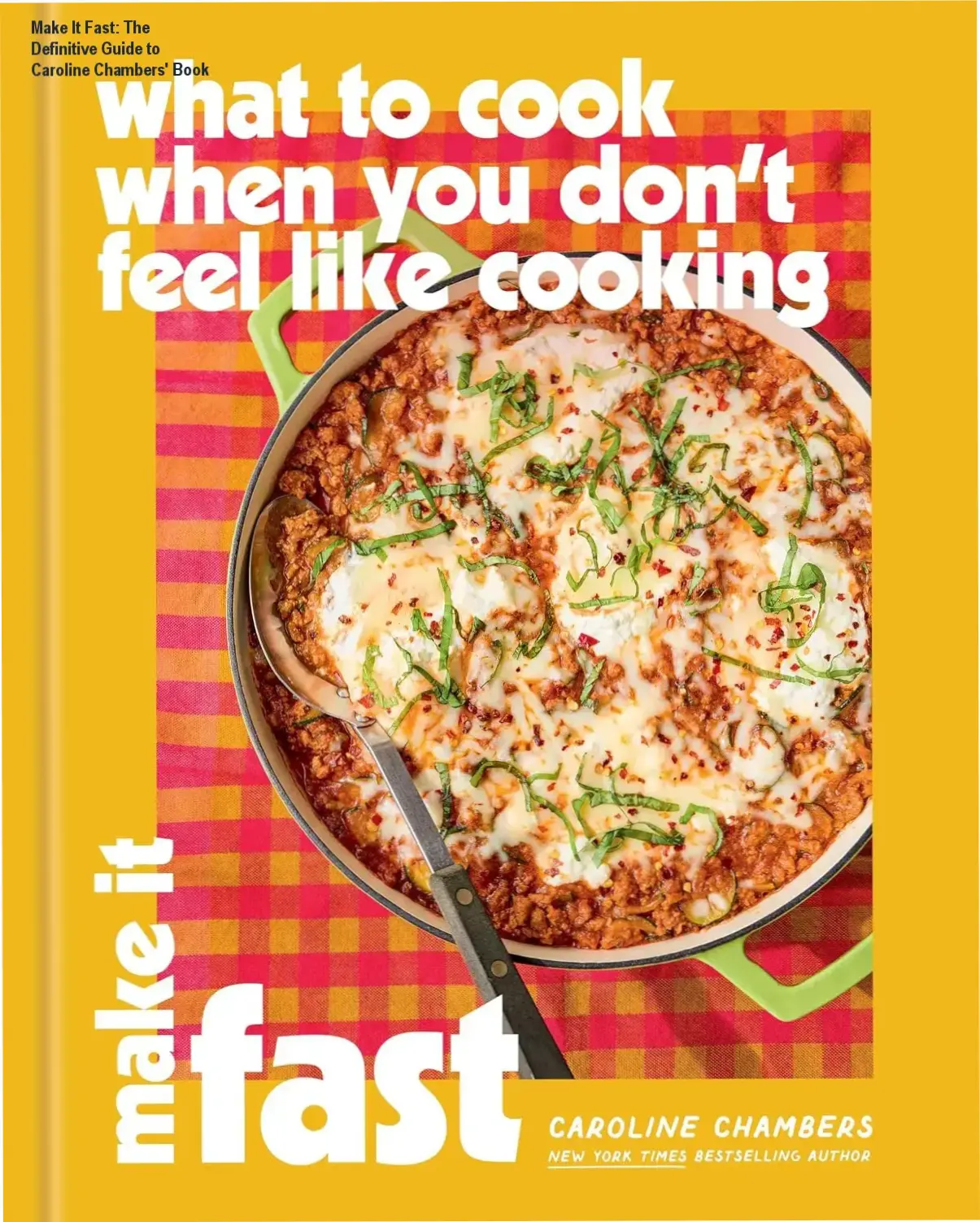
Make It Fast: The Definitive Guide to Caroline Chambers’ Book
We have all been there: staring at the fridge at 6:30 PM with the mental energy of a potato. The desire for a real meal is present, but the thought of chopping a single onion or scrubbing three different pans feels like an insurmountable chore.
This is the exact friction point Caroline Chambers targets. Instead of preaching the gospel of “Meal Prep Sundays”—which is often just another chore—she acknowledges the reality of decision fatigue. You can check the current reader reception on Amazon to see how this “minimalist” philosophy has struck a chord with a generation exhausted by complex recipes.
Most cookbooks sell a fantasy of gourmet perfection. Chambers sells a strategic survival guide. This isn’t about culinary art; it is about reducing the distance between “I’m hungry” and “I’m eating” without sacrificing flavor or nutritional sanity.
Ready to dive into “What to Cook When You Don’t Feel Like Cooking: Make It Fast”?
Explore available editions, check current live pricing, or download a free sample directly on Amazon.
Preview Free Sample & Check Price on Amazon
*You will be redirected to Amazon. As an Amazon Associate, we may earn from qualifying purchases.
The Philosophy of “Strategic Laziness”
Caroline Chambers doesn’t just provide recipes; she provides a framework for avoiding the kitchen. Her “superpower” is the ruthless elimination of unnecessary steps. If a step doesn’t significantly change the taste, it’s gone.
The writing style reflects this. It is conversational, direct, and devoid of the romanticized fluff found in most food literature. She isn’t talking about “the aroma of simmering garlic”; she’s talking about how to get dinner on the table before you give up and order pizza.
This approach shifts the focus from the process to the result. The goal isn’t to become a better chef; it’s to feed yourself with minimal friction. It’s an honest admission that for many of us, cooking is a means to an end, not a hobby.
The “Hands-On” Metric: Reality vs. Marketing
The book makes a bold claim: 100 dinners with no more than 30 minutes of “hands-on” time. For the skeptical reader, this is where the analysis begins. Does “hands-on” include the time the oven takes to preheat? Yes. Does it include the time the meat spends marinating? No.
By separating “active work” from “passive waiting,” Chambers solves the primary psychological barrier to cooking. The dread isn’t usually the cooking itself, but the active labor
Who Is This Actually For?
This isn’t a book for the “culinary hobbyist” who finds peace in spending three hours reducing a sauce. If you view cooking as a meditative art form, you’ll find Caroline Chambers’ approach almost aggressively efficient.
The ideal reader is the “functional eater.” You are likely a busy professional, a parent managing a chaotic schedule, or someone who genuinely loves flavor but absolutely loathes the logistics of chopping, marinating, and scrubbing five different pans.
The value here isn’t in teaching you how to cook, but in teaching you how to bypass the friction of cooking. The “anchor recipe” concept—where one base transforms into five different meals—is the real winner for anyone struggling with decision fatigue.
Who Should Skip This Book?
- The Gourmet Purist: If you believe shortcuts compromise the integrity of a dish, the “Rotisserie-ish” approach will irritate you.
- Strict Dieticians: While the food is “good,” this isn’t a calorie-counting manual or a restrictive health guide. It’s about flavor and speed.
- The Meal-Prep Obsessed: This book focuses on “Make It Fast” in the moment, not spending your entire Sunday in Tupperware purgatory.
Common Purchasing Missteps
Many buyers mistake this for a “5-Ingredient Cookbook.” It’s not. You’ll still need a pantry. The “fast” part refers to hands-on time (the actual labor), not necessarily the number of items on the shopping list.
Don’t expect a deep dive into culinary theory. This is a tactical manual for survival on a Tuesday night when you’re one bad email away from ordering expensive, mediocre takeout for the third time this week.
Quick Analysis: FAQ
| Question | The Honest Answer |
|---|---|
| Is it really under 30 mins? | Yes, for active prep. Cooking time varies, but the “labor” is minimized. |
| Does it require fancy gear? | No. It’s designed for standard kitchens and minimal cleanup. |
| Is it worth the hardcover price? | If it replaces just four UberEats orders a month, it pays for itself instantly. |
Editorial Conclusion
Caroline Chambers has successfully commoditized “laziness” into a high-efficiency system. By removing the psychological barriers to starting a meal, she solves the biggest problem in home cooking: the mental load.
It is a pragmatic, unsentimental guide to eating well without the drama. If you want to stop fighting your kitchen and start using it, it’s a high-value investment. You can check the current pricing and read verified buyer experiences via the official Amazon listing.
Final Editorial Verdict
“What to Cook When You Don’t Feel Like Cooking: Make It Fast” delivers on its core promise for its intended audience, offering compelling insights without fluff. As highlighted in our detailed edition breakdown, its practical depth and readability are its greatest strengths.
We also recommend checking the official Kindle sample and reader ratings before making your final purchase decision.
Posts Similares
Contrato com o meu Italiano Possessivo – D. A. Lemoyne | Review
O romance “Contrato com o meu Italiano Possessivo” explora a tensão psicológica de um casamento por conveniência movido pela vingança. A obra mergulha no tropo do “dark romance”, onde o protagonista busca justiça através de manipulação e controle emocional. A narrativa foca no conflito entre o dever de um magnata e a vulnerabilidade de uma…
Curso de Libertação Completo – Aprenda a Ministrar Libertação com 218 Aulas Práticas
Você já percebeu que, quando a ansiedade bate, a primeira reação costuma ser buscar uma solução rápida: vídeo motivacional, livro de auto‑ajuda ou até um curso milagroso que promete “libertar” a mente em poucos dias. O problema é que a maioria desses produtos não passa de promessas vazias, recheadas de linguagem genérica que não aborda…
Irmandade Mortal – J.D. Robb | Dossiê Completo
Irmandade Mortal, obra de J. D. Robb, é um thriller policial de alta voltagem que mergulha nas camadas de corrupção política e segredos familiares. A trama utiliza o desaparecimento de um ex-senador para desmantelar uma rede de interesses escusos em Nova York. A narrativa foca na capacidade investigativa da tenente Eve Dallas, que precisa navegar…
Clube da Testo Alessandro Loiola: Veredito Final e Análise
O Clube da Testo não é um guia de suplementação rápida, mas um ecossistema de ajustes biológicos liderado pelo Dr. Alessandro Loiola. A análise técnica revela um método fundamentado em pilares interdependentes: sono, nutrição, treinamento e gestão de estresse. Diferente de promessas vazias de “biohacking” superficial, a estrutura do curso foca na recuperação da homeostase…
O Mundo dos Ganaches: Veredito Final e Análise Técnica
Analisamos o e-book “O mundo dos ganaches” sob a ótica de viabilidade comercial e técnica. O material é um guia prático focado em transformar a manipulação de chocolate e creme de leite em produtos de alta lucratividade para confeiteiros. O produto entrega domínio técnico de texturas para quem quer vender doces. Serve para iniciantes e…
Entre Fogo e Sangue – Christopher Buehlman | Análise
Veredito direto: Entre Fogo e Sangue entrega fantasia sombria rigorosa, usando a Peste Negra como pano de fundo para uma guerra teológica brutal. O livro resolve a fadiga de fantasia genérica ao trocar “sistemas de magia” por teologia medieval visceral e horror corporal. Contexto de mercado: Christopher Buehlman chega ao Brasil pela Morro Branco com…