The Poison Daughter: The Definitive Romantasy Verdict
Most readers enter the “romantasy” genre looking for a predictable escape—a dash of magic, a brooding love interest, and a guaranteed happy ending. However, the market is currently saturated with repetitive tropes that often prioritize steam over substance, leaving seasoned readers craving a narrative that actually challenges its protagonists.
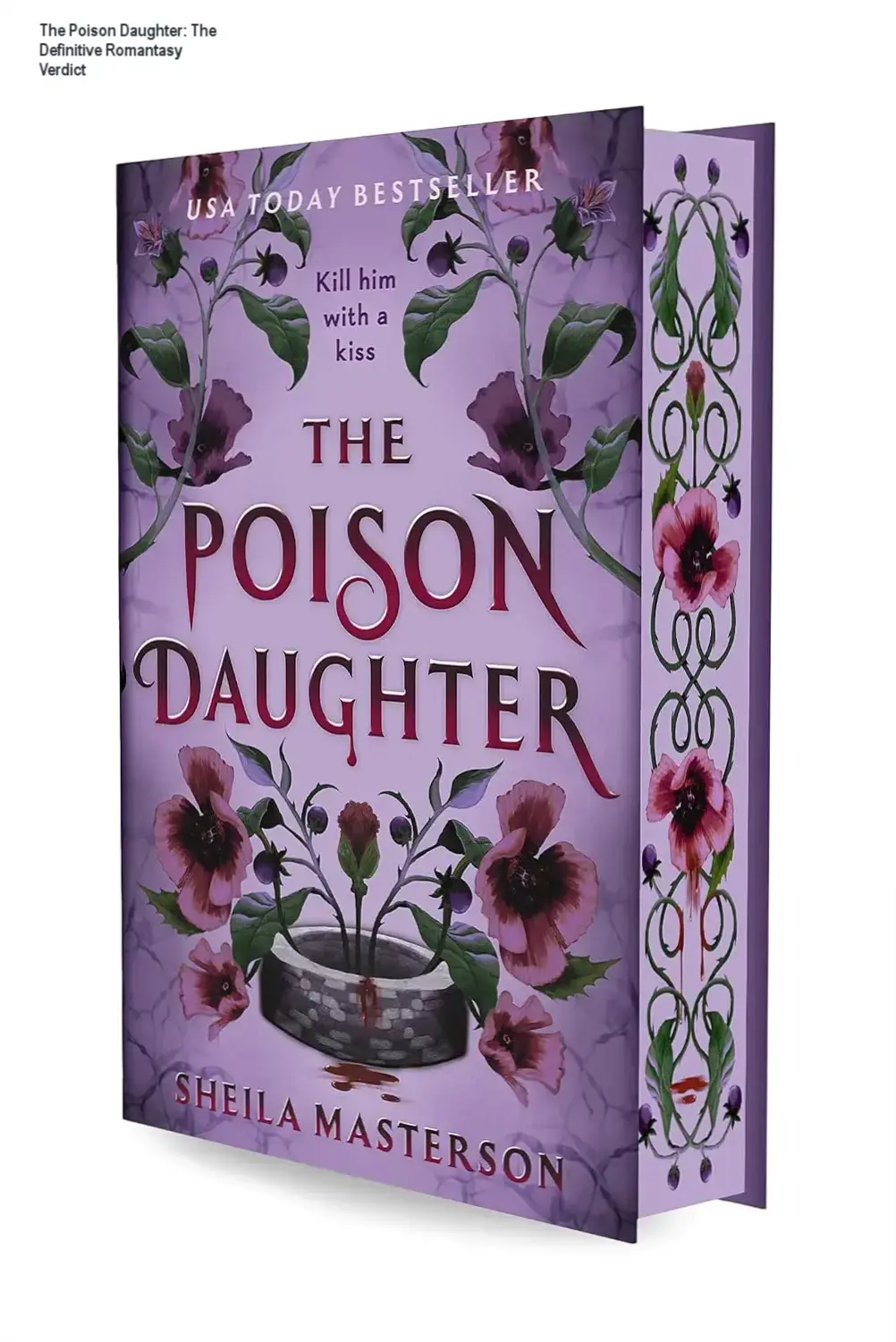
Sheila Masterson’s “The Poison Daughter” attempts to disrupt this cycle by weaponizing the concept of feminine rage. It transforms the traditional “forbidden touch” trope into a lethal survival mechanism. Before diving into the technicalities of this 672-page epic, it is worth checking the current reader reception and availability to see if the hype aligns with your specific taste in dark romance.
Ready to dive into “The Poison Daughter”?
Explore available editions, check current live pricing, or download a free sample directly on Amazon.
Preview Free Sample & Check Price on Amazon
*You will be redirected to Amazon. As an Amazon Associate, we may earn from qualifying purchases.
The Lethal Mechanic: Narrative Stakes vs. Plot Convenience
The core hook of “The Poison Daughter” is simple: Harlow Carrenwell kills anyone she kisses. In a genre where physical intimacy is usually the goal, Masterson turns the kiss into a weapon of assassination. This creates an immediate, high-stakes tension that sustains the first half of the book.
From a structural standpoint, the “poison lips” are more than a gimmick. They serve as a metaphor for the isolation and trauma Harlow has endured. She isn’t just a killer; she is a tool for her family, a biological weapon designed to clear the path for their political dominance.
However, as a skeptical analyst, I have to ask: does the immunity of Henry Havenwood feel like a genuine plot twist or a convenient shortcut? The “only one man can touch me” trope is a staple of the genre, but here it functions as the primary engine for the romantic tension.
The dual POV (Point of View) is handled with precision. We see Harlow’s internal struggle—the vigilante who hunts abusive men—contrasted with Henry’s bewilderment and eventual obsession. This duality prevents the story from becoming a one-dimensional power fantasy.
| Technical Element | Execution Analysis | Verdict |
|---|---|---|
| Pacing | Slow-burn start, accelerating toward a high-tension climax. | Balanced |
| Trope Integration | Heavy use of “Enemies to Lovers” and “Marriage of Inconvenience.” | Conventional |
| World Building | Lunameade is atmospheric, though vampire elements feel secondary. | Atmospheric |
| Character Arc | Harlow moves from a weapon to an agent of her own will. | Strong |
The “Slowburn” Paradox: Pacing and Length
At 672 pages, this is a commitment. Published by “Slowburn,” the book lives up to its publisher’s name. For some, this is a virtue; for others, it is a slog. The narrative spends a significant amount of time establishing the oppressive atmosphere of the walled city and the psychological warfare between the leads.
The prose is descriptive, bordering on lush. Masterson excels at creating a sense of claustrophobia, especially when Harlow is trapped in the Havenwood fortress. The “vampire-infested woods” provide a constant external threat that keeps the plot from stagnating in domestic drama.
Real-world reader feedback on Goodreads often highlights the “tension” as the strongest point. Many users mention that the anticipation of the first “safe” kiss is more rewarding than the actual event. This is a classic CRO (Conversion Rate Optimization) move applied to storytelling: build the desire until it becomes unbearable.
That said, there are moments where the dialogue leans too heavily into the “primal/fear play” tropes. While this appeals to a specific subset of the Romantasy audience, it can occasionally feel repetitive or overly melodramatic for those seeking a more grounded fantasy plot.
Moral Ambiguity and the Vigilante Arc
One of the most refreshing aspects of Harlow is her double life. She isn’t a “misunderstood” killer; she is an active vigilante. The act of hunting abusive men adds a layer of moral complexity that elevates the book above standard romance.
The “Feminine Rage” trope is executed here not as a slogan, but as a narrative driver. Harlow’s anger is justified, and her
Who Is This Actually For?
The Poison Daughter isn’t a light beach read; it’s a 672-page commitment to “feminine rage” and high-tension dynamics. This book is designed for the Romantasy enthusiast who prioritizes the “enemies” part of “enemies-to-lovers” just as much as the romance.
If you enjoy the “Touch her and die” trope, a morally grey female protagonist who functions as a vigilante, and a slow-burn tension that feels almost claustrophobic, you’ll find immense value here. The dual POV is critical, as it balances Harlow’s lethal internal monologue with Henry’s perspective on the woman he cannot kill.
Who Should Skip This Book?
Avoid this title if you are looking for a fast-paced, plot-driven fantasy with minimal romantic focus. If “forced proximity” or “marriage of inconvenience” tropes feel cliché to you, the narrative engine of this book won’t provide enough momentum to sustain the page count.
Additionally, readers who prefer “soft” heroines or traditional moral binaries will struggle with Harlow. She is an assassin by trade and a killer by choice; there is no sudden “moral awakening” that strips her of her edge.
Value for Money: The Hardcover vs. Digital Dilemma
At over 600 pages, the physical presence of this book is significant. The deluxe limited edition—with sprayed edges and bonus POV chapters—is a collector’s item, but it’s a luxury spend. For the average reader, the value lies in the depth of world-building (vampire-infested woods, magical founding families) rather than the physical bells and whistles.
The primary “purchasing mistake” here is expecting a quick romantasy novella. This is a sprawling narrative. You are paying for the slow burn and the atmospheric tension of a fortress setting.
Quick Editorial FAQ
- Is it a standalone? Yes, it’s designed as a standalone romantasy.
- How “spicy” is it? High. Between “primal play” and “fear play” tropes, the chemistry is aggressive and intense.
- Is the magic system complex? No. It’s focused primarily on the “poison kiss” mechanic and the surrounding gothic atmosphere.
Ultimately, Sheila Masterson delivers a polished, atmospheric piece of fiction that weaponizes the “deadly woman” trope. It is a calculated study in power dynamics and reluctant attraction. To see if the current pricing matches the value for your library, you can check the latest reader ratings and discounts on Amazon.
Final Editorial Verdict
“The Poison Daughter” delivers on its core promise for its intended audience, offering compelling insights without fluff. As highlighted in our detailed edition breakdown, its practical depth and readability are its greatest strengths.
We also recommend checking the official Kindle sample and reader ratings before making your final purchase decision.
*You will be redirected to Amazon. As an Amazon Associate, we earn from qualifying purchases.