
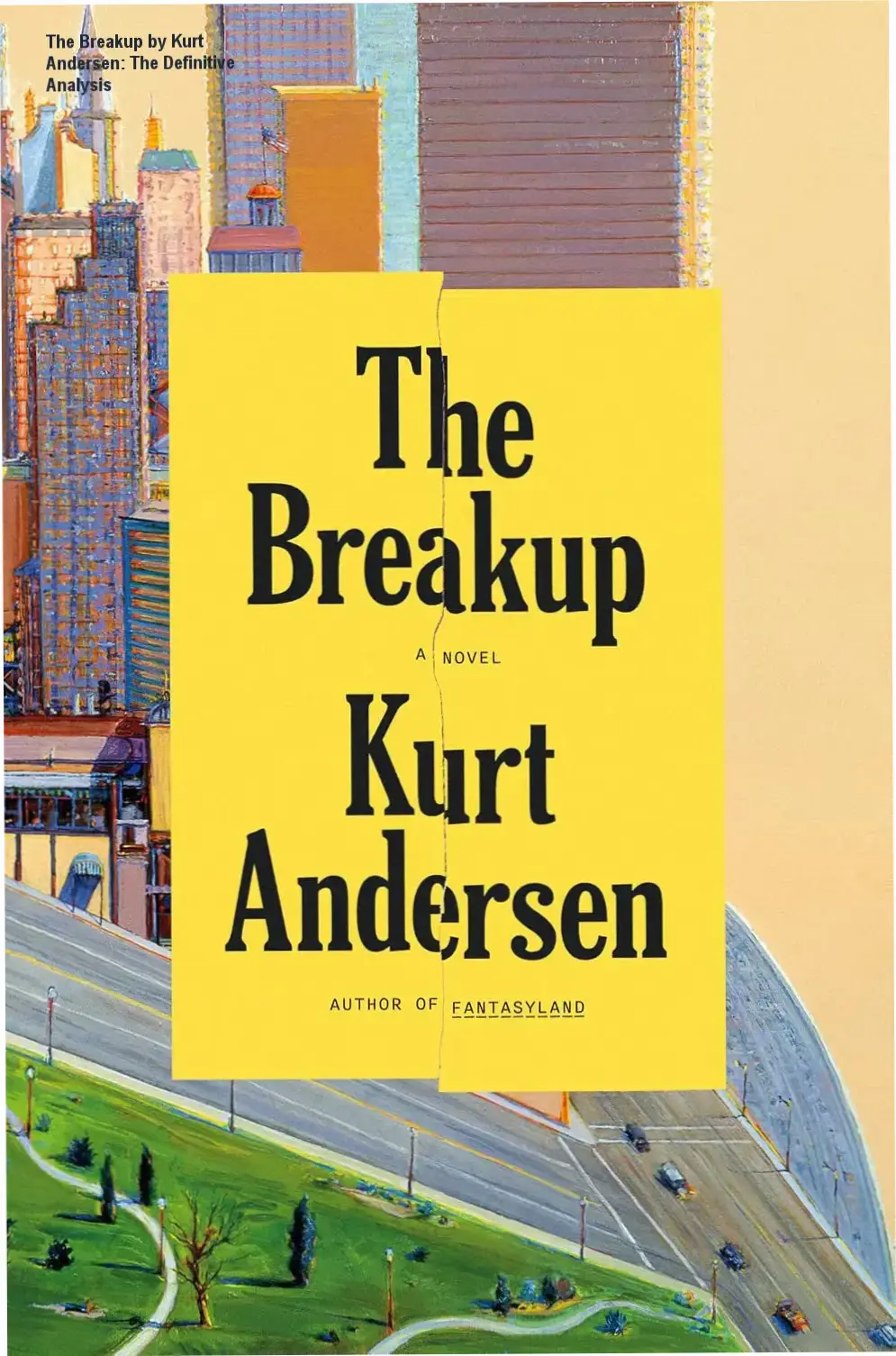
The Breakup by Kurt Andersen: The Definitive Analysis
We have all witnessed the slow erosion of a relationship where the silence becomes louder than the arguments. It starts with small ideological drifts—a disagreement over a news headline or a different approach to parenting—until you realize you are living with a stranger who happens to share your mortgage.
Kurt Andersen takes this intimate tragedy and scales it up to a national catastrophe in The Breakup. By mirroring a crumbling marriage against a fractured United States in 2045, the novel asks if some divides are simply too wide to bridge. If you are looking for a nuanced take on political polarization and domestic collapse, you can check the current availability and reader reception here.
Ready to dive into “The Breakup: A Novel”?
Explore available editions, check current live pricing, or download a free sample directly on Amazon.
Preview Free Sample & Check Price on Amazon
*You will be redirected to Amazon. As an Amazon Associate, we may earn from qualifying purchases.
The Macro-Micro Parallel: A Risky Literary Gamble
Andersen isn’t interested in a simple divorce story. He is playing a high-stakes game of parallelism. Natalie and Asher are not just a couple in crisis; they are living embodiments of the “Two Americas.”
Natalie resides in the rural Tennessee of the “Free American Republic,” while Asher remains in a diminished San Francisco. The geographic distance is a physical manifestation of their ideological void.
This structure works because it avoids the trap of being a “political pamphlet.” Instead, the politics are the weather—the oppressive, inescapable atmosphere that dictates how the characters breathe and move.
However, from a skeptical lens, this mirror effect can occasionally feel too symmetrical. At times, the narrative pushes the “marriage = country” metaphor so hard that the characters risk becoming symbols rather than people.
World-Building in 2045: Plausible or Preachy?
The setting is a post-civil war landscape suffused with AI. Andersen avoids the “neon-chrome” clichés of cyberpunk, opting instead for a “grimy-future” aesthetic that feels uncomfortably close to home.
The integration of AI into daily life is handled with a subtle, almost invisible hand. It isn’t about robot overlords; it is about how technology mediates—and often distorts—human intimacy.
The “Free American Republic” isn’t just a plot point; it is a study in how borders are redrawn when shared values vanish. The tension lies in the “strange, uncertain new American landscape” the characters navigate during their road trip.
| Feature | Technical Execution | Impact on Reader |
|---|---|---|
| Setting | Post-Civil War USA (2045) | High anxiety, visceral realism |
| Pacing | Slow burn, character-driven | Demands patience, rewards depth |
| Tone | Tragic-comic blend | Bittersweet, intellectually stimulating |
| Core Conflict | Domestic vs. Sociopolitical | High emotional resonance |
Writing Style: The Wit Amidst the Wreckage
Coming from the author of Fantasyland, the prose is sharp. Andersen possesses a trademark wit that prevents the 576-page journey from becoming a relentless slog of misery.
He uses a “razor-sharp” approach to dialogue. The conversations between Natalie and Asher are masterclasses in passive-aggression and the “quiet rifts” that define long-term resentment.
The pacing, however, is a point of contention. Some readers find the atmospheric buildup rewarding, while others—as seen in some Goodreads discussions—feel the narrative meanders during the college tour segments.
“The Breakup is an epic elegy for a country strained past its breaking point.” — Tom Perrotta
This quote captures the essence of the book. It is an elegy. It doesn’t offer easy answers or a magical reconciliation. It offers a mirror.
The Road Trip Trope: Emotional Core or Plot Device?
The decision to center the climax around a road trip to visit colleges with their seventeen-year-old is a classic narrative move. It forces proximity upon two people who have spent years avoiding each other.
This “forced intimacy” is where the book finds its heart. The child becomes the only remaining bridge between two warring territories. It shifts the story from a political commentary to a family drama.
The resilience of the family unit is contrasted against the fragility of the state. It poses the ultimate question: if a family can survive a civil war, can it survive each other?
Critics might argue that the “teenager as a catalyst” is a bit predictable, but in this context, it serves as the necessary anchor to keep the sociopolitical analysis from floating into abstraction.
Who Should Actually Read This?
The Breakup isn’t a fast-paced political thriller. It’s a slow-burn character study disguised as dystopian fiction. It is designed for readers who enjoy “speculative realism”—stories where the future feels like a plausible, albeit depressing, extension of today’s headlines.
If you appreciate authors who blend sociopolitical commentary with intimate domestic drama, this is your target. It appeals to those who want to explore how macro-level national collapse manifests in micro-level relationship decay.
Who Should Skip It
Avoid this book if you are looking for a high-action “post-apocalyptic” survival guide or a traditional war novel. If you prefer your dystopias with clear heroes, villains, and fast-moving plots, Andersen’s analytical and often ambivalent approach will feel sluggish.
Furthermore, if you are currently feeling overwhelmed by political polarization, this narrative acts as a mirror. It doesn’t offer easy escapes; it offers a reflection of the “irreconcilable differences” that define the modern era.
Value for Money & Realistic Expectations
At 576 pages, this is a significant time investment. You aren’t paying for a quick read, but for a comprehensive world-building exercise. The value lies in the intellectual provocation—the way it links AI-suffused life in 2045 with the emotional distance between two parents.
Common Misstep: Do not buy this expecting a “how-to” on surviving a civil war. This is a novel about the emotional wreckage left behind, not a tactical manual on the conflict itself.
Editorial Verdict
Kurt Andersen succeeds in making the geopolitical feel personal. While some may find the pacing reflective to a fault, the strength of the prose and the boldness of the premise make it a standout in the dystopian genre. It is a courageous, if cynical, look at the resilience of the family unit when the state ceases to function.
To see if the narrative style resonates with you, we suggest browsing the current reader reviews and pricing on Amazon.
Final Editorial Verdict
“The Breakup: A Novel” delivers on its core promise for its intended audience, offering compelling insights without fluff. As highlighted in our detailed edition breakdown, its practical depth and readability are its greatest strengths.
We also recommend checking the official Kindle sample and reader ratings before making your final purchase decision.
*You will be redirected to Amazon. As an Amazon Associate, we earn from qualifying purchases.