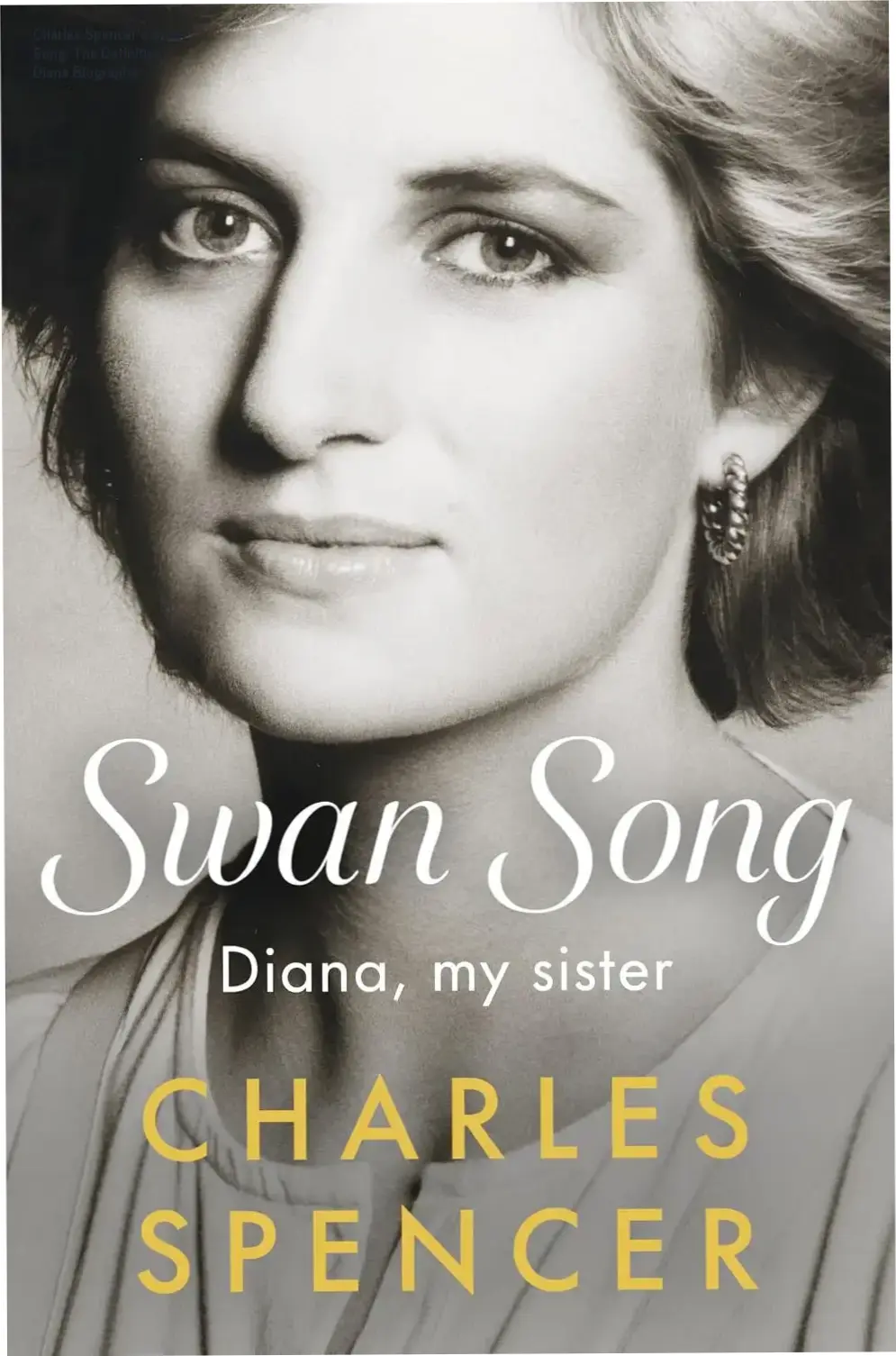
Charles Spencer’s Swan Song: The Definitive Diana Biography
We think we know Diana. The cameras ensured that. We watched the wedding, the dresses, the panic, the funeral. But Charles Spencer argues we never actually saw her—we only saw the projection. Swan Song: Diana, my sister arrives not as a correction of the record, but as a retrieval of the person. The core problem this book solves is the erasure of the private self by the public myth. For thirty years, the Earl Spencer has been the silent sentinel at Althorp, watching his sister’s legacy curated by everyone but her family. This memoir shifts the lens from the Palace gates to the nursery at Park House. It asks a quieter question: what happens to a sibling bond when one half becomes the most photographed woman on earth? The answer lives in the nickname “Duch.” If you want to measure the distance between the icon and the girl, you can preview the opening chapters here.
The market is saturated with Diana literature. Most titles fall into hagiography or hatchet job. Spencer occupies a third, rarer space: the witness. He doesn’t need palace sources; he has memory. The book’s impact on the genre is immediate—it forces a re-reading of the “War of the Waleses” not as constitutional crisis, but as a brother watching his sister drown. The narrative stakes aren’t constitutional; they are familial. That intimacy is the commercial hook, but the literary value lies in the texture of a shared childhood that no journalist could access. It reframes the tragedy not as a car crash in Paris, but as the final severing of a lifeline that began in the sandpit.
Ready to dive into “Swan Song: Diana, my sister”?
Explore available editions, check current live pricing, or download a free sample directly on Amazon.
Preview Free Sample & Check Price on Amazon
*You will be redirected to Amazon. As an Amazon Associate, we may earn from qualifying purchases.
Writing Style: Aristocratic Restraint Meets Visceral Grief
Spencer writes like an Earl who learned to speak in public but thinks in private. The prose is polished—Oxford-educated, historically literate—but it lacks the sterile distance of academic biography. He uses the “Duch and Carlos” dialect as a structural anchor. Every time the narrative threatens to drift into royal reportage, he pulls it back with a childhood memory. The pacing is deliberate. The first third moves at the speed of a country estate summer: slow, sensory, safe. Then the engagement announcement hits like a gear change. The middle section accelerates into the tabloid years, mimicking the frenzy Diana lived through. The final act—the week of the funeral—slows down again, stretching hours into pages. It mimics the physiology of shock.
Readers on early access forums note the absence of bitterness. “He doesn’t settle scores,” one Goodreads reviewer wrote, “he settles the narrative.” The tone is elegiac, not litigious. He describes the press not as antagonists but as a “barbaric” force of nature—inescapable, amoral. This linguistic choice matters. It removes agency from the photographers and places the tragedy in the realm of
Who This Book Is For (And Who Should Skip It)
This memoir lands hardest for readers who remember the summer of 1997 viscerally. If you watched the funeral procession on television, the prose hits differently. It fills the silence between the public spectacle and the private grief.
Royal watchers craving institutional gossip will be disappointed. Spencer protects the Crown more than you’d expect. The narrative focuses on sibling dynamics, not palace mechanics. Readers hunting for bombshell revelations about the Firm should look elsewhere.
Psychology enthusiasts gain a rare case study in family systems under extreme pressure. The boarding school trauma, the divorced parents, the divergent coping mechanisms — it reads like a textbook on attachment theory wrapped in aristocracy.
Skip it if you want a Diana hagiography. Spencer admits her flaws: the manipulation, the volatility, the desperate need for control. He loved her, but he refuses to sanctify her. That honesty is the book’s value proposition.
Value Proposition: Hardcover vs. Library Hold
At 384 pages, the density justifies the list price for collectors. The archival photographs alone — many unpublished — warrant a physical copy. The paper quality and binding feel archival, not disposable.
Audiobook listeners get Spencer’s narration. His voice carries the weight; the pauses say more than the words. But you lose the photo inserts. Kindle users get searchability for names and dates, crucial for cross-referencing the sprawling cast.
Budget-conscious readers: wait for the paperback. The insights don’t expire. The hardcover premium buys you immediacy and object quality, not exclusive information.
Common Buying Missteps
- Expecting a biography: It’s a sibling memoir. The lens is fixed on Charles. Diana enters and exits his orbit.
- Wanting the “real” Harry/William: They appear as nephews, not protagonists. Their interior lives remain opaque.
- Assuming literary prose: The writing is functional, occasionally clunky. It serves the testimony, not the art.
Quick Contextual FAQ
Does it cover the crash investigation? Only the week surrounding it. The inquest findings are summarized, not dissected.
Is Camilla mentioned? Sparingly. The focus stays on the Spencer sibling bond.
Are there new letters or diaries? Yes. Excerpts from their childhood correspondence (“Duch” and “Carlos”) are the emotional core.
Editorial Bottom Line
“Swan Song” succeeds because it lowers the volume on the myth to amplify the human. It’s a brother’s eulogy, delayed by three decades, finally delivered without the world watching. The perspective shift — from global icon to little sister — is the only reason this book exists. If that shift interests you, the investment pays off. You can verify current pricing and reader sentiment here.
Final Editorial Verdict
“Swan Song: Diana, my sister” delivers on its core promise for its intended audience, offering compelling insights without fluff. As highlighted in our detailed edition breakdown, its practical depth and readability are its greatest strengths.
We also recommend checking the official Kindle sample and reader ratings before making your final purchase decision.
*You will be redirected to Amazon. As an Amazon Associate, we earn from qualifying purchases.